
"How Do I Know When My AFib Is Gone After Heart Surgery?" asks Linda
Linda just asked me two GREAT questions about heart valve surgery and atrial fibrillation (AFib). She writes, "Hi Adam, After surgery… How do I know when my AFib is gone? Also, when do patients stop taking blood thinners after AFib is gone following surgery? Thanks! Linda"

As we learned in this video, up to 50% of patients experience atrial fibrillation after heart surgery. We have also learned together, that AFib is temporary for most patients. According to research, 94% of post-op AFib is gone within 6 weeks following cardiac operations.
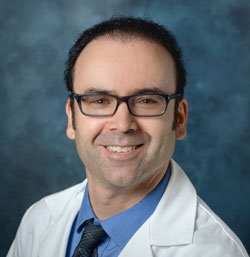
To answer Linda's questions, I reached out to Dr. Ali Khoynezhad, a cardiac surgeon who specializes in AFib and heart valve therapy at MemorialCare in Long Beach, California. So you know, Dr. Khoynezhad has successfully treated many patients in our community. You can see 50+ patient testimonials for Dr. Khoynezhad at his surgeon profile.
Dr. Khoynezhad Says...
In his response to Linda's questions about how patients know when their AFib is gone, Dr. Khoynezhad shared:
Since many episodes of AFib are asymptomatic, the sensitive tool to rule out irregular heart rate after a surgical AFib procedure is a 7-day or 14-day continuous EKG monitor. There are many companies which offer convenient solutions to record the EKG and rarely there is Holter-type monitoring necessary. The monitoring is done typically 3 months after the procedure, as it takes so long for the lesions performed during the procedure to become full scars and thereby effective barrier to the AFib.

Specific to Linda's question about stopping blood thinners (e.g. warfarin) after heart surgery, Dr. Khoynezhad shared:
Once the monitor confirms you have been free of AFib at three months, the blood thinners may be stopped by your surgeon or cardiologist. However, it is recommended to take blood thinners after the operation until this three-month monitoring results are available and you have the "green light" from your treating physician.
I hope that helped all of us learn more about atrial fibrillation after heart surgery. Thanks so much to Linda for her awesome questions! And, a special thanks goes out to Dr. Khoynezhad for sharing his clinical experiences and research with our patient community!
Keep on tickin!
Adam
Written by Adam Pick
Patient & Website Founder

Written by Adam Pick - Patient & Website Founder
Adam Pick is a heart valve patient and author of The Patient's Guide To Heart Valve Surgery. In 2006, Adam founded HeartValveSurgery.com to educate and empower patients. This award-winning website has helped over 10 million people fight heart valve disease. Adam has been featured by the American Heart Association and Medical News Today.
Comments





Adam's Newest Blogs


New Community Posts
Blog Categories
- Adam's Updates
- Aneurysms
- Aortic Stenosis
- Aortic Valve Repair
- Aortic Valve Replacement
- Atrial Fibrillation
- Before Surgery
- Bicuspid Aortic Valve
- Heart Valve Replacement
- Medical Technology
- Mitral Regurgitation
- Mitral Valve Repair
- Patient Stories
- Pulmonary Valve
- Recovery
- Ross Procedure
- Surgeons & Hospitals
- Tricuspid Valve
Blog Categories
- Adam's Updates
- Aneurysms
- Aortic Stenosis
- Aortic Valve Repair
- Aortic Valve Replacement
- Atrial Fibrillation
- Before Surgery
- Bicuspid Aortic Valve
- Heart Valve Replacement
- Medical Technology
- Mitral Regurgitation
- Mitral Valve Repair
- Patient Stories
- Pulmonary Valve
- Recovery
- Ross Procedure
- Surgeons & Hospitals
- Tricuspid Valve
Blog Categories
- Adam's Updates
- Aneurysms
- Aortic Stenosis
- Aortic Valve Repair
- Aortic Valve Replacement
- Atrial Fibrillation
- Before Surgery
- Bicuspid Aortic Valve
- Heart Valve Replacement
- Medical Technology
- Mitral Regurgitation
- Mitral Valve Repair
- Patient Stories
- Pulmonary Valve
- Recovery
- Ross Procedure
- Surgeons & Hospitals
- Tricuspid Valve

Heart Hospital Map

Search for heart hospitals that specialize in heart valve treatment.
New Posts From Our Community

Lori Williams from
Novato
This is John, Lori's husband,letting you know that everything went well...
Meet Lori
Gianna Roy from
Delhi, India
How to Check a Call for Papers Before Submitting to Conferences...
Meet Gianna
Kate Griffith from
Virginia Water, United Kingdom
I couldn't resist posting this photo of me at my pre-op...
Meet KateNewest Community Post
Lori Williams from
Novato
This is John, Lori's husband,letting you know that everything went well...
Meet Lori
Find Heart Valve Surgeons
Search 1,500 patient-recommended surgeons
Heart Hospital Map
Search for heart hospitals that specialize in heart valve treatment.