Adam's Heart Valve Surgery Blog
Double Heart Valve Surgery Patient, Adam Pick, Blogs About
Heart Valve Replacement and Heart Valve Repair Surgery

"High Heart Rate After Valve Surgery?" Asks Pete

June 23rd, 2009

I just received a great question from Pete about elevated heart rates following heart valve surgery.

Pete writes, “Hi Adam, I had aortic valve replacement on April 8, 2009, about two months ago. My main concern is that my heart rate is running quite high at 80 to 90 beats per minute. Before surgery, my heart rate was around 60. I contacted my cardiologist about this three times. Each time, they tell me this is one of the side effects from surgery and it should diminish over time. Quite frankly, I am concerned my heart is going to wear out. Any thoughts? Thanks, Pete”

Without a doubt, Pete raises a very valid concern of patients following cardiac surgery.

So you know, I experienced something very similar to Pete after my open heart surgery.

I have always had a high heart rate – about 80 beats per minute (bpm). However, after surgery, my resting heart rate was about 10 bpm higher. Sure enough, like Pete, I called and asked my doctor whether-or-not this was something to be concerned about.

Guess what? My cardiologist suggested that this was “normal”. Sure enough, my heart rate did normalize during my recovery.

In fact, I just located a reference on Medhelp which states, “It is not at all uncommon to have rapid heart rates after open heart surgery.  For example, atrial fibrillation and atrial flutter are very common, as well.”

In some patient cases, however, I have learned that certain drugs (e.g. Metoprolol, Cordarone) may be used to help slow heart rates following surgery. That said, if you are experiencing high heart rates after surgery, I would encourage you to contact your cardiologist to confirm that your situation is not unique.

Remember… Always safe, not sorry!!!

Keep on tickin!

P.S. Do you have any thoughts about high heart rates after heart surgery? If so, please click here to leave a comment for Pete!

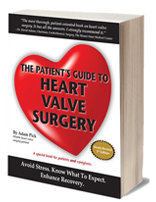
About The Author: Adam Pick is a double, heart valve surgery patient and author of The Patient's Guide To Heart Valve Surgery. This unique book integrates clinical research with the personal experiences of 135 former patients to help future patients and their caregivers better understand the problems, the opportunities and the realities of heart valve surgery. To learn more about Adam and his heart valve surgery book, click here.

28 Comments... Click here to add one.


anon says on June 24th, 2009 at 12:28 am

9 mos later, and I am on a low dose of metoprolol to keep my heart rate down. And it stays down as long as I stay on metoprolol. Still, it is more than just a bit disappointing, it’s a bit worrisome as well, since the artificially low heart rate seems to drag on my ability to climb stairs and the like.


Vicki says on June 24th, 2009 at 12:46 am

Hi Pete & Adam,

I had a VSD closure and aortic valve repair about 5 months ago. I became tachycardic after surgery (my resting bpm was around 130). I was prescribed metoprolol (Lopressor) to help lower my heart rate. The good news is that as of 2 weeks ago, I was taken off the metoprolol. Right now my heart is still adjusting to being off the medication (my bpm is currently in the upper 90-100 range). I contacted my cardiologist and was told that this was expected, but was not given a timeline as to when I can expect my bpm to return to my normal range.


Cliff Buehrer says on June 24th, 2009 at 10:48 am

Hello Pete, I had mitral valvee repair on July 29,2008. 2 days after leaving the hospital my pulse jumped from approx 72 to 120. Went back to the hospital and the surgeon was not worried. They put me on low dose metropolol. Seemed to level out in the 90,s. After coming home my cardiologist felt I was having a beta bloker withdrawl. I was on 100mg 2X per day before surgery and nothing after surgery. It took about 3 weeks at my old beta bloker level and my heart hate leveled off in the upper 60′s. Beta blocker withdrawl can be a very serious.


Brian Arrington says on June 24th, 2009 at 1:15 pm

Last week my cardiologist informed me that I needed an aortic valve replacement. My heart rate has always been high. Around 85-90 per minute. Scares me to read that after the surgery it will be even higher.
What gives??


Lloyd says on June 24th, 2009 at 1:33 pm

Pete,

I had a similar problem. After surgery I could not sleep laying down, my heart kept pounding. I slept in a chair for a couple of weeks before I called my doctor. My doctor changed my med Atenolol from 25 mg to 50 mg and he had me take it at bed time. His nurse also suggested I sleep on my side. My surgery last last November and I followed doctor’s orders and have been sleeping quite well.


Daniel Monk says on June 24th, 2009 at 5:12 pm

Pete,
My heart rate is now about 80-90 beats at rest. I underwent Aortic valve replacement a little over a month ago (Biovine Tissue Valve). Prior to surgery it was about 70 bpm. My surgeon told me that although the restriction in my heart is now gone, it can take the heart up to a year to “Re-model” itself. I am taking metoprolo to lower the beat. Eventually I shouldn’t need to take any meds (other than aspirin) I’m told. I also seem to notice my heartbeat more now. I don’t know if it is louder or if I’m just more aware of it.

Dan Monk


Adam Pick says on June 24th, 2009 at 5:47 pm

Anon, Cliff, Vicki, Daniel and Lloyd –

Thanks for all of your comments (above). This is very, very, very, very helpful information.

Keep on tickin!

Adam


Rebecca Roberts says on June 24th, 2009 at 7:22 pm

Pete:

I have had the same problem since my mitral valve repair in Jan. 2009.
A recent Holter monitor showed my average heart rate was 93;with exercise the high was 152; and at rest the low was 63.
I was put on increasing doses of Metoprolol following surgery, until June 3, when I was taken off it, as my blood pressure was dropping extremely low during cardiac rehab., and when I was jogging at home. My blood pressure has improved, but not the heart rate!
Although he has tried to address it through medication, my cardiologist is not extremely concerned…says it is a common problem following surgery.

Becky


Terry says on June 24th, 2009 at 7:28 pm

Hi all,
My heart rate before my mitral valve problem became serious was about 55 to 60; then I went into atrial fib, and had a controlled rate on Digoxin of about 70. After mitral valve repair and a Maze procedure (on March 10 of this year) my heart rate was usually around 90 to 110, still on Dig, and now in a regular rhythm. I was very worried. I could not take a beta blocker because my blood pressure was too low, and indeed I took Midodrine to raise my blood pressure. Then it seemed that almost all of a sudden after three months post op, my heart rate came down to the 60 to 80 range. I have started some weight training again, and a little cardio vascular exercise, and my heart rate seems to rise appropriately and then goes back down. So maybe it is true that the heart takes some time to recover, and that time may really differ in individuals. I am really always hoping that these things are “normal”!!


Ann Garcia says on June 24th, 2009 at 8:16 pm

On July 1st, I am going to have my mitral valve replaced and a ring on the tricuspid valve. Since I have atrial fibrillation caused by the mitral stenosis and mild pulmonary hypertension, my doctor plans to put wires in place just in case a pace maker is needed later. I will be having the Cox Maze procedure and have been warned that rapid heart rate is normal after surgery.

Thanks to Adam and all of you. I am not afraid of what is to come and look forward to recovery.


Sean R says on June 24th, 2009 at 8:30 pm

Pete,
I’m 60 and in pretty good shape. I had aortic valve and root replacement in Aug. of 2008. Before surgery, my resting heart rate was 52. It’s always been around that. After surgery and for weeks it was around 80. Very disconcerting! Same fears as you. Cardiologist and surgeon told me not to worry, that it would slow back down. It has slowed gradually. 10 months post-op I’m now at 54. So, hang in there!
Sean


Curt Sandberg says on June 24th, 2009 at 9:49 pm

In my humble opinion, open heart surgery is not a science — it is an invasive “treatment” that your body reacts very negatively to. I had open heart surgery – mitral valve repair – over four years and had the same experience. The surgeon told me that he did an unusual procedure (that provides “better results”) by going in from the back of the heart to repair the valve. My resting heart rate grew to over 100 beats per minute over the next six months. My cardiologist finally prescribed Metoprolol. I have been taking this now for close to four (4) years. There has been no sign that my resting heart rate will ever be “normal” without the Metoprolol. Another disquieting symptom is that when I have been given a stress echo-cardiogram, if I temporarily go off the metoprolol, my heart goes “crazy” and the cardiologist has to abort the test. I can now only do stress echos with the Metoprolol in my system. Again, in my humble opinion, any surgery that cuts heart muscle and/or nerve pathways is a traumatic process for one’s heart. Of course I have to admit that having the surgery is better than being in a box six feet under…


Kerrigan says on June 25th, 2009 at 10:57 am

I’m at 5 months post-surgery for aortic valve replacement.
After some up and down of the heartrate, the doc settled on a generic form of LoPressor.
My resting heart rate is now around 60 bpm, and it gets up to 100 during my cardio workouts, but mostly stays around 80-90 while exercising.
The drug has reduced the “pounding” heartbeat to a more gentle beat, which is what the docs were looking for post-surgery. This lets the heart rest somewhat and get adjusted to the new valve I’m told.
Seems to be working. My BP gets up to 140 in the morning after waking, but goes down slowly and ends up 110 or so for the rest of the day.
I do have the experience of the drug slowing me down a little, but the tradeoff is worth it.
Hopefully some day I can get off the BP meds.
It’s nice to no longer experience the pounding pulse I had for a couple of months after the surgery!
Everyone seems to react differently to the surgery and the meds. The docs say everyone goes through a dialing in process to find the right combination of meds and lifestyle.


Josh says on June 30th, 2009 at 1:37 pm

Pete-

This is Josh- I’m just about 4 months out of aortic valve replacement and ascending aortic aneurysm repair. I’m 38 and in otherwise relative good health. My situation after surgery was EXACTLY like yours. Although I’m on a beta blocker, I was very worried about a fast heart rate (resting 80-95 bpm) where I had a much slower one before. Now 4 months later my resting heart rate is at 60-70 bpm, and 100-120 with solid exercise during cardiac rehab. Which by the way, I highly recommend and strongly believe helped get my heart rate back down. My main issue now is just getting used to the strength with which my heart is beating- although it’s slower again, it still feels like it’s pounding in my chest (another thing the doctors say is normal and will calm down soon).

Just hang in there and things seem to work themselves out!

Josh


Elizabeth Borjas says on July 14th, 2009 at 11:10 am

I had a mitral valve replacement 10 years ago. I have a mechanical St. Jude valve made out of titanium. I too was put on metoprolol and told I would be on it the rest of my life. I’ve been off it 4 years and my heart beat averages 76 or 80. After my surgery, it was in the 90′s and would sometimes run high. I always felt my legs drag with the medication and my blood pressure was low.

YOU CAN NOT GO OFF THIS MEDICINE ON YOUR OWN. The decision has to be with your doctor and under his or her supervision. You have to be weaned from this med very slowly. The only reason I was taken off was because I was undergoing a test where I had to be taken off.

Your heart rate will slow down with time. Be encouraged and when you feel your heart racing practice slowing your breathing down. It works.


Chris Hollen says on January 17th, 2010 at 5:19 pm

I also had minimally invasive mitral valve repair at Good Samaritan Hospital in Cincinnati,Oh on Dec.21,2009. I went back to the hospital on Dec. 27 with sweating, dizziness and high heart rate(130). I was treated for dehydration and my heart rate came down to 110-120bpm. My surgeon Dr. J. Michael Smith was not overly concerned and I was released on Dec. 29. I am now on 100mg. metoprolol a day and my heart rate is between 90 in the morning to 110 in the evening. Dr. Smith is not concerned as he says my heart is getting used to the repaired valve and my heart rate will eventually return to normal. I am 37 years old and he says he will eventually wean me off of metoprolol also. I also feel worried that my heart will wear out at such a high rate. Glad to know other people are going through the same problems after surgery.


Denise says on October 11th, 2010 at 8:02 pm

I had a minimally invasive mitral valve repair at the Cleveland Clinic in Cleveland Ohio on August 12, 2010. Since my surgery, I have experienced a very high heart rate of 102-116 just sitting around on the computer. I sometimes feel my heart beating fast and sometimes feel it palpitating out of my chest. My normal heart rate pre-op was 75-80. It is very frightening to me and puts me in a panic state at times. I just started Cardiac Rehab and the instructors have noticed my heart rate high . The Cardiologist said it should go back to normal….but when? I even get short of breath from it. I was put on Metoprolol after my surgery however I experienced severe headaches after the surgery for 5 weeks and thought it was from the Metoprolol so I went off of it as per my doctors orders.
Any answers from anyone? Will my heart go back to normal after a while. I’m 2 months post op.
Any suggestions would be of help.


Meg says on October 14th, 2010 at 8:14 pm

I am 34 and had mitral valve repair almost 6 months ago. I too had a very high heart rate and still do, but it is improving! It was around 100-110 resting for months after my surgery. Now it is between 80-90 resting. I have many skipped beats and palpitations but can\’t go on a beta blocker because I have very low blood pressure. So I understand your concerns. I must tell you though that I have had a very rough recovery and I am just now starting to see the light at the end of the tunnel, but I am definitely starting to feel better! I wish I would have just been more patient and I wish I wouldn\’t of worried myself so much as I was recovering. I still pray my blood pressure and irregular beats and heart rate continue to improve.


Jim Corbett says on November 19th, 2010 at 2:08 pm

I’m 54 and had minimally invasive mitral valve repair on 9/14/10. I’ve been concerned about my heart rate as pre surgery my at rest rate was in the low 50′s. Now it is in the mid 90′s. Like everyone else, my cardiologist and surgeon said not to worry. I’m two months post op and have seen no change. From some of the responses, it looks like I should wait until the first of the year before being concerned. I’m currently on no medication and plan to resume running soon.


Hjalmadean says on December 19th, 2010 at 6:46 pm

My mother at 86 had mitro valve repair Sept 28.2010. Everything has healed nicely. but does have high heart rate, sometimes as high as 127. Being concerned I asked her doctor and he says that the body has been through a lot and it will take time for her body to adjust. She had a lot of trouble with her vision after surgery but now it seems to be clearing up. Does have spills where her blood pressure would drop below 100, which the doctor increased her sodium intake which has helped.


Denise says on January 5th, 2011 at 9:50 pm

I had mitro valve repair Aug. 12, 2010 with a ring put in the valve. I have had a high heart rate since my surgery. My normal heart rate was always 80 and now it runs between 100 and 108 resting. I have been to the cardiologist several times and have mentioned this to him. He does not seemed concerned about it but is weening me off of Snythroid for my thyroid to see if that is what is causing the high heart rate. I am 4.5 months post op and it has not changed. I have been through cardiac rehab since September 2010 and continue as of today. My heart rate is high everyday that I go. It seems to come down quick after being on the treadmill but not below 104 when I leave. Have been off all beta blockers since 3 weeks after surgery. I know they would help lower it but the doctor does not want to do it yet until he sees if it the thyroid medication. I dont think that is the answer. Does anyone out there know how long before the heart rate goes back to normal after surgery?


Frank Ingels says on January 31st, 2011 at 4:45 pm

I had mitral valve repair 11 January 2011. Before I had no real symptoms and a pulse rate of 60′s. In great shape for 73.5 years and at 5’5″ and 143 pounds fairly lean. Was walking 2 miles a day and doing 40 pushups.
Now after the surgery I have been gaining back stamina and walking a mile twice a day. But the pulse rate was in the 90′s. I don’t tolerate Corge (Beta Blocker) without sinking spells so I am not on a med at this time. However today for some reason in the space of an hour the pulse rate jumped to a steady 133. I had worked in the office for a few hours this am and had started thinking about attending a meeting the 10th of Feb. Now I am concerned about my health and am thinking seriously of quitting work entirely.
What about this pulse rate jump? Don’t seem to have fib or flutter.
Have not yet heard back from the cardiologist nurse (called at 1pm and it is only 4pm now). Would walking still be advised?


Roger says on February 15th, 2011 at 10:08 pm

2/15/11: I left a message about 4 to 6 weeks ago. My heart rate was elevated (90′s to low 100’s) after my mitral valve repair on 10/22/10. I began a progressively intensive exercise regimen around Christmas, ’10, about 10 weeks after surgery. Nothing crazy, but walking, progressively increasing up to 4 miles at about 4 mph, carrying hand weights starting at 1 lb per hand working up to 5 lbs per hand, generally every other day. I also do light upper body exercises. My heart rate during normal activity is now down to the 70’s and my resting rate is into the 60’s. I’m 58 and have always been in reasonably good shape. I am still on Coumadin and very low dose Lopressor. I’m hoping go get off these in another two months. I believe the exercise has had a very beneficial effect and highly recommend it.


Stephanie says on February 19th, 2011 at 1:30 pm

I had mitral valve repair on Jan 24 and have atrial flutter and a fast heart rate. I’m on metoprolol and diltiazem as well as warfarin. My doctor in the hospital told me this condition often resolves in around 3 months. I hope he’s right!


Jean Malbrough says on March 26th, 2011 at 2:48 pm

Pete: I had my aortic vale replace about 8 months ago with a porcine valve. I had complications in the beginning, two pleural effusions. Once I recovered from that my recovery took off. I’ve been off all medications for about 4 months, exercising regularly, the star patient. All of sudden I felt like my heart was going to beat out of my chest my heart rate went up to 90 from the usual 70 and my b.p. off the charts. I feel like I age 10 years in a month. Finally, got into see the cardiologist, not an easy task. I was put on Bystolic 5mg. It really dropped everything down in two days. Now, I am 107/60 with a pulse of 60. It has really slowed me down. However, the echo confirmed that my heart is fine. It is reassuring to know I am not the only one with this issue.


Frank Ingels says on March 27th, 2011 at 12:31 pm

Pete,
I had Mitral repair 11 Jan 2011, by the time I left the hospital, 15 Jan 2011, the pulse rate was up to 90 from normal of 60. After three weeks I started having fibrillation. Finally they put me on Amiodarone (200mg)and Metroprolol (25mg) and a full asprin each dayt and I have done fine. Had to lay off of caffeine, but occasionally glass of tea or half of a real cup of coffee is okay now. Pulse rate is in 60′s again. They think that as the heart heals I can come off the meds, sometime in late May we will try. Fortunately there are no side effects to the meds.
Have heart (sorry about the pun) and don’t worry and be sure to do the rehab as it will make you really feel great.


sonia says on September 15th, 2011 at 11:15 pm

Hello Adam,

I would like to thank you since I found your page just browsing about open heart surgery. My mother in-law just went through the ordeal. Your blog helped me about the surgery and give my family encouragement. Today is 2 weeks since the surgery. Everything was going well until today when she needed to be admitted for an irregular heart beat. According to the doctors, its pretty common but as usual I found comforting words in your blog. Thank you. She’s being treated and she will be all right.


Gary says on September 28th, 2011 at 1:18 pm

I just had open heart mitral valve repair done a week ago at Grant Medical Center in Columbus, OH. I am 61, exercise regularly, and have a normal resting heart rate of between 50 and 60 bpm. After surgery, it fluctuates between 70 and 94. I am on only 25 mg a day of Metoprolol. I was warned about the increase but it is still concerning. However, after reading about all the prior cases in this blog, I am less concerned now and understand it takes time for the heart to adjust. I am healing very quickly. I attribute this to eating correctly, doing my deep breathing exercises and already walking a mile a day (only 8 days after open heart surgery). The high blood oxygen concentration has to be helping. I plan to do as much exercise as my body will allow to see how quickly my resting heart rate will fall to pre-surgery norms. Thanks to all those who posted prior to this….very helpful information.


Leave a Reply

(required)
To prove you're a person (not a spam script), type the answer to the math equation shown in the picture. Click on the picture to hear an audio file of the equation.
Click to hear an audio file of the anti-spam equation

  #1 Recommended Book
  For Patients & Caregivers