Emotional And Behavioral Changes After Heart Surgery… For Beth & Erik
Beth just emailed me about her husband’s problematic recovery from heart surgery. She writes, “Hi Adam - My husband had heart valve replacement surgery (from mitral valve prolapse with regurgitation) two months ago. Since then, he seems to be experiencing some emotional and behavioral changes after heart surgery. Although his heart is doing great, Erik seems to be “a little down” and somewhat “out of it” since the heart surgery. Any thoughts? Thanks, Beth.”

Here are my thoughts for Beth:
As patients, we enter the operating room with two critical thoughts. The first thought is, “Please let me live!” The second thought is “Please fix my heart so that I can live longer!”
After surgery, the relief of living and having fixed hearts is not enough for many patients. Instead, many patients are bombarded by difficult thoughts relative to pain, complications and ultimately, a challenged recovery. That said, these thoughts can manifest in emotional and behavioral changes after heart surgery.
In my own research, I learned that 30%-75% of patients report feeling anxious or depressed after heart surgery. That’s a pretty significant number. Personally, I experienced both emotional and behavioral changes following my valve replacements. I was moody. I was irritable. I was fatigued. I was tired of the pain.
As Doctor R. Scott Mitchell notes, “I think the cause of cardiac depression is entirely unknown… But, it could be the psychological effect of anticipating surgery, the prolonged time under anesthesia, or the results of the heart-lung machine.”
On this note, reports suggest that these emotional and behavioral shifts are increasing in frequency. In the opinion of many, this increase is directly related to short hospital stays in which patients are discharged too quickly after the operation. Today, patients are in the hospital five days on average. In the past, patients would have ten to fifteen days in the hospital to assimilate their new reality, according to Dr. Richard Fogoros.
As to what can be done about the emotional changes after heart surgery, I took several guided steps including attending cardiac rehab classes, spending less time alone, ending my use of Vicodin, etc.

I hope this helps explain a little more about the common emotional and behavioral changes after heart valve replacement surgery and heart valve repair surgery.
Keep on tickin!

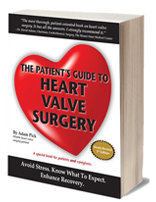
About The Author: Adam Pick is a double, heart valve surgery patient and author of The Patient’s Guide To Heart Valve Surgery. This unique book integrates the clinical facts of heart valve surgery with the personal experiences of 78 former valve surgery patients to help patients and caregivers better understand the problems, the opportunities and the realities of heart valve surgery. To learn more about Adam and his heart valve surgery book, click here.
- Previous: How Long To Regain Consciousness After Open Heart Surgery?
- Next: More Data On The SAPIEN Transcathether Valve Replacement From The European Union


September 12th, 2008 at 3:48 pm
Dear Beth and Eric
I am 3 1/2 weeks post op for a mitral valve repair. Everything went well and I am recovering nicely. My mood though, not so great. I have had a great support system but I think I just miss my independence. I get very blue and then I get upset with myself for being blue. I have a lot to be thankful for but I start wanting to just go somewhere and be by myself. My friends and my family take me out and I have time alone in the house. I have always been a very independent person and I haven’t been released to drive yet. It’s not that I really want to drive but I just want to be somewhere besides my house and be by myself. I want to have something to talk about other than health issues. I want to be interesting. Some days I wish I had a new hobby but I dismiss the idea because it sounds like to much trouble. On the days that I am home alone, I don’t turn on music or tv and I can’t concentrate to read. Tell Eric that he is not alone. I hope someone responds here and tells us how to get past this moodiness. Is Eric on anti-depressants. I am but to be honest, I was on them before surgery but then they helped. I have to make myself go to cardiac rehab but I always feel better afterwards. I am looking forward to cool weather and getting out of the house more often. Good luck to both of you.
Vicki
September 12th, 2008 at 5:20 pm
RE: I hope someone responds here and tells us how to get past this moodiness.
hi vicki.
be patient and fair to yourself. youve been through a major trauma to your system. i havent had my surgery yet, but i did have a valvuloplasty, which is way less than open heart surgery, and it took me at least 3 months to feel okay again. fresh air usually makes me feel better. see if it helps you to sit outside in the sunshine.
laura
September 12th, 2008 at 5:39 pm
Adam…My brother had a mechanical aorta heart valve replacement back in 1970. He was one of the first 3 to receive one and, up until this past Monday, was the only survivor of those 3. He passed away, due to a heart attack. His situation was unique, in that he had a blood infection that ate out his aorta heart valve. When they wheeled him into the operating room, they told him he had 2 hrs to live. He was in the Air Force at the time, and they flew in the best heart surgeon in the country to perform the proceedure. His name was Col. Cox. I am trying to locate Col. Cox to let him know about my brother, but am running up against the typical red tape known as the Government. Is there a roster of heart valve recipients that you know of that might also list the attending physician?
To those of you going through this, good luck to you. My brother was told his valve would only last 7 yrs. It lasted over 20 yrs, and he had a good life. He did have to have it replaced about 10 yrs ago, and the valve was defective, so he had a pig valve installed. Even so, he lived a full life.
Patty
December 8th, 2008 at 2:23 pm
I am a male 68, and 9 years removed from mitral valve repair, with complications 6 months after surgery. Shortly after the surgery and lasting to this day, I have been waaaay over-emotional. My short-term memory was also bad but since has improved. Some things just seem to set my ‘cry’ button off and I feel like the doctors must have messed with my genes and my estrogen levels are higher than my testosterone levels : )
I appreciate the little things in life, but wish that I didn’t cry at the drop of a hat. Will it ever go away?
December 31st, 2008 at 6:52 pm
We have a friend who is 10 years past triple bipass. He seems to be lacking in judgement in many areas - financial included. Is there a good resource that we could consult to learn more about this? Thanks. Ann
January 17th, 2009 at 4:50 pm
I have been dating a wonderful man for almost 3 months when he was given wrong medication during a routine colonoscopy. He wound up having emergency heart surgery which weakened his heart and 5 days later had surgery again to receive a pacemaker. I have not seen him since all this has happened (his choice) and barely had a few conversations. I have conveyed my support and wanting to be there for him but he seems to be pushing me away and avoiding me.
How can I help him and give my support? I don’t care how he may look or about possible side effects. I care about him. Isn’t this the time when you would lean on those you are close to? I feel I am becoming depressed and disconnected from him. Can anyone give me some feedback as to how he may be feeling?
Thanks in advance.
March 4th, 2009 at 8:36 pm
I am a 50 yr old female who had a heart valve repair for severe regurgitation from mitral valve proplapse. I was going into heart failure last spring and told that if I didn’t get surgery I would be in the emergency room within six months. It was the best thing I have ever done! I had the surgery 09/09/08 - was back at work half-time after one month; back to work full-time after three months; had all the emotional roller-coaster rides you all are talking about but made myself get out and walk - more every day. Started biking at two months; running at three months. For the last two months I have been obsessed with one person (not my spouse) and have been too embarrassed to talk to anyone about it. I figured it was a result of the surgery and the trauma my body has been through, but it is driving me crazy! I have had little/no depression - euphoric is more the word I would use. I am so very thankful to be alive and getting better every day because I’ve had symptoms from my heart problems my whole life. I have had severe guilt trips because two friends who had heart valve replacements prior to me (by a couple of months) are doing very poorly - one passed away a couple of weeks ago (from other health problems due to never going to the doctor his whole life). I have always tried to take care of myself and I think it’s paid off. I still get anxious thoughts, when is “it” going to happen to me (meaning something going wrong). I can’t wait to get over this mind trip - I never did drugs for fun and I sure don’t want to feel like this. I just go out and try to get exercise when I start getting weird thoughts and the exercise seems to help. After reading all the posts to this site - I feel much better. I haven’t felt like I had anyone I could talk to about this that would understand what I was going through. Thank you all for listening and wishing you all quick recoveries - we’ll all get through this with time.
March 4th, 2009 at 11:37 pm
I am 19 days post aortic valve replacement and would agree with everyone that says walking is the best medicine…not just for your body but for your mind and spirit also. From the day after I came home from the hospital, I made myself get up in the morning, put real clothes and shoes on so I felt more normal and then laid back down and took a nap if necessary. Naps are also a good thing for recovery. I, too, find it confining to be restricted about many things, but nobody complains about how much I walk so use that as my escape. The one thing that has kept me from getting depressed or anxious during this whole process is the thought that not doing anything would result in dire consequences so any action I have taken is good and I will recover at some point. I am still pretty short of breath but improved for my first day home so I am making progress. Focus on all the things you can do now and know that they will increase and improve as time goes by.
Midge
March 5th, 2009 at 8:43 pm
Dear Midge - The first month after my open heart surgery, I felt like all I did was sleep, read books, watch movies and walk (more each day - started with just one block the first day home from the hospital - did that a week; increased to two blocks for a week, etc.). For me it did get easier physically each day, it’s the weird thoughts/emotions that seem to carry on. Now (six months out) the sternum only hurts when I do too much - last week I ran/walked two miles three days — too much — this week my sternum is achy. So, I’ll just run two times this week and see how I feel. I’m biking an hour every weekend now, but haven’t dared to try tennis, swimming, canoeing, or some of the other things I enjoy. Am just adding a little to my routine at a time. Hang in there!
April 9th, 2009 at 5:10 pm
My father had quadrupel bypass surgery on Tuesday and is showing severe emotional disturbances. He is not speaking in complete sentences, relative to anything, including pain. For anyone who has had this surgery who is reading this, my question is: Is this normal? This man went into surgery joking, and playing around and came out not saying a word! This is so bizarre and my family is just devastated. We want to know how to help him, and would be very happy to receive some pointers in how to perk him up and help him recover.
April 10th, 2009 at 2:02 pm
Stephanie, I’m willing to wager that your father will improve with time…some things in days, some things in weeks maybe. I had my aortic valve replaced on 2/13/09, can’t remember a thing that happened for three days until the afternoon of 2/16, then finally woke up enough to be lucid but had a hard time remembering alot of words when I went to talk. I would start out a sentence but would just totally loose the next word or two I wanted to say. Luckily I had a roommate and she was having the same experience, so we had some really good laughs while trying to talk to one another. (Laughing was good but a little uncomfortable on the sternum).
Just remember, we are given alot of drugs, etc. for the surgery and for afterward and they do funny things to your system. People react differently to these drugs and expel them from their body at different rates so be patient and attentive to him and overlook some of the different things he does. I said I was lucid by Monday afternoon, but also continued to have some grand hallucinations for a couple more days….usually when I was alone and my mind could go where it wanted. Having people to talk with helped me focus more.
My advice is to treat your father with love and lots of understanding….this surgery is no walk in the park for your system. I feel I have had a great recovery but there were definitely alot of stumbles along the way.
Midge
June 8th, 2009 at 2:49 pm
I am a 50 yr. old. 7 weeks P.OP. from mitral valve repair and had been recovering pretty well in till I started cardio rehab 2 weeks ago.
I had a slight ache in the inside of the back on the left side.( an old injury ) I had thought it was the lack of exercise, and started a very light routine at the card. rehab. unit. I had just gone 3 times,the last being a friday.
I felt great emotionally but my pain had increased in my back. I then sneezed, didn’t have the pillow close by. This really inflamed the pain that went through the sternum to the left side of the incision, then to the ball joint of my shoulder, and to my back, like a pinched nerve. I tried laying down with the heating pad, but the pain in my sternum and back forced me to take the oxycodone pain pills. They helped me get through the weekend.
I called the cardio nurse and she had told me to contact my primary care doc. which I did and was seen on Tuesday and given muscle relaxers. The doctor noticed that the top of my sternum incision looked infected and swollen and gave me a 10 day script of antibiotic. My last follow up with my cardio surgeon happened to be that following thursday. The pain in my back had eased a little. The surgeon put a hypo. needle into my swollen sternum to see if he could drain it, but couldn’t get anything out. He told me to complete the antibiotics and that was it. Well, by the last day of the 10 day course of the antibiotics, which happened to be the following thursday, my sternum swelling had decreased but had puss under the scar, and two other places showed up along my ( I thought healed up incision).I had called my cardio nurse and got in right away. Well, the surgeon cut open and cleaned out the now three wounds and showed me very quickly how to care for the open wounds. Using a 9% sodium chloride irrigation and sterile pads, and letting the water from the shower rinse out the wounds, and then push the sod.chlor.soaked pads up into the wounds and cover with gauze and change once a day.
And now my questions, Why after five weeks did this infection to my incision start? Could I have picked up? Something at the cardio rehab unit? And infected myself. Why didn’t the antibiotics work?, and is the 9% sodium chloride treatment enough to keep infection away? Is there a better treatment?
My mitral valve repair seems solid and looks good.
I no longer feel tired, or confused and seem to have better motor skills and don’t forget words quite so much.
I can meditate without the palpitations or the hard heart beats affecting my breathing.
I also agree with walking as much as one can. If I find my self starting to have depressed thoughts. I make myself stand up and do something, walk, do a stretching routine,do something. I don’t find that watching television helps.
I would like to suggest that everyone be careful with not exposing your selfs to any strong chemicals,paints,cleaning supplies,auto.exhaust , etc. These can also affect the way we feel and think.
THANKS TO LIFE
Kerry
June 8th, 2009 at 8:14 pm
Kerry, I had my aortic valve replaced 2/13/09. About the fifth day in the hospital the top of my incision got so sore I had to hold my hospital gown away from it when I wasn’t sleeping. It was right where the knot was tied. When the doctor came in for his daily rounds, I told him about it and he went to touch it and I took hold of his arm and told him, “No, don’t even touch it. It hurts too bad. He then looked it over without touching and said my body was having a reaction to the beginning stitch and put me on IV antibiotics for the remaining 5 days of my hospital stay (it added an extra day to my stay). Then sent me home with antibiotics for 10 more days and that seemed to work but it was a touchy spot for a few weeks. Think the IVs probably prevented it from getting worse.
Your situation sounds like what happened to my daughter when she had a C-section a few years back. The incision got really infected and when she finally went to the doctor, he opened the incision and pus shot up to the ceiling of the exam room. She was a single mom so every night I had to go over and take alcohol soaked sterile pad and push them into the incision as far as they would go, but each day the distance I had to push the pads in was less and less so after a couple of weeks we were able to stop. As you may guess, this was very painful for her but it did work eventually. Not exactly the same thing as yours but similar enough to let you know that this kind of stuff is done.
Midge
July 21st, 2009 at 1:35 pm
My dad had a aortic valve replacement on 7/14/09 and 2 days following the surgery we noticed that when we would talk to him he would just stare at us & his eyes were bulged. We initially thought he was falling asleep with his eyes open but the nurses said he has bypass brain from being on the heart lung machine. If you ask him a question his respone is delayed or non existent, says very little, and can’t make decidions. Well a week has passed and he is off all IV’s & pain meds, & is going to transfer out of ICU into rehab today, where he will receive physical, occupational, & speech therapy. There have been slight improvements daily but no significent gains. All the doctors & nurses say this is normal, but how normal is it, it sounds like from other’s posts & discripions that my dad’s case is more severe. Will he get back to the way he was before.
August 18th, 2009 at 2:29 pm
Dear Vicky M;
I had a aortic valve replacement three months ago and I felt exactly as you did at 3 1/2 weeks out. First of all, my family and friends drove me nuts. I love them but either they were coming over or calling all the time. I just wanted to be left alone.
My daughter stayed with me for a week after surgery and then my parents came for the next 2 weeks. I couldn’t stand that I had no privacy and had to rely on others for things I wanted to do myself. Ironically, when they left I felt lonely and depressed.
I couldn’t concentrate to read a book and spent more time watching TV than I ever had before. After 3 months, I can concentrate to read and have mostly returned to my regular activities. I struggle with anxiety which I feel certain is because of all the recent changes in my life including the surgery, side effects from the drugs, a job change, and the death of a close friend from complications after open heart surgery.
I too am sick and tired of talking about my health. That’s all that my family talks to me about anymore. I have found that I gravitate to people who are not constantly asking me how I am. I expect that my family will get tired of this too sooner or later. In the meantime, I’m getting really good at changing the subject.
My best advice, for whatever it’s worth is to try to get back to your “normal” activities as quickly as possible. Your friends and family may try to convince you that it’s too soon to…(well, just fill in the blank) but you will know what you’re capable of doing and what you’re not. If you get over tired or sore, rest.
As your recovery progresses you will feel like doing more and everything won’t seem like “too much trouble”. I started a new business in the midst of my recovery and it was the best thing I could have done. It gave me something to look forward to and it made me plan for the future. I wish you good luck and a speedy recovery.
August 22nd, 2009 at 8:54 pm
Hi Adam– I had arotic valve replacement on May 27, 2009. My surgeon is Prem Shekar of Brigham and Women’s Hospital in Boston. I had severe aortic stenosis. I am recovering just fine as a result of the unbelievable care at BWH and the follow up of my surgeon an d cardiologist Dr. Lorenz Cueni of PLymouth Ma. I am 68 years old and otherwise in excellent health. Your book and blog helped me so much in prep for my surgery and afterward. Thank you so much for getting involved in the follow-up to these surgerys. Keep up the excellent work!!! I shall continue to read your website.
Nancy Frazee
NFrazee381@aol.com
October 15th, 2009 at 11:50 am
I had a defective aortic valve replaced a year and a half ago. I’m a 59 year old male. My recovery was smooth and by the book. There doesn’t seem to be too much lingering effect, other than I can actually breathe and climb stairs now.
But, psychologically, it’s a whole ‘nuther story. Before the surgery I was a very committed organized labor activist, on the front lines. Both as a chief steward for a 500 member union and in just general rabble rousing. I had been doing this, more or less, throughout my adult life. The surgery took ALL that fight out of me. I feel like I aged a decade, mentally. I was driven at work, in a very stressful, demanding creative job, as well. Now, all I can get excited about is retirement.
It’s difficult to tell if this is just “aging”, or if it is some residual effect of having my heart and lungs “turned off” during surgery. There was a distinct change in my whole outlook on life from before to after. I wouldn’t call it “depression”, per se, but I sometimes feel that I’m living in a different skin than I had before the operation. This got me to cruising the internet, which led here. I still don’t know if this sort of seemingly permanent personality change is common, or even related.
Has any long term open heart surgery survivor had a similar abrupt personality change after the operation?
October 16th, 2009 at 4:56 pm
Bill, think this might be called “it’s time to get on with MY life” syndrome. I had AVR in Feb. 09 and think my personality has change also. Many things I thought were important are not as important as they seemed and many things I put on the “back burner” for so long are now front and center. Every day I look at the big, blue sky and give thanks to be alive. When you confront your own mortality as so many OHS patients have done, I believe it does cause changes and that we will never go back to our old selves.
Today when I am standing in line at the market and the lady in front of me has a really nice looking hairdo, I tell her so. When I see an attractive family playing at the park, I try to find a way to tell them how great it looks to watch them. Some people react like you are “bonkers”, but the majority of them thank you with a smile on their face. I just feel kinder, gentler and more at peace with myself and where I am in this world.
We have all been granted a miracle and should welcome this rebirth of ourselves. My mother died at about 56 years..had our types of surgeries been available then, she would have lived much longer.
Take care and enjoy the new you….both physically and mentally.
Midge
October 16th, 2009 at 5:24 pm
I am a 49 year old man. I was in hospital for two weeks after a Mitral Valve Replacement (mechanical) in June. I had been in hospital for 8 weeks before that with endocarditis.
The point is, I have had no emotional changes since the op which supports the theory that longer stays post op are better for you. I did, however, get great support from the rehab nurses and attend the gym, despite my neighbour telling me it was a bunch of old fatties and hearties throwing balloons at each other. It is actually much more strenuous than that. One of the nurses also treated me in the coronary care unit when I was first admitted.
Tomorrow I am doing my first long walk (3 hours) and on Tuesday I am playing in a singles tennis tournament, less than 4 months after the op.
So no emotional changes. I cried easily before the op (a bit of a history with depression) and still do. Really irritating, but that’s just me.
Oh, I did ask my partner of 14 years to marry me the day the surgeons gave me the all clear. So maybe they fixed more of my heart than the valve. For the record, she said yes.
Andrew
October 17th, 2009 at 2:18 pm
Hi All,
I had my vavle replaced on 10/02/09 and i feel the same way. I just feellike I am in a different body now. it’s very strange and hard to explain.
October 17th, 2009 at 2:31 pm
Hi there…
I’m a 26 year old that just had my second open-heart surgery on Sept 11th. This time around it was to replace my aortic arch and take out the aneurysm that had been plaguing it for years. I also had my leaky cow aortic valve replaced from my first surgery in 2000.
When I first went into surgery I was 15 years old, I was born with aortic stenosis, later found out to be caused by only having 1 flap rather then 3 in my aortic valve. Rare…but congenital heart defects are all too common. I was just a high school girl playing sports when I had my first open-heart…I had a support system, sure, but still..I was just a kid.
This last time around, I have my husband and his family as well as my own. One of my brothers refuses to speak to me for personal reasons involving his wife…the other is serving our country on his 2nd tour in Afghanistan. It was for this reason that I went into a sort of depressed and emotional period before and after my surgery. I felt like I was a burden to everyone…that everyone was going out of their way to single me out for special treatment that I didn’t think I deserved. My husband and his family were new to this whole ordeal, which made me feel all the more guilty. I went through phases where I thought I wouldn’t make it through surgery..they told me that the aneurysm was pressing against the breastbone which made it even more risky. When I came out of surgery and into recovery…I went through a time where I refused to rely on painkillers. When I was still in ICU, my painkillers gave me such vivid dreams that I nearly ripped out my neck IV in the middle of my sleep. I woke up to find myself inches away from tearing it out…already having meticulously torn away all the tape and such. I was petrified it would happen again and here I am a month later and only took my painkillers for 1 week and only to help me sleep.
My main problem and my main source of depression or “down” like symptoms is the fact that I am young…and so is my husband. We are not millionares nor have we been married long enough to even start saving that nest egg. I was obviously out of work for about a month and bills have started to pile up. Now my husband is the main breadwinner and my parents have contributed more then I can even accept. I hate having to rely on others..and this threw me into a state that was less like depression and more like “i’m sitting here, doing nothing and everyone else is picking up my slack”
I have been cleared to go back to work and that excitement has brought me out of my slump. I suppose that the idea of not doing anything and feeling a bit helpless brought me down and now that I have something to look forward to next week, i’m almost back to my old self.
There will be instances that any survivor can relate to. That first sneeze…and the ones coming soon after for about a month…the fact that laying down flat can sometimes not be so cool for a good while. Moving wrong…tweaking a muscle that was forgotten in rehab…and all-around questions from those that don’t understand. It’s in my opinion that in addition to your support system…you also need to speak with others that understand what you’re going through. Anyone can say “Oh i know how you feel” without meaning to be incosiderate…but not many can look at you and say that and actually mean it.
November 14th, 2009 at 10:49 pm
I had mitral valve replacement on May 20; I had severe complications; was in the hospital 24 days; in a coma 12 of those days; am doing exceptionally well physically now, walking 2 miles per day most days. However, my emotions are overwhelming and my “fuse” is maybe one quarter inch long. I cry a lot and become overwhelmed at the least thing. I had problems with clinical depression for years prior to surgery. It apparently has become worse. I know I’m extremely blessed to be alive; I came close to death on two occasions during my hospitalization. Why are my emotions “running wild” more than normal? Will it get better as time goes along, or will I have to suffer with this forever?