

"Are 'Valve-in-Valve' Procedures Possible With The SAPIEN Aortic Valve?" Asks Bernard
In connection with yesterday's post, I received many interesting questions about the SAPIEN aortic valve replacement. For example, Bernard asked about the possibility of a "valve-in-valve" procedure. In his email, Bernard wrote, "My surgeon used a bovine tissue valve to replace my diseased aortic valve. If my new valve requires replacement in the future, can the SAPIEN be used?"

To ensure that Bernard received an appropriate answer to his question, I contacted Dr. Eric Roselli, a leading cardiac surgeon from the Cleveland Clinic.

Dr. Eric Roselli - The Cleveland Clinic
Dr. Roselli is intimately familiar with the development and clinical trials of transcatheter technologies, including the SAPIEN. In his response to Bernard, Dr. Eric Roselli first addressed the possibility of this procedure.
Yes, but for now the experience with a "valve-in-valve" procedure for structural valve deterioration (SVD) of a bioprosthetic valve is still early. What we know is that it can be done in nearly all kinds of the bioprosthetic valves that are commercially available and the results are better when the initial valve is larger in size (i.e. 23mm or greater). This has been done both transfemorally and transapically with relative safety.
Then, Dr. Roselli addressed the traditional approaches for "redo" aortic valve replacement procedures and the risks of valve-in-valve operations:
On the other hand, the experience with redo open heart surgery for SVD of an old biologic valve is something we have great experience with and several centers of excellence have demonstrated surgical risks that match the risk of first time aortic valve replacement (exceptionally low). Therefore, the valve-in-valve procedure for SVD should be approached with caution and for now, it should be reserved for higher risk patients.
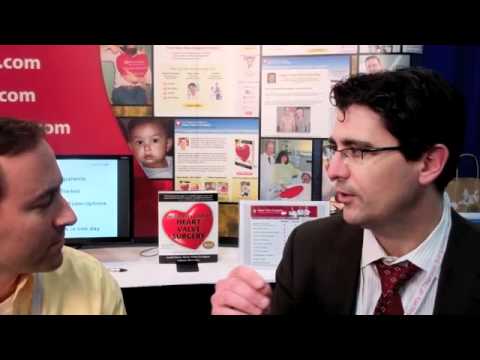
So you know, I recently interviewed Dr. Roselli about the future of heart valve treatment. If you are interested, here are the highlights from that discussion.

Video available online at:
https://www.youtube.com/watch?v=ysZp1jcQlnA
Thanks to Bernard for his question and special thanks to Dr. Eric Roselli for sharing his clinical expertise with our patient and caregiver community.
Keep on tickin!
Adam
Written by Adam Pick
Patient & Website Founder

Written by Adam Pick - Patient & Website Founder
Adam Pick is a heart valve patient and author of The Patient's Guide To Heart Valve Surgery. In 2006, Adam founded HeartValveSurgery.com to educate and empower patients. This award-winning website has helped over 10 million people fight heart valve disease. Adam has been featured by the American Heart Association and Medical News Today.
Comments





Adam's Newest Blogs


New Community Posts
Blog Categories
- Adam's Updates
- Aneurysms
- Aortic Stenosis
- Aortic Valve Repair
- Aortic Valve Replacement
- Atrial Fibrillation
- Before Surgery
- Bicuspid Aortic Valve
- Heart Valve Replacement
- Medical Technology
- Mitral Regurgitation
- Mitral Valve Repair
- Patient Stories
- Pulmonary Valve
- Recovery
- Ross Procedure
- Surgeons & Hospitals
- Tricuspid Valve
Blog Categories
- Adam's Updates
- Aneurysms
- Aortic Stenosis
- Aortic Valve Repair
- Aortic Valve Replacement
- Atrial Fibrillation
- Before Surgery
- Bicuspid Aortic Valve
- Heart Valve Replacement
- Medical Technology
- Mitral Regurgitation
- Mitral Valve Repair
- Patient Stories
- Pulmonary Valve
- Recovery
- Ross Procedure
- Surgeons & Hospitals
- Tricuspid Valve
Blog Categories
- Adam's Updates
- Aneurysms
- Aortic Stenosis
- Aortic Valve Repair
- Aortic Valve Replacement
- Atrial Fibrillation
- Before Surgery
- Bicuspid Aortic Valve
- Heart Valve Replacement
- Medical Technology
- Mitral Regurgitation
- Mitral Valve Repair
- Patient Stories
- Pulmonary Valve
- Recovery
- Ross Procedure
- Surgeons & Hospitals
- Tricuspid Valve
Surgeon Spotlight


Dr. Joel Corvera is a world-renowned heart valve surgeon that has performed thousands of heart valve operations.
The Patient's Guide
This book has helped over 47,000 patients and caregivers from diagnosis to recovery.
New Posts From Our Community

Kevin Mulcahy from
Kingsport, Tennessee
Emotional day as I leave my new home and new friends...
Meet Kevin

Newest Community Post
Kevin Mulcahy from
Kingsport, Tennessee
Emotional day as I leave my new home and new friends...
Meet Kevin
Find Heart Valve Surgeons
Search 1,500 patient-recommended surgeons
Surgeon Spotlight
Dr. Joel Corvera is a world-renowned heart valve surgeon that has performed thousands of heart valve operations.
The Patient's Guide
This book has helped over 47,000 patients and caregivers from diagnosis to recovery.
