

Calcified Aortic Valve Stenosis - What Is It?
According to reports, aortic valve stenosis is relatively common problem effecting 2% of people over the age of 65, 3% of people over the age of 75, and 4% of people over the age of 85. One of the major causes of stenosis is the calcification of the aortic heart valve. This is especially likely to occur in people with a bicuspid aortic valve, but also occurs as a result of age-induced 'wear and tear'.
Typically, aortic stenosis due to calcification of a bicuspid valve occurs in the fourth or fifth decade of life. Whereas, aortic stenosis -- due to calcification -- of a normal valve tends to occur in the seventh or eighth decade of life. To learn more about aortic stenosis, click here.

Of the various forms of aortic stenosis, the calcific type is predominant. Since calcific aortic stenosis shares many pathological features and risk factors with atherosclerosis, and since atherosclerosis may be prevented and/or reversed by cholesterol lowering, there has been interest in attempting to modify the course of calcific aortic stenosis by cholesterol lowering with statin drugs.
Although a number of small, observational studies demonstrated an association between lowered cholesterol and decreased progression, and even regression, of calcific aortic stenosis, a recent, large randomized clinical trial, published in 2005, failed to find any predictable effect of cholesterol lowering on calcific aortic stenosis. However, a 2007 study did demonstrate a slowing of aortic stenosis with the statin... rosuvastatin.
So you know, I suffered from calcified aortic valve stenosis as indicated above. When I reached the age of 33, my bicuspid aortic valve had become severely stenotic. While I was mostly asymptomatic, blood flow through my aortic valve was hindered and my heart had already begun to enlarge (dilate).
Luckily, I caught this severe heart valve disease just before permanent damage was done to my cardiac muscle. I'll never forget what Dr. Vaughn Starnes said to me after my aortic valve replacement. Doctor Starnes said, "Adam - We caught this just in time. The valve was very calcified, very white, very sick!"
I hope that helps explain more about the impact of calcium deposits building up on the aortic valve.
Keep on tickin!
Adam
Written by Adam Pick
Patient & Website Founder

Written by Adam Pick - Patient & Website Founder
Adam Pick is a heart valve patient and author of The Patient's Guide To Heart Valve Surgery. In 2006, Adam founded HeartValveSurgery.com to educate and empower patients. This award-winning website has helped over 10 million people fight heart valve disease. Adam has been featured by the American Heart Association and Medical News Today.
Comments





Adam's Newest Blogs


New Community Posts
Blog Categories
- Adam's Updates
- Aneurysms
- Aortic Stenosis
- Aortic Valve Repair
- Aortic Valve Replacement
- Atrial Fibrillation
- Before Surgery
- Bicuspid Aortic Valve
- Heart Valve Replacement
- Medical Technology
- Mitral Regurgitation
- Mitral Valve Repair
- Patient Stories
- Pulmonary Valve
- Recovery
- Ross Procedure
- Surgeons & Hospitals
- Tricuspid Valve
Blog Categories
- Adam's Updates
- Aneurysms
- Aortic Stenosis
- Aortic Valve Repair
- Aortic Valve Replacement
- Atrial Fibrillation
- Before Surgery
- Bicuspid Aortic Valve
- Heart Valve Replacement
- Medical Technology
- Mitral Regurgitation
- Mitral Valve Repair
- Patient Stories
- Pulmonary Valve
- Recovery
- Ross Procedure
- Surgeons & Hospitals
- Tricuspid Valve
Blog Categories
- Adam's Updates
- Aneurysms
- Aortic Stenosis
- Aortic Valve Repair
- Aortic Valve Replacement
- Atrial Fibrillation
- Before Surgery
- Bicuspid Aortic Valve
- Heart Valve Replacement
- Medical Technology
- Mitral Regurgitation
- Mitral Valve Repair
- Patient Stories
- Pulmonary Valve
- Recovery
- Ross Procedure
- Surgeons & Hospitals
- Tricuspid Valve









The Patient's Guide
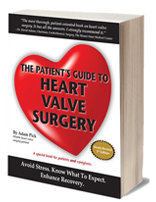
This book has helped over 47,000 patients and caregivers from diagnosis to recovery.
New Posts From Our Community


Zackery Peindl from
Pittsburgh
Hello everyone. Im 30 years old from Pittsburgh and on Thursday...
Meet Zackery
Clifford Fava from
Milford, Connecticut
I am having a cardioversion on October 22. Just a little...
Meet CliffordNewest Community Post

Find Heart Valve Surgeons
Search 1,500 patient-recommended surgeons
The Patient's Guide
This book has helped over 47,000 patients and caregivers from diagnosis to recovery.
