

The Lifetime Management of Congenital Heart Valve Disease
Written By: Allison DeMajistre, BSN, RN, CCRN
Medical Expert: Stephen Nageotte, MD, Interventional Cardiologist, Cedars-Sinai, Los Angeles, California
Reviewed By: Adam Pick, Patient Advocate, Author & Website Founder
Published: July 30, 2026
Families with children living with congenital heart valve disease quickly learn about the commitment it takes for lifelong management. Additionally, as those children grow and enter adulthood, they understand that although heart valve disease may not hinder them from living a normal life, it hasn’t disappeared and could need further intervention sometime in the future. Having the guidance of an experienced medical team from the time of initial diagnosis is the key to successful lifetime management.
To help families learn more about successfully managing congenital heart valve disease, we spoke with Dr. Stephen Nageotte, a leading interventional cardiologist at the Guerin Family Congenital Heart Program at Cedars-Sinai Medical Center in Los Angeles, California.
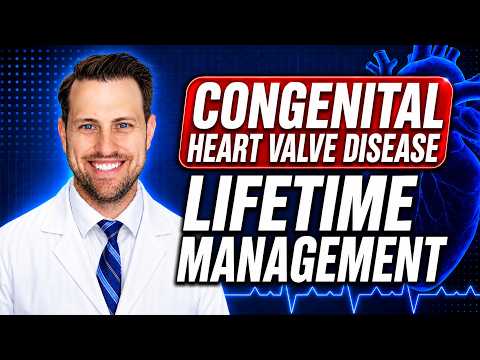

Video available online at:
https://www.youtube.com/watch?v=NwPICNddc4w
Key Facts About Managing Congenital Heart Valve Disease Over a Lifetime
Here are the key insights shared by Dr. Nageotte:
Choosing the right heart team is integral to proper guidance over time. “I think one of the things to consider is just how complex these lesions are,” said Dr. Nageotte. “When we’re talking about congenital heart disease, there’s incredible variability in terms of disease progression and when the disease presents, whether it be in utero or later in life.” Dr. Nageotte explained that one of the most important things patients and their families can do is have a heart team that they feel comfortable with, so they understand what is next as they progress through treatment.
Who is part of the multidisciplinary heart team? “Within pediatric cardiology, there is not just the pediatric cardiologist,” Dr. Nageotte said. “There are fetal cardiologists, interventional cardiologists, and imaging specialists. Apart from that, we have congenital cardiothoracic surgeons and congenital anesthesia. We also have a Pediatric Intensive Care Unit (PICU) team of intensivists and the nursing staff, which is incredible. We include the families in the team as well.”
Once patients and their families find an excellent multidisciplinary heart team, what comes next? Dr. Nageotte explained that the initial decision about the best strategy for the first surgery or transcatheter intervention is extremely important for long-term management. “With these valves, there will inevitably be deterioration, and patients will most likely need to have more than one intervention.” He said that, rather than thinking about the easiest way out of the initial situation, they will need to make decisions that lead to a lifetime of success.
While developing a management and intervention plan, what should patients know about yearly surveillance? “It is absolutely not a one-and-done deal where we put the valve in, say goodbye, and that’s it,” said Dr. Nageotte. “Patients will need to follow up with us, at least yearly, to keep an eye on the valve with echocardiograms. We also conduct more advanced studies, including MRI, exercise testing, and others, to evaluate the electrical system of the heart to decide if and when a patient needs a repeat intervention or valve replacement.”
Thanks Dr. Nageotte and Cedars-Sinai Medical Center!
On behalf of all the patients in our community, thank you, Dr. Stephen Nageotte, for everything you and your team are doing at the Guerin Family Congenital Heart Program at Cedars-Sinai Medical Center in Los Angeles, California!
Related links:
Patient Webinar: The Lifetime Management of Congenital Pulmonary Valve Disease
Free Ebook: The Lifetime Management of Congenital Pulmonary Disease
Keep on tickin,
Adam
P.S. For the deaf and hard-of-hearing members of our patient community, we have provided a written transcript of our interview with Dr. Nageotte below.
Written by Adam Pick
Patient & Website Founder

Written by Adam Pick - Patient & Website Founder
Adam Pick is a heart valve patient and author of The Patient's Guide To Heart Valve Surgery. In 2006, Adam founded HeartValveSurgery.com to educate and empower patients. This award-winning website has helped over 10 million people fight heart valve disease. Adam has been featured by the American Heart Association and Medical News Today.
Video Transcript:
Adam Pick: Hi everybody, it's Adam with HeartValveSurgery.com. And we're in Los Angeles, California at Cedars-Sinai Medical Center. I'm thrilled to be joined by Dr. Steve Nageotte, who is a leading interventional cardiologist at the Guerin Family Congenital Heart Program here at Cedars. Dr. Nageotte, it is great to see you again, and thanks for being with me today.
Dr. Stephen Nageotte: Thank you so much for having me.
Adam Pick: As a congenital heart valve disease patient, I'm really excited for this conversation. Because it's all about the lifetime management of this disease and for the patients and the parents of the patients. What can you share with them that you've learned over your incredible career?
Dr. Stephen Nageotte: I think one of the things to consider is just how complex these lesions are. When we're talking about congenital heart disease, there's incredible variability in terms of disease progression and when the disease presents, whether it be in utero or later in life.
One of the most important things that you can do as a patient and a family is set yourself up with a heart team that you feel comfortable understanding what is next for you on the docket.
Adam Pick: When you say a heart team, you mean a multidisciplinary team is, is that correct? And who would be a part of that team?
Dr. Stephen Nageotte: Yes, it's not just the pediatric cardiologist, but within pediatric cardiology even, there's fetal cardiologists, we have the interventional cardiologists and we have the imaging specialists. Apart from that, we also have the congenital cardiothoracic surgeons, congenital anesthesia, we have a PICU team of intensivists and the nursing staff that is incredible and within the team, we include the families themselves as well.
Adam Pick: So Dr. Nageotte, I've gone ahead. I've found an excellent team to help me. What comes next?
Dr. Stephen Nageotte: With you and the team, one of the most important things you can do is make the right initial decision in terms of what is the best strategy for that first surgery or transcatheter intervention. To set yourself up for a lifetime of success because inevitably with these valves, there will be deterioration. You will need to have more than likely, more than one intervention. So not just thinking about what's the easiest way to get out of this initial situation, but how am I going to have a lifetime of success?
Adam Pick: Dr. Nageotte, you're putting together that plan for the management of those interventions, but what about the yearly surveillance?
Dr. Stephen Nageotte: Yes, it is absolutely not a one and done. We put the valve in, we say goodbye and that's it. This is something that you're going to need to follow up with us, at least yearly, to keep an eye on that valve with echocardiograms. But then there's other advanced studies that we do as well, including an MRI, exercise testing, as well as sometimes some other testing that might be looking at the electrical system of your heart as well. Trying to find when is the right time, if you may or may not need a repeat intervention or a repeat valve replacement.
Adam Pick: The fantastic advice, Dr. Nageotte, and on behalf of the patients in our community, the parents, thanks to you for everything you and your team are doing here at the Guerin Family Congenital Heart Program at Cedar-Sinai.
Dr. Stephen Nageotte: Thank you so much. It's really a pleasure.
Upcoming Surgeries










Adam's Video Library

Learn about heart valve surgery and patient success stories at Adam's video library.
