
The Future of Aortic Valve Replacement Durability with Dr. Eric Roselli
Written By: Allison DeMajistre, BSN, RN, CCRN
Medical Expert: Eric Roselli, MD, Chief of Adult Cardiac Surgery, Cleveland Clinic, Cleveland, Ohio
Reviewed By: Adam Pick, Patient Advocate, Author & Website Founder
Published: August 6, 2026
Durability is a top priority for young patients with aortic disease when choosing a valve replacement. Mechanical valves are designed to not wear out. The trade-off is lifelong anticoagulation medication, which is why most patients choose a tissue valve, even though it will likely wear out within 10-20 years and require a reoperation, either with a surgical or a transcatheter procedure. For many patients, avoiding blood thinners is worth that possibility. But what if a tissue valve could last as long as a mechanical valve? That would transform heart valve replacement for patients and surgeons alike.
We received an excellent question from Ben, who wanted to know more about the future of heart valve durability. Ben asked, “What is the latest research in innovations for heart valve replacement devices specific to durability? Will there ever be a tissue or material valve that does not wear out in 10 to 15 years?”
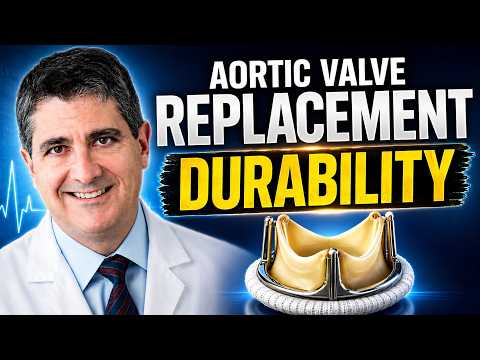
To answer Ben's question, we met with Dr. Eric Roselli, Chief of Adult Cardiac Surgery at the Cleveland Clinic in Cleveland, Ohio, to answer Ben’s question. Dr. Roselli has performed over 5,000 cardiac surgeries, including 3,000 heart valve procedures, and specializes in complex aortic valve operations.

Video available online at:
https://www.youtube.com/watch?v=f8n7r_p8BGA
Facts About the Future of Aortic Valve Replacement Durability
Here are the key insights shared by Dr. Roselli:
The current state of valve replacement devices. Dr. Roselli said, “The [mechanical valve] material we have right now is titanium and pyrolytic carbon, and those valves don’t wear out. We will continue to see, I think, some more advances in the bioengineering space.” He explained that, regarding the tissue valves, the bovine pericardium or porcine leaflet is treated with chemicals and fixed like tanned leather, so it doesn’t break down. “That technology has been around since the mid-1980's, and over the subsequent decades, they’ve realized that there are other chemical treatments they can use to make the tissue more durable,” he said.
Scientists are exploring whether modifying the immune system response will extend durability. “I think we’ll soon see some changes in how they look at immune-mediated interactions with the body,” said Dr. Roselli. “It’s what I call the patient-prosthesis interface.” He explained that researchers are now creating living tissue that can be populated with a patient’s own cells. “Then forget the immune system,” he said. “The body isn’t seeing that tissue as abnormal. Although the technology in that space is advancing, it is still way too slow for a patient with valve disease.”
There is also research into using more advanced materials for the devices. “The material science is also getting smarter,” said Dr. Roselli. “We’re seeing changes in how materials are designed, not necessarily smart materials but things that are designed with the same properties as our native tissue. Looking under a microscope, they’ve found smaller molecules doing different things in various layers. Unfortunately, the science is probably going to take a while. Although they can test materials in a lab or even in animal models, until it goes into a human being and we see what happens, I have to remain skeptical.”
Right now, the focus remains on heart health and safety. “There are some commercial companies that are working and testing various things. They celebrate one-year or three-year outcomes, but Ben asked the right question: ‘What’s happening after the first decade?’ That’s going to take time, human testing, and a lot of money to study. In the meantime, when a valve wears out, we can do it again, and we can do it safely. So, if you’re hanging on to a valve, remember: it’s all about your heart and overall health, and we’re getting better in all those ways as well.”
Thanks Dr. Roselli and the Cleveland Clinic!
On behalf of all the patients in our community, thank you, Dr. Eric Roselli, for everything you and your team are doing at the Cleveland Clinic in Cleveland, Ohio!
Related links:
See Dr. Roselli’s Interactive Surgeon Profile with 30+ Patient Reviews
Advanced Surgical Techniques for Aortic Valve Patients with Dr. Eric Roselli
Keep on tickin,
Adam
P.S. For the deaf and hard-of-hearing members of our patient community, we have provided a written transcript of our interview with Dr. Roselli below.
Written by Adam Pick
Patient & Website Founder

Written by Adam Pick - Patient & Website Founder
Adam Pick is a heart valve patient and author of The Patient's Guide To Heart Valve Surgery. In 2006, Adam founded HeartValveSurgery.com to educate and empower patients. This award-winning website has helped over 10 million people fight heart valve disease. Adam has been featured by the American Heart Association and Medical News Today.
Video Transcript:
Adam Pick: Hi, everybody. It's Adam with HeartValveSurgery.com and we're at the American Association for Thoracic Surgery meeting in Chicago, Illinois. I'm thrilled to be joined by Dr. Eric Roselli, who is the chief of adult cardiac surgery at the Cleveland Clinic in Cleveland, Ohio. Dr. Roselli, it's great to see you again. Thanks for being with me.
Dr. Eric Roselli: Great to see you Adam.
Adam Pick: Yeah, so AATS, a lot of great stuff happening here. Research, presentations, talks. We're also getting questions from the patients in our community.
Dr. Eric Roselli: Love it.
Adam Pick: This one comes in for you and your specialty in aortic valve disease from Ben. He asks, "What is the latest research in innovations for heart valve replacement devices specific to durability? Will there ever be a tissue or material valve that does not wear out in 10 to 15 years?"
Dr. Eric Roselli: Well, the material we have right now is titanium and pyrolytic carbon. Those valves don't wear out. We will continue to see, I think, some more advances in the bioengineering space.
So, we tan that piece of leather, right? That bovine pericardium or that, that pig leaflet. You treat it with chemicals. You fixate it like a tan piece of leather so it doesn't break down. Over the subsequent decades, since that technology has been around in the mid-1980s, they've realized there's other little chemical treatments and things that they can do to make those tissues more durable.
I think we're going to see some changes soon where they're going to be looking at interacting with some of the, immune-mediated interactions with the body, what I call the, the patient-prosthesis interface, right? So we put this thing in you, how does your body interact with it? So the immune space has been one area that hasn't been treated.
The other stuff like taking a negatively charged phosphate off so calcium doesn't bind to it, that's chemistry, but now they're kind of really getting into the immune space, and I think that's going to be really cool, and we'll see more there. We're starting to see with tissue engineering people creating new tissues that are living, that hopefully will get populated with your own cells.
Then forget the immune system.
Your body's not seeing it as abnormal. Um, there's some cool technology in that space that is making progress, but to a patient with valve disease, the progress is way too slow. It's not right around the corner, but it's very cool, and it's coming fast, and things are moving fast.
The material science is also getting smarter. We're seeing microstructure changes in kind of the material science space -- not really like smart materials, but things that are designed with some of the same sort of material properties like our native tissues are.
When you look under a microscope, you realize that, uh, you know, at various layers, uh, the, the smaller molecules are doing different things, and I think they're starting to make some materials like that. Um, I, I'm, I'm afraid that's probably going to take a while, and even though you can do some really cool testing with materials in a lab or even in an animal model, until you put it in human beings and see what happens, um, I have to be skeptical because we've looked at some of these things.
I know there's a couple commercial companies that are working on some things and testing some things and, and they celebrate their one-year outcomes and their three-year outcomes, but as, uh, uh, was it, was it Ben? Mm-hmm. As Ben asked, Ben, you asked the right question. You said, "What's happening after the first decade?"
That's going to take time and human beings and a lot of money to study, and so, um, we'll see. But there's lots of effort, and, uh, in the meantime, uh, when a valve wears out, we can do it again. We can do it safely. So if you're hanging on to a valve, remember it's all about your heart health and the rest of your health, and we're getting better in that, in, in all those ways as well.
Adam Pick: Yeah, so Ben, fantastic question. Dr. Roselli, fantastic response. Great seeing you as always, my friend.
Dr. Eric Roselli: Thanks, man.
Adam Pick: Keep up the great work at the Cleveland Clinic.
Dr. Eric Roselli: You too.
Upcoming Surgeries


Surgeon Spotlight


Dr. Joel Corvera is a world-renowned heart valve surgeon that has performed thousands of heart valve operations.