

 Uploading your photo!
Please wait a minute!
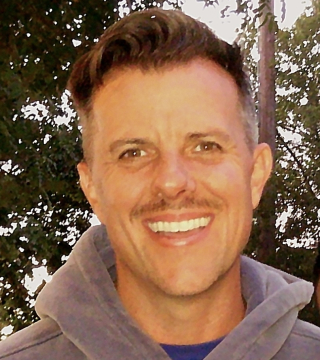

Will's Profile
Diagnosis: Aortic Regurgitation, Bicuspid Aortic Valve, Aortic Aneurysm
Member Since: September 29, 2026
Member Since: September 29, 2026
Send Will a GuestbookAbout Me
About four years ago, I went in for a routine wellness visit and happened to mention a problem I had with my eye. My doctor sent me to an eye doctor, said my eye was fine. But, just to be safe, they did a CT scan of my head.
That scan unexpectedly found something completely unrelated: my ascending aorta was enlarged.
They discovered that I also had a leak in my aortic valve.
I felt completely fine and had no idea anything was wrong with my heart.
So for the next several years, we simply kept an eye on things with regular CT scans and echocardiograms (every 6 months).
For quite a while, the size of my aorta stayed relatively stable. The measurements have been around 4.7–4.8 cm. My aortic root is also enlarged, measuring around 4.3 cm.
The bigger change has been with my aortic valve. In May 2026, an echocardiogram showed that the valve leak had progressed to severe (3+) aortic regurgitation. Further testing with a TEE revealed I was born with a bicuspid aortic valve, meaning my valve developed with two leaflets instead of the usual three and over time has caused this leak.
Even though I still feel well and haven't had significant symptoms, my heart has been working harder over time to compensate for the leaking valve. As a result, the main pumping chamber of my heart has enlarged. My left ventricle now measures about 6.55 cm, which is one of the reasons my doctors are recommending surgery now rather than continuing to watch it.
I first met with a cardiac surgeon in Sacramento, who recommended replacing the valve along with the enlarged portions of my aorta.
But because this is a big decision, I wanted to get additional opinions. I eventually met with the team at Cedars-Sinai in Los Angeles, including Dr. Pedro Catarino and Dr. Dominick Megna. They believe there is a good possibility that they can provide a longterm durable repair of my own valve rather than replace it.
The plan is to perform a valve-sparing David procedure, replacing the enlarged aortic root and ascending aorta while attempting to preserve and repair my own valve.
There is also a backup plan. Once they are actually in surgery, they will be able to see the valve much more clearly and determine whether it looks like a repair will be durable.
If they look at it initially and don't think a durable repair is possible, they may switch to a Ross procedure. If they attempt the repair but, after completing it, determine that the repair isn't likely to hold up well long-term, they would replace the valve with a biological valve instead.
I also got a second opinion from Stanford, and they described a very similar approach: try to repair the valve if they believe they can make it durable, but don't settle for a repair that isn't expected to last.
So after four years of watching, testing, second opinions and trying to understand exactly what is going on, we're finally at the point where surgery is approaching.
It's still a little surreal because I feel healthy and normal, but we've learned that my heart has been quietly working much harder than it should.
We're praying and hoping for the best possible outcome and especially hoping they can successfully repair my own valve!
-
 I am from: La Habra, California, United States
-
 My surgery date is: October 21, 2026
-
 I was diagnosed with: Aortic Regurgitation, Bicuspid Aortic Valve, Aortic Aneurysm
-
 My surgery was: Aortic Valve Repair, Aortic Aneurysm Replacement
-
 My surgeon is: Dr. Pedro Catarino
-
 My hospital is: Smidt Heart Institute at Cedars-Sinai



Surgeon Spotlight


Dr. Joel Corvera is a world-renowned heart valve surgeon that has performed thousands of heart valve operations.
