

Ross Procedure: Innovation and Outcomes with Dr. Ismail El-Hamamsy
Written By: Allison DeMajistre, BSN, RN, CCRN
Medical Expert: Ismail El-Hamamsy, MD, Director of Aortic Surgery, Mount Sinai Health, New York, New York
Reviewed By: Adam Pick, Patient Advocate, Author & Website Founder
Published: August 18, 2026
The Ross Procedure is a specialized surgery that replaces a patient’s damaged aortic valve with their own pulmonary valve. A donated valve is then used in place of the pulmonary valve. Many cardiovascular surgeons believe it’s the best operation for treating aortic stenosis in young and middle-aged adults because of its long-term durability and ability to restore normal quality of life.
Although the first Ross Procedure dates to 1967, it is not commonly performed due to its complexity, and its success is likely directly related to the surgeon's expertise and experience. Surgeons who regularly perform the Ross Procedure are affiliated with high-volume centers and have accumulated years of knowledge, ultimately helping them improve the surgical process to achieve overwhelmingly positive patient outcomes.
To learn more about the refinements and innovations in the Ross Procedure today, Adam Pick, founder of HeartValveSurgery.com and a former Ross Procedure patient, spoke with Dr. Ismail El-Hamamsy, the Director of Aortic Surgery at Mount Sinai Health in New York City. During the past 15 years, Dr. El-Hamamsy has performed over 600 Ross Procedures, drawing on unique expertise that has led to improved research and excellent results for his patients.
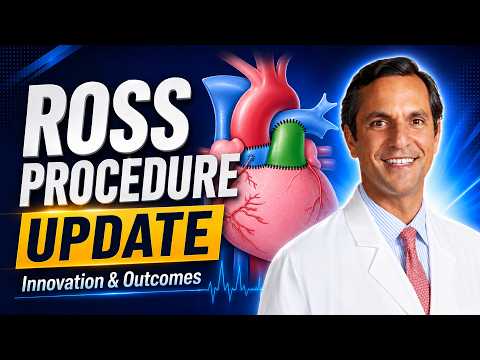

Video available online at:
https://www.youtube.com/watch?v=44SvooOokSI
The Latest Innovations and Outcomes in the Ross Procedure
Here are the key insights shared by Dr. El-Hamamsy:
Improvements in the Ross Procedure have enhanced its safety and durability. “This has been a lifetime of work,” said Dr. El-Hamamsy. “The last 15 years have taught us a lot about the Ross, and I think we’ve really improved things to the level that we’re confident that the operation is very mature in the sense that it’s very safe, even in patients who need it as a redo operation. More importantly, the long-term durability of the operation is much more predictable now. We also have a much clearer understanding of the key technical principles to make the operation durable for the pulmonary valve that goes in the aortic position, and the technology has also evolved on the donor valve side in a way that we can also make those much more durable as well.”
The focus on medical management of Ross Procedure patients. Dr. El-Hamamsy explained that a successful Ross operation is not just about the technical aspects. “We’ve found that medical management after the operation is incredibly important. One of the things we’ve now clearly established is that blood pressure control for the first year is a critical element in ensuring that the operation is durable in the long term-not just the first couple of days or the first week but for the first year,” he stressed. “We try to keep the systolic pressures below about 110 to 115, and I’ll tell all your patients this is something they need to be working on with their doctor, their surgeons, or with their cardiologist. They need to leave with a blood pressure cuff at home. One cannot overemphasize the importance of blood pressure management.”
The current outstanding Ross Procedure outcomes. “We have a study coming out in the Journal of the American College of Cardiology looking at our inaugural 455 cases I’ve done in Canada before moving to New York. The unique thing about that patient population is that, from day one, we’ve been prospectively following al. those patients annually with clinical and echocardiographic follow-up with 98 percent completeness. This is very granular data, and the results are very exciting and encouraging for patients. The cumulative incidence of any reintervention on either the donor valve side or the aortic side, whether open or catheter-based, is 3% at 12 years. These results are unmatched in terms of effectiveness for patients, particularly in that average age group of around 48 years.”
A Ross Procedure renaissance. Dr. El-Hamamsy said, “To have an operation that not only restores survival versus the general population, but where the incidence of any reintervention is that low, is incredibly exciting for patients. So, I think that we’re observing a renaissance for the Ross Procedure that’s not just based on theory but etched in practice and actual data. It’s very, very encouraging for all our patients.”
Thanks Dr. El-Hamamsy and Mount Sinai Health!
On behalf of all the patients in our community, thank you, Dr. Ismail El-Hamamsy, for everything you and your team are doing at Mount Sinai Health in New York City!
Related links:
Ask Dr. Ismail El-Hamamsy: The 4 Must-Know Facts About the Ross Procedure
Patient Research: Ross Procedure Survival Advantages with Dr. El-Hamamsy
See Dr. Ismail El-Hamamsy's Interactive Surgeon Profile with 50+ Patient Reviews
Keep on tickin,
Adam
P.S. For the deaf and hard-of-hearing members of our patient community, we have provided a written transcript of our interview with Dr. El-Hamamsy below.
Written by Adam Pick
Patient & Website Founder

Written by Adam Pick - Patient & Website Founder
Adam Pick is a heart valve patient and author of The Patient's Guide To Heart Valve Surgery. In 2006, Adam founded HeartValveSurgery.com to educate and empower patients. This award-winning website has helped over 10 million people fight heart valve disease. Adam has been featured by the American Heart Association and Medical News Today.
Video Transcript:
Adam Pick: Hi, everybody, it's Adam with HeartValveSurgery.com, and we're at the American Association for Thoracic Surgery Conference in Chicago, Illinois. I'm thrilled to be joined by Dr. Ismael El-Hamamsy, who's the Director of Aortic Surgery at Mount Sinai Health in New York City, New York. Dr. El-Hamamsy, it is great to see you again, and thanks for being with me today.
Dr. El-Hamamsy: Adam, always good to see you. Yeah, so we were just talking about here at AATS, there's a lot of research and publications coming out. There's also discussions about innovations in the field of heart valve therapy.
Your specialty in the Ross procedure, I understand you have been refining the technique, innovating. Can you share with all the patients in our community what you've been working on?
Dr. El-Hamamsy: Well, this has been a, uh, lifetime of work really. The last 15 years have taught us a lot with regards to the Ross, and I think we've really improved things to a level that, you know, we- we're pretty confident that the operation now is a very mature one in the sense that not only is it very safe, even in patients who need it as a redo operations, or as a redo operation or in other contexts, but more importantly, the long-term durability of the operation is much more predictable now.
We have a much clearer understanding of the key technical principles to make the operation durable for the pulmonary valve that goes in the aortic position, and the technology has also evolved on the donor valve side in a way that we can also make these much more durable. One of the things that's really come up that is, that is incredibly important is that have a successful Ross operation, it's not just about the technical bits of the operation, it's also the medical management after the operation.
And one of the things that we've, now clearly, established is that blood pressure control for the first year after the operation, not just the first couple of days or the first week, but really for the first year, is a critical, uh, element in ensuring that the operation is durable in the long term.
So we try to keep the systolic pressures below about 110 to 115, and I'll tell all your patients this is something that they need to be working on with their doctor, with their surgeons or with their cardiologist. They need to leave with a blood pressure cuff at home. One cannot, uh, overemphasize the importance of blood pressure management.
Now, how does that translate into outcomes? Well, it's actually quite timely that we're having this conversation. We have a study that will be coming out in the Journal of the American College of Cardiology, looking at our inaugural 455 cases that I'd done in, uh, Canada before moving to New York.
And what is unique about that patient population is that from day one we've been prospectively following all these patients on an annual basis with clinical and echocardiographic follow-up. So we have 98% completeness of follow-up annually for this, so very, very granular data.
And I don't know if I can share the data yet, but I will share it with you, Adam, because it's so exciting actually. We're very encouraged for patients. At 12 years, the cumulative incidence of any reintervention, be it on the donor side or the aortic side, be it open or catheter-based, is 3%. 3% at 12 years, which is unmatched in terms of, um, effectiveness for patients, particularly in that age group.
The average age was around 48. And so to have an operation that not only restores survival versus the general population, but where the incidence of any reintervention is that low, is incredibly, um, exciting for patients. So I think that the Ross is really, you know, the renaissance that we're observing for the Ross is not only based on theory, but it's really now, you know, etched in practice and in, in actual data that's very, very encouraging for all our patients.
Adam Pick: Well, as a Ross procedure patient myself, I cannot thank you for having the commitment, the dedication, and the team to follow the patients, learn, and continue to modify and enhance this procedure. And on behalf of all of them in our community, Dr. El-Hamamsy, thanks for being with me today.
Dr. El-Hamamsy: Thank you, Adam.
Upcoming Surgeries











Surgeon Spotlight

Dr. Joel Corvera is a world-renowned heart valve surgeon that has performed thousands of heart valve operations.
