Mitral Valve Resectional Technique: What Should Patients Know?
Written By: Allison DeMajistre, BSN, RN, CCRN
Medical Expert: Marc Gillinov, MD, Chairman of Cardiac Surgery, Cleveland Clinic, Cleveland, Ohio
Reviewed By: Adam Pick, Patient Advocate, Author & Website Founder
Published: March 30, 2026
Mitral valve prolapse is a common heart valve problem in which the leaflets of the valve become floppy and don’t close properly. This causes blood to leak backward inside the heart, also known as mitral regurgitation. Although the condition affects millions of people around the world, mitral regurgitation is often so minor that the condition goes completely unnoticed, sometimes for an entire lifetime.
However, if the prolapse becomes more pronounced, it can cause increased leakage which may cause patient symptoms like shortness of breath, fatigue, chest pain and pre-mature death. A mitral valve repair surgery may be required to address these symptoms and risks. There are several methods for repairing the mitral valve, depending on the extent of prolapse or the location of the structural problem. A mitral valve resection, accompanied by annuloplasty, is often the best option for repair.
We recently received a question about a mitral valve resection from a patient in our community who asked, “What is the mitral valve resection technique and which patients is the procedure best for?” We were thrilled to get the answer from Dr. Marc Gillinov, Chairman of Cardiac Surgery at the Cleveland Clinic in Cleveland, Ohio, and an expert on the most effective methods of mitral valve repair.
Facts About Mitral Valve Resection
Here are the key insights shared by Dr. Gillinov:
- Comparing the mitral valve to a parachute. “That’s a good question,” said Dr. Gillinov. “When people have mitral valve prolapse and the valve leaks, what happens is that a portion of the valve is not held to its normal position. Imagine someone floating down on a parachute, and if the parachute is working, that’s great. But now think what if one of those struts breaks? Those struts are like the cords to your valve, and if the canopy flails in the breeze, it’s a disaster for your valve. You’ve got about 30 of these struts or cords. If one of them breaks or becomes too long, only that part of the valve is broken.”
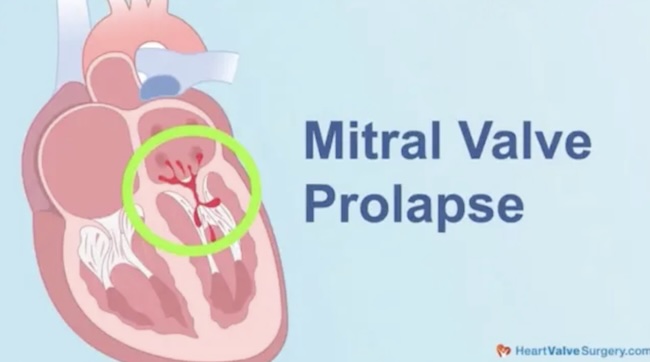
- Fixing the valve is like repairing a parachute. Dr. Gillinov continued, “So, how can we fix that? One way is if we go back to that parachute, and I cut out a triangle, like a piece of pie, and I put the valve or the parachute back together after I cut out that triangle, I will still have the circle of the parachute or the shape of the valve, but I have resected or cut out the piece that was attached to that broken strut or cord. You can cut this piece out with its bad cord as a triangle or as a rectangle, but most commonly it’s a triangle, so it’s more like a Thanksgiving pumpkin pie. Someone cut out a piece and put the pie back together, and the pie is whole again, and your valve is fixed.”
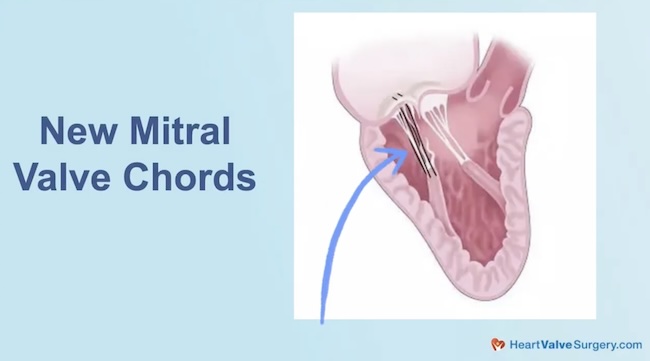
- Can the cords be replaced? “Yes, we can replace the cords,” said Dr. Gillinov. Each part of your mitral valve is a bit like a parachute, and if one of those cords breaks, rather than cutting out the piece of the valve with the bad cord, I can make new cords. The new cords are made from Gore-Tex, which is very strong, like a fishing line. If I re-operate on someone years later who had one of these Gore-Tex cords implanted, it often appears just like a native cord. There are two ways to fix a valve with a broken cord. I can cut out the damaged part like a piece of pie or make a new cord out of Gore-Tex.”
Thanks Dr. Gillinov and Cleveland Clinic!
On behalf of all the patients in our community, thank you, Dr. Marc Gillinov, for everything you and your team are doing at the Cleveland Clinic in Cleveland, Ohio!
Related Links:
- See 100 Patient Reviews for Dr. Marc Gillinov
- Watch “3 Questions to Ask Before Mitral Valve Surgery” with Dr. Gillinov
Keep on tickin,
Adam
P.S. For the deaf and hard-of-hearing members of our patient community, we have provided a written transcript of our interview with Dr. Gillinov below.
Written by Adam Pick
- Patient & Website Founder

Video Transcript:
Adam Pick: Hi everybody. It’s Adam with HeartValveSurgery.com, and we are at the Endoscopic Cardiac Surgeons Club meeting in northern Kentucky. I am thrilled to be joined by Dr. Mark Gillinov, who is the Chairman of Cardiac Surgery at the Cleveland Clinic in Cleveland, Ohio. Dr. Gillinov, it is great to see you again and thanks for being with me today.
Dr. Gillinov: My pleasure.
Adam Pick: We’re here at this meeting learning a lot of information, seeing some great talks. I know you just gave a talk all about mitral valve surgery. This question just came in from a patient that we want to ask you, which is, “What is the mitral valve resectional technique and which patients is the procedure best for?”
Dr. Gillinov: That’s a good question. When people have mitral valve prolapse and the valve leaks, what happens is a portion of the valve is not held to its normal position. Imagine someone floating down on a parachute, and if the parachute is working, that’s great. But now think what if one of those struts breaks?
Those struts are like the cords to your valve. So, imagine the parachute a strut breaks and that part of the canopy of the parachute, which is like your valve. That part of the canopy flails in the breeze, and it’s a disaster with your valve. You’ve got about 30 of these struts or cords. If one of them breaks or becomes too long, only that part of the valve is broken.
So how can we fix that? One way is go back to that parachute, and if I cut out a triangle, like a piece of pie. And I put the valve or the parachute back together after I cut out that triangle. I still have the circle of the parachute or the shape of the valve, but I have resected or cut out the piece that was attached to that broken strutter cord.
And you can cut this piece out with its bad cord as a triangle or as a rectangle, but most commonly it’s a triangle, so it’s more like it’s thanksgiving. There’s a pumpkin pie. Someone cut out a piece of pie, like a triangle, put the pie back together, and your pie is back whole, and your valve is fixed.
Adam Pick: I love the analogy. Very helpful. And I’m guessing if you’re a patient and you’ve never heard this analogy before and you’re hearing about parachutes and struts, can you talk a little bit and tell the patients what those cords are and can you ever replace them?
Dr. Gillinov: Yes, you can replace them. Each part of your mitral valve is a bit like a parachute, and if one of those chords breaks.
Rather than cut out the piece of the valve with the bad cord, I can make new cords. The new cords are made out of Gore-Tex, which is very strong like fishing line. And, if you re-operate on someone years later who had one of these Gore-Tex cords put in, it often looks just like a native cord. So, two ways to fix that valve with the broken cord.
Cut out that piece like a piece of pie. Or make a new quarter strut out of cortex.
Adam Pick: Fascinating. And I cannot thank you enough, Dr. Gillinov, on behalf of the patients in our community, patients all over the world, for all the great and wonderful things you are doing and your team at the Cleveland Clinic.
Thanks so much for being with me today.
Dr. Gillinov: My pleasure.