Surgeon Q&A: Minimally-Invasive Congenital Heart Valve Surgery
Written By: Allison DeMajistre, BSN, RN, CCRN
Medical Expert: Chris Malaisrie, MD, Cardiac Surgeon, Northwestern Medicine, Chicago, Illinois
Reviewed By: Adam Pick, Patient Advocate, Author & Website Founder
Published: April 21, 2026
Bicuspid aortic valve and mitral prolapse are two of the most common congenital heart valve problems. Many times, these valve defects go undiagnosed until adulthood, when symptoms arise. Other times, congenital heart problems require immediate surgery after birth and several more interventions as the child grows. A common question we get from both adult patients and parents who have children with congenital heart disease is, “Can minimally-invasive techniques be used to treat patients with congenital heart valve disease?”
Adam Pick, the founder of HeartValveSurgery.com, recently attended the Endoscopic Surgeons Club Meeting in Cincinnati, Ohio, where he met with Dr. Chris Malaisrie to learn more about minimally-invasive options for congenital heart valve disease patients. Dr. Malaisrie is heart valve expert with a specialty in minimally-invasive surgery at Northwestern Medicine in Chicago, Illinois.
Facts About Minimally Invasive Techniques for Congenital Heart Valve Disease
Here are the key insights shared by Dr. Malaisrie:
- The two common congenital disorders may be asymptomatic, but should not be ignored. “Minimally invasive heart surgery can be an option for patients with congenital heart disease,” said Dr. Malaisrie. “Fortunately, two of the most common congenital heart defects are benign for a very long time. I’m talking about bicuspid aortic valve and mitral valve prolapse. You’re born with these sorts of things, and they can get worse over time and occasionally need surgery later. So, the first thing I’d like to emphasize is routine follow-up and paying attention to disease that is severe even without symptoms.”

- Interventions for bicuspid aortic valve. Dr. Malaisrie said, “There are multiple ways to fix bicuspid aortic valve. It depends on how the bicuspid valve gets diseased. It could either leak or it could become too tight. When it’s too tight, we’re talking about replacing the aortic valve. When the valve is leaky, we can repair it.” Dr. Malaisrie explained that patients under 50 years old are well within guidelines to receive a mechanical valve for a straightforward aortic valve replacement. “I think a minimally invasive, non-sternotomy approach is an excellent option. We can replace the valve between the ribs on the right side with direct vision, endoscopy, or robotics. The patient can achieve a very quick recovery after a minimally invasive aortic valve replacement.”
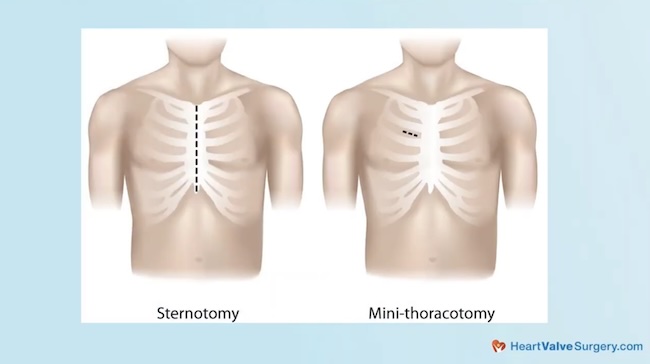
- A minimally invasive option for mitral valve prolapse. “When mitral valve prolapse progresses to the severe stage, valve repair is an excellent option. This can also be performed through small incisions between the ribs on the right side using endoscopy or robotic approaches, again achieving a very quick recovery for the patients.”
- Recommendations for patients who have very complex cases of congenital heart disease with related valvular disorders. “Congenital heart disease can range from very simple things, such as atrial septal defects (ASDs) or ventricular septal defects (VSDs), which are small windows within the heart that can cause shunting. Shunting can then cause short-circuiting of blood in the heart. These can both be easily repaired with minimally invasive approaches and are usually taken care of while the patient is a child or an infant.” Dr. Malaisrie explained that as patients with more complex cases progress to adulthood, whether they’ve had treatment for their adult congenital heart disease or not, they should find a center that specializes in adult congenital heart disease. The center should have a cardiologist, an interventional cardiologist who can offer percutaneous options, and a surgeon who is experienced in both open and minimally invasive approaches, providing various treatment options for patients with very complex cases. Adam Pick commented, “I can’t thank you enough for shining the light on the idea of having a multidisciplinary team along with the lifetime management of a congenital heart condition.”
Thanks Dr. Malaisrie and Northwestern Medicine!
On behalf of all the patients in our community, thank you, Dr. Chris Malaisrie, for everything you and your team are doing at Northwestern Medicine in Chicago, Illinois!
Related links:
- Check out Dr. Malaisrie’s Interactive Surgeon Profile
- Explore Northwestern Medicine’s Heart Valve Microsite
Keep on tickin,
Adam
P.S. For the deaf and hard-of-hearing members of our patient community, we have provided a written transcript of our interview with Dr. Malaisrie below.
Written by Adam Pick
- Patient & Website Founder

Video Transcript:
Adam Pick: Hi everybody it’s Adam with heart valve surgery.com, and we are at the Endoscopic Cardiac Surgeon’s Club in Cincinnati. I’m thrilled to be joined by Dr. Chris Malaisrie, who is a minimally invasive expert and an aortic valve specialist at Northwestern Medicine in Chicago, Illinois. Dr. Malaisrie, it is great to see you again, and thanks for being with me today.
Dr. Chris Malaisrie: Good to see you again, Adam.
Adam Pick: So we’re here at the Endoscopic Cardiac Surgeons Club. We’re learning a lot. One of the questions that we’ve been getting in from patients, congenital patients is, “Can minimally invasive techniques be used to treat patients with congenital heart valve disease?
Dr. Chris Malaisrie: Minimally invasive heart surgery can be an option for patients with congenital heart disease. Fortunately, two of the most common congenital heart defects are benign for a very long time. I’m talking about bicuspid aortic valve and mitral valve prolapse.
You’re born with these sort of things. They can get worse over time and occasionally need surgery later. So, the first thing I’d like to emphasize is routine follow up and paying attention even without symptoms for disease that is severe. Now, when it does get severe… We’ll start with bicuspid aortic valve.
There are multiple ways to fix bicuspid aortic valve. It depends how the bicuspid the valve gets diseased. They could either leak or it can become too tight, usually too tight. We’re talking about some sort of aortic valve replacement for too leaky a valve. We can repair these valves for a very straightforward aortic valve replacement with a mechanical valve for a younger patient, well within guidelines to get a mechanical valve for patients who are less than 50 years old.
I think a minimally invasive approach is an excellent approach. That’s a non-sternotomy approach. We can replace the valve in between the ribs on the right side. We could use that with direct vision, endoscopy, or robotics. The patient can achieve a very quick recovery after a minimally invasive aortic valve replacement for mitral valve prolapse.
When it does progress to the severe stage, mitral valve repair is an excellent option. This can also be performed through small incisions between the ribs on the right side using endoscopy or robotic approaches all can achieve a very quick recovery for the patient.
Adam Pick: Very helpful. I am curious to know your thoughts. For the patients out there who have maybe very complex cases of congenital heart disease with related valvular disorders, what’s your recommendation for them?
Dr. Chris Malaisrie: Congenital heart disease can range from the very simple things such as ASDs or VSDs or small windows within the heart that can cause shunting. Shunting can cause short circuiting of blood in the heart. These can be easily repaired with minimal invasive approaches, usually taken care of while the patient is a child or an infant to very complex congenital heart disease. Now patients as they progress to adulthood can either have been treated for their adult congenital heart disease or have not been treated at all.
So I think it’s really important to find a center that specializes in adult congenital heart disease, a center in which a cardiologist will see the patient, interventional cardiology, can see the patient to offer percutaneous options, and also a surgeon who is experienced in both open and minimally invasive approach can offer treatment options for this patient who can sometimes be very, very complex.
Adam Pick: I can’t thank you enough for really shining the light on the idea of having a multidisciplinary team along with the lifetime management of a congenital heart condition. So on behalf of the patients out there, patients all over the world, thanks to you for everything your team are doing at Northwestern Medicine in Chicago, Illinois. Thanks for being with me today.
Dr. Chris Malaisrie: Thank you very much.