
Edwards Lifesciences Bullish On SAPIEN Valve Replacement (Video)
Since my own heart valve surgery, writing my book and launching this website, I have developed a huuuuuuuge interest in companies that develop, market and sell heart valve devices and medical equipment.
Ultimately, I believe their actions and announcements illustrate the surgical trends which directly impact patients with heart valve disease. So, for this reason, I constantly monitor companies like Edwards Lifesciences, Medtronic, St. Jude Medical and Intuitive Surgical to learn more about heart valve repair and heart valve replacement technologies. I then pass along that information to you here in this blog.
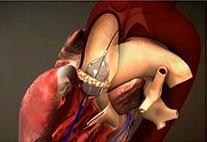
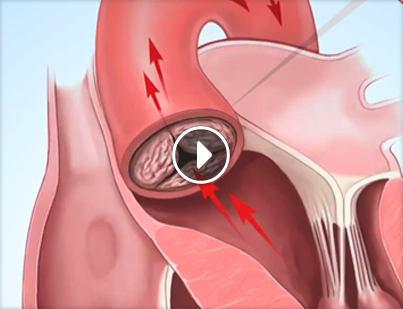
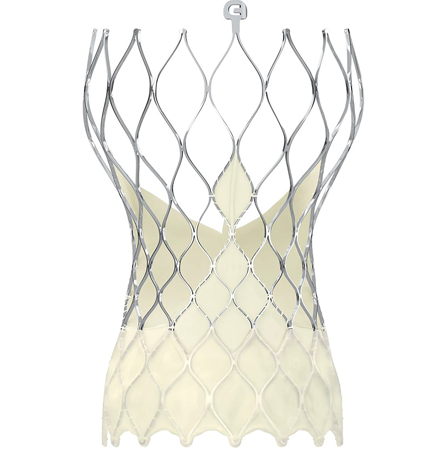
Earlier this week, Edwards Lifesciences, the largest heart valve replacement manufacturer in the world, released very strong quarterly earnings. However, beyond the financial numbers, the company made several comments about SAPIEN, Edwards’ minimally invasive heart valve replacement technology (see the video above) that I found interesting.
While commercially available in Europe, the SAPIEN is in F.D.A. trials here in the US. Some reports suggest that the technology, used for aortic and pulmonary valve replacements, could be F.D.A. approved in the next few years. According to The Wall Street Journal, the SAPIEN is viewed as an option for patients who are too sick or too old to withstand traditional heart surgery.

Mike Mussallem - Edwards’ Chief Executive Officer
Additional highlights about the SAPIEN released during the analyst conference call were:
- Mike Mussallem, Edwards CEO, noted that the company is on track to exceed its goal of doubling the number of transcatheter-valve procedures this year.
- The company posted $26.5 million in transcatheter-valve sales in the recent quarter and is on track to reach $100 million in sales this year.
Needless to say, Edwards’ report further showed its ongoing strength in, and commitment to, the minimally invasive heart valve replacement market. However, there have been recent, strategic moves by incumbents (including Medtronic) and start-ups to capture share in this growing niche of the heart valve replacement industry.
Keep on tickin!

P.S. To leave a comment, please click here.
About The Author: Adam Pick is a double, heart valve surgery patient and author of The Patient’s Guide To Heart Valve Surgery. This unique book integrates the clinical facts of heart valve surgery with the personal experiences of 78 former valve surgery patients to help patients and caregivers better understand the problems, the opportunities and the realities of heart valve surgery. To learn more about Adam and his heart valve surgery book, click here
- Previous: “Open Heart Surgery And Hair Loss?” Asks Tim
- Next: Joke Blog: The Dumbest Kid In The World?


July 23rd, 2009 at 1:46 pm
This is the very procedure that led my surgeon and cardiologist to tell me to choose a tissue valve for my redo surgery. If this procedure works it should lead one to choosing a tissue valve the first time around. I wonder what would happen to the measurement of the annulus if this were used in successive redo surgeries.
July 23rd, 2009 at 1:51 pm
I agree with you Laurie.
There is a lot of interest in the SAPIEN valve which might trigger incremental utilization of the tissue valve for some patients.
Keep on tickin!
Adam
July 23rd, 2009 at 1:59 pm
My Surgeon told me the same thing about when my tissue valve needs to be replaced and that a cardiolgist would probably do the the procedure.
I surely hope so i do not want OHS again
July 23rd, 2009 at 3:46 pm
Having a mitral valve replaced 10 months ago I am looking forward to vast improvements on procedures vs OHS ever again.
I have a question. Has anyone had ventricular tachycardia after mitral valve replacement. 10 months I’ve been telling Dr the episodes I’m having and finally an episode was caught on EKG while I was on treadmill. They are now going to do EP study and possible ablation since cardia MRI could not gate up with my heartbeat that test was useless. They are looking for scarring etc plus also to see if anything genetic. The VTAC episodes are really scary to say the least. Anyone who has had this I would love to hear the outcome. I had afib after surgery now I am wondering if it was VTAC the whole time.
July 23rd, 2009 at 9:14 pm
I find this technology very exciting. I had my aortic vavle replaced on June 8, 2009 with a bovine valve that, hopefully, will last 20 years. The reason I did not go with a mechanical valve was because I knew this procedure was being done in Europe now and in clinical trials in the US. I am banking on all the long term data to be in by the time I need a new vavle. The question I have is that in the video the doctor kept saying “native” aortic valve; I would assume that my new valve is not “native”. I am hoping that this new technology also includes valves that have already been replaced? Time will tell. Thank you Adam and fellow bloggers for all the information, encouragement, and strength I have received from this website.
July 27th, 2009 at 2:51 pm
Adam,
I see and applaud your effort toward developing a database of heart valve surgeons, traditional practitioners involved in the traditional approach, OHS. As you know, the new transcatheter approach, particularly the transfemoral one, will be done by the interventional cardiologists. While there are many of these specialists out there doing coronary and peripheral vascular interventions, a small percentage of them have or will be trained to include transcatheter AVR (aortic valve replacement) or TAVI (I for implantation) in Europe in their practice. It may be of benefit, similar rationale to that of the heart valve surgeon database, to have one for the transcatheter approach.