
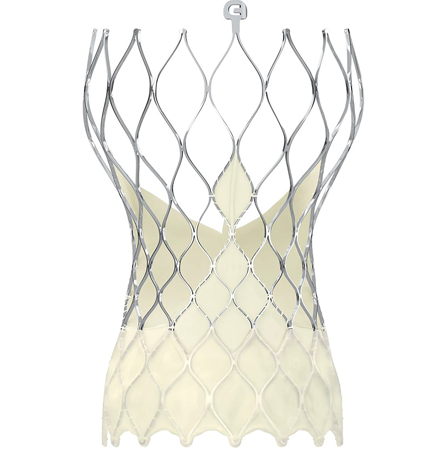
CoreValve Aortic Valve Replacement With No General Anesthesia
September 21st, 2008I just read a fascinating surgical report about the minimally invasive CoreValve transplant with two awake patients needing aortic valve replacement in New Zealand.
Two women, aged 79 and 91, were the first people in New Zealand to undergo a new type of heart operation which uses local, not general, anaesthetic, at Waikato Hospital.
The transcatheter aortic valve implementation (made by CoreValve) was performed on a 79-year-old woman named Ramona Johnson. Ramon’a surgery was the first of two at Waikato Hospital, and among four planned at the hospital over two days.

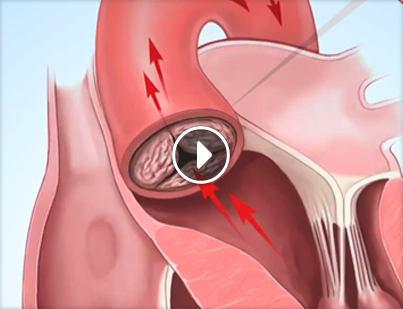
CoreValve Transcather Aortic Valve Replacement
At two hours, the operation was shorter than conventional open heart surgery which took between four and six hours. Ramona Johnson was in a comfortable condition in the cardiac care ward after her operation.
The second patient was 91-years-old. The operation was used on elderly patients or those with medical conditions who were unable to go through open-heart surgery, although conventional aortic valve replacement by open-heart surgery under general anaesthetic remained the procedure of choice.
Over 120 people a year were admitted to Waikato Hospital with aortic stenosis, a condition where the main outflow valve from the heart thickens and does not open fully.

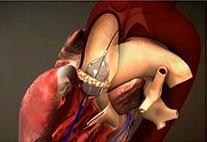
The new operation (shown above) involved replacement of the valve via the leg, inserting a new valve inside the old aortic valve, with patients only requiring a local anaesthetic, and recovery time at least halved. Only about 2000 transcatheter aortic valve implementations had occurred worldwide – all in the Northern Hemisphere.
The New Zealand operations used a product from US company CoreValve, which at $35,000 each cost about the same as a traditional surgical valve, Waikato Hospital clinical director of cardiology Gerry Devlin said.
“We’re one of two New Zealand sites participating in an international registry with this kind of valve,” Dr Devlin told Campbell Live. Patients were alive and well three years after the operation, and had returned to an excellent quality of life, he said.
Please note, the CoreValve aortic valve replacement system is in clinical trials right now and therefore not readily available to all patients. In fact, most minimally invasive transcather approaches for valve replacement are used on elderly or very fragile patients. According to CoreValve’s website, its products are not available in the United States for trials or commercialization even though the company is based in Irvine, California.
Keep on tickin!

![]() |
| About The Author: Adam Pick is a double, heart valve surgery patient and author of The Patient's Guide To Heart Valve Surgery. This unique book integrates clinical research with the personal experiences of 135 former patients to help future patients and their caregivers better understand the problems, the opportunities and the realities of heart valve surgery. To learn more about Adam and his heart valve surgery book, click here. |
![]() |