Ask The Expert: TAVR For Aortic Valve Regurgitation with Dr. Aakriti Gupta
Written By: Allison DeMajistre, BSN, RN, CCRN
Medical Expert: Aakriti Gupta, MD, Interventional Cardiologist, Cedars-Sinai
Reviewed By: Adam Pick, Patient Advocate, Author & Website Founder
Published: January 13, 2026
Patients with aortic regurgitation have been waiting a long time for less-invasive treatment options. Adam Pick, the founder of HeartValveSurgery.com, recently interviewed Dr. Aakriti Gupta, a leading interventional cardiologist at Cedars-Sinai Medical Center in Los Angeles, California, to discuss a significant update for patients with leaking aortic valves.
Given new clinical trial research, Dr. Gupta shared that while surgery is still the only FDA-approved treatment for moderate-to-severe or severe aortic regurgitation today, the field is moving quickly and transcatheter therapy may soon be a realistic option for many patients. Here are the highlights from our discussion with Dr. Gupta.
Why TAVR Works Well for Aortic Stenosis
Dr. Gupta explained that traditional TAVR has been incredibly successful in aortic stenosis for a simple mechanical reason: stenotic valves often have calcium, and that calcium helps anchor a transcatheter valve when it’s deployed. In other words, the device has something firm to “grab onto,” improving stability and reducing the chance of unwanted movement after placement.
As Dr. Gupta shared, “I think it is important first for patients to understand why TAVR works in aortic stenosis, and the major reason is that when you develop calcium in your aortic valve, that’s when it tightens enough and it doesn’t, you know, push the blood forward.”
But… What About TAVR for Aortic Regurgitation?
Aortic regurgitation is a different problem. Many aortic regurgitation patients don’t have much calcium on the valve. Without that calcium, the commercially available TAVR valves designed for stenosis may not anchor as securely, which can lead to issues like valve movement or residual leakage—two outcomes doctors work hard to avoid. That lack of natural “scaffolding” is one of the biggest reasons aortic regurgitation has historically been much harder to treat with standard TAVR technology.
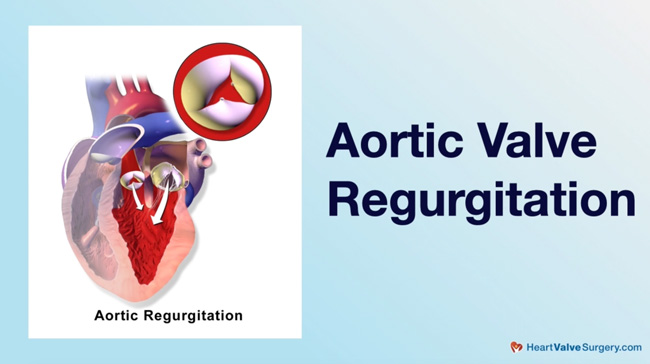
As Dr. Gupta shared, “The contrast is in aortic regurgitation where majority of the patients don’t have any calcium, and as such, the same commercially available TAVR valves that we are right now using for aortic stenosis may not do so well in aortic regurgitation because there’s no calcium anchoring them.”
Big Update: A Valve Designed Specifically for Aortic Regurgitation
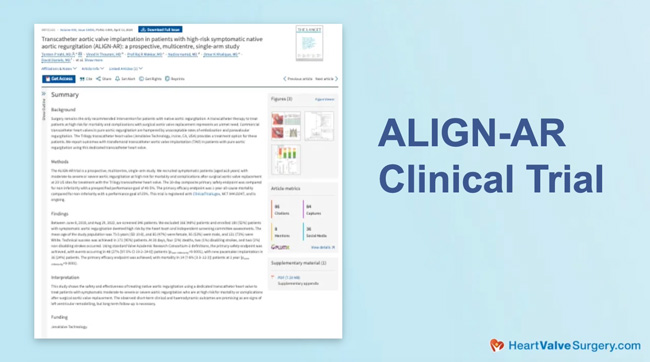
Dr. Gupta highlighted the encouraging results from the ALIGN-AR Trial, published in The Lancet, which evaluated the Trilogy Valve System, a new TAVR device engineered specifically for aortic regurgitation in which there is little to no calcium present. The Trilogy Valve System is made by JenaValve.
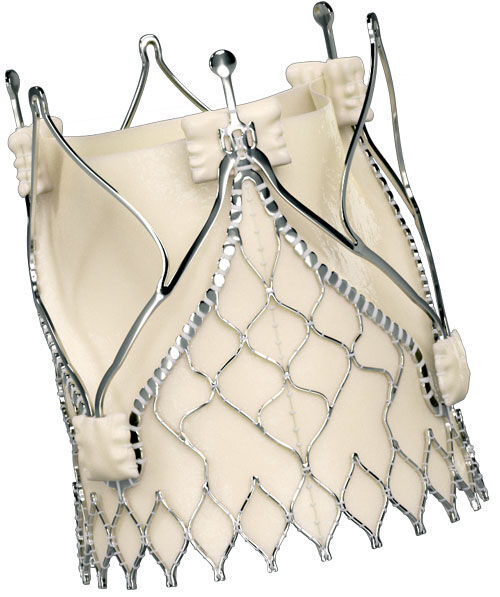
JenaValve (TAVR for Aortic Regurgitation)
Unlike the original TAVR valves for aortic stenosis, which relies on calcium for anchoring, this system clips directly onto the native aortic valve leaflets. Dr. Gupta shared that the trial results showed the approach was safe, durable, and that patients felt better after the Trilogy is implanted. Additionally, the heart muscle showed favorable remodeling after reducing the leakage.
Dr. Gupta shared, “It clips onto the leaflets and it performs really well. What we showed in the trial is that it is safe. It is durable and patients feel great. And the heart valve. The heart muscle actually remodels favorably after we reduce leakage.”
What Does This Mean for Patients?
As of this conversation, Dr. Gupta noted that the FDA-approved therapy for aortic regurgitation is still surgery. However, patients evaluated at major valve centers with active research programs may be able to access transcatheter options through clinical trials (including ALIGN-AR and ARTIST) right now.
If you’ve been diagnosed with moderate-to-severe or severe AR, here are a few practical questions this discussion naturally raises:
- How severe is my regurgitation—and is my heart starting to enlarge or weaken?
- Am I a surgical candidate, and if so, what type of valve strategy fits my age/lifestyle?
- Do I qualify for any AR-focused TAVR clinical trials (like ALIGN-AR or ARTIST)?
- Should I be evaluated at a high-volume valve center for a second opinion?
The Future of TAVR for Aortic Regurgitation
Dr. Gupta’s outlook is optimistic for TAVR in patients with leaking aortic valve. She believes aortic regurgitation care may be approaching a minimally invasive “revolution” similar to the one that transformed aortic stenosis treatment, potentially making TAVR the dominant therapy in the years ahead.
“The treatment for aortic regurgitation is probably going to see the same revolution as was seen with aortic stenosis,” stated Dr. Gupta. If I had a crystal ball five years from now, the predominant therapy is going to be TAVR for aortic regurgitation.”
Related Links:
- See Dr. Aakriti Gupta’s Interactive Cardiologist Profile
- Explore Cedars-Sinai’s Heart Valve Microsite
Keep on tickin!
Adam
P.S. For the deaf and hard-of-hearing members of our community, a written transcript of the video interview with Dr. Gupta is provided below.
Written by Adam Pick
- Patient & Website Founder

Video Transcript:
Adam Pick: Hi everybody, it’s Adam with HeartValveSurgery.com. We are at Cedars-Sinai Medical Center in Los Angeles, California. I’m thrilled to be joined by Dr. Aakriti Gupta who is a leading interventional cardiologist that specializes in minimally invasive heart valve therapies which use small catheters instead of open-heart surgery. Dr. Gupta, it is great to see you again and thanks for being with me today.
Dr. Gupta: Thank you for having me, Adam.
Adam Pick: A big topic in our community is the potential use of transcatheter aortic valve replacement or TAVR for patients with aortic regurgitation. I am curious to know, it’s 2026, can you give us the latest update on that possibility?
Dr. Gupta: Absolutely. I think it is important first for patients to understand why TAVR works in aortic stenosis, and the major reason is that when you develop calcium in your aortic valve, that’s when it tightens enough and it doesn’t, you know, push the blood forward.
And that’s when we come and fix it with TAVR. Now when we are deploying a transcatheter valve, we are counting on that calcium to anchor the valve properly. The contrast is an aortic regurgitation where majority of the patients don’t have any calcium, and as such, the same commercially available valves that we are right now using for aortic stenosis may not do so well in aortic regurgitation because there’s no calcium anchoring them.
They can move and they can be residual leakage, so that’s not great. Now the good news is that we have a great valve that is currently being studied, and we just published the results, uh, of the ALIGN-AR Trial in The Lancet. Dr. Raj Makkar of Cedars-Sinai is the first author. I’m one of the authors, and this trial tested the JenaValve or the Trilogy Valve, which is specifically engineered to perform in aortic regurgitation where there is no calcium.
It clips onto the leaflets and it performs really well. What we showed in the trial is that it is safe. It is durable and patients feel great. And the heart valve. The heart muscle actually remodels favorably after we reduce leakage. The trial is still ongoing. So, in 2026, if you have moderate to severe or severe aortic regurgitation, the current FDA approved treatment is only surgery.
But if you came to a center, like Cedars, where we have access to all of the research protocols, we would either enroll you in the ALIGN-AR trial or the ARTIST trial, which is another trial that is testing this technology. You are probably able to get TAVR for aortic regurgitation.
Once it’s commercially available, I imagine that patients can get this treatment in most parts of the country. So, I think it’s an exciting time because. The treatment for aortic regurgitation is probably going to see the same revolution as was seen with aortic stenosis, such that if I had a crystal ball five years from now, the predominant therapy is going to be TAVR for aortic regurgitation.
Adam Pick: Wow. Well, this is no doubt an exciting time for those patients with aortic regurgitation on behalf of those patients and patients all over the world. Thanks to you, Dr. Makkar, and the entire team here at Cedars-Sinai. Thanks for being with me today, Dr. Gupta. Thank you so much.
Dr. Gupta: It was a pleasure.