

Why Do Heart Valves Calcify?
Written By: Allison DeMajistre, BSN, RN, CCRN
Medical Expert: Marc Gillinov, MD, Chairman of Cardiac Surgery, Cleveland Clinic, Cleveland, Ohio
Reviewed By: Adam Pick, Patient Advocate, Author & Website Founder
Published: August 10, 2026
Heart valve calcification is the progressive buildup of calcium deposits on the aortic, mitral, tricuspid or pulmonary valves in the heart. Calcification can take several years to progress to stenosis, which is the stiffening and narrowing of the valve opening. It’s usually at this point that patients see a doctor because of symptoms like shortness of breath, overwhelming fatigue, or palpitations. A diagnosis of aortic stenosis or mitral valve stenosis often leaves some patients stunned, having never had heart problems before, and learning it may require surgery for a valve replacement.
Because it can take a long time to develop into a symptomatic heart problem and ultimately require surgical intervention, we receive a lot of patient questions about valve calcification. The most recent comes from Pamela, who asked, “What causes a heart valve to calcify?”
To answer Pamela’s question, we met with Dr. Marc Gillinov while attending the American Association for Thoracic Surgery Conference in Chicago, Illinois. Dr. Gillinov is the Chairman of Cardiac Surgery at the Cleveland Clinic in Cleveland, Ohio. He is a highly specialized heart surgeon and is always an excellent resource for patient questions.
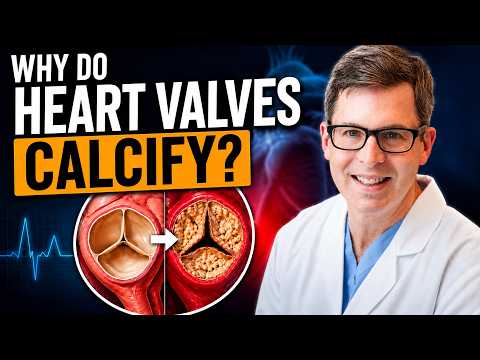

Video available online at:
https://www.youtube.com/watch?v=fAbxNyArdL8
Facts About Heart Valves and Why They Calcify
Here are the key insights shared by Dr. Gillinov:
The process of valve calcification. “That’s a great question, and there may be some talks or presentations here at the meeting about that,” said Dr. Gillinov. “The short answer is we don’t know for sure. As people get older, heart valves can begin to calcify. Your normal heart valve tissue, whether aortic or mitral, is soft and pliable like the skin on your hand, but as some people age, the valve tissue gets very stiff and calcified, like your knuckles, and then the valve doesn’t conform to itself and doesn’t close well.”
The contributing factors and steps for prevention, “It does not appear to be related to drinking milk or eating ice cream or having calcium supplements, so that’s not the problem. It may be something like the hardening of arteries or atherosclerosis, or maybe inflammation. The short answer right now is we’re not sure, and so we tell people to control the things they can control. Exercise, eat well, watch your weight, et cetera,” Dr. Gillinov said.
Thanks Dr. Gillinov and Cleveland Clinic!
On behalf of all the patients in our community, thank you, Dr. Marc Gillinov, for everything you and your team are doing at the Cleveland Clinic in Cleveland, Ohio!
Related links:
See Dr. Marc Gillinov’s Interactive Surgeon Profile with 100+ Patient Reviews
Surgeon Q&A: 3 Questions to Ask Before Mitral Valve Surgery with Dr. Marc Gillinov
Keep on tickin,
Adam
P.S. For the deaf and hard-of-hearing members of our patient community, we have provided a written transcript of our interview with Dr. Gillinov below.
Written by Adam Pick
Patient & Website Founder

Written by Adam Pick - Patient & Website Founder
Adam Pick is a heart valve patient and author of The Patient's Guide To Heart Valve Surgery. In 2006, Adam founded HeartValveSurgery.com to educate and empower patients. This award-winning website has helped over 10 million people fight heart valve disease. Adam has been featured by the American Heart Association and Medical News Today.
Video Transcript:
Adam Pick: Hi, everybody. It's Adam with HeartValveSurgery.com, and we're at the American Association for Thoracic Surgery Conference in Chicago, Illinois. I'm thrilled to be joined by Dr. Marc Gillinov, who is the chairman of cardiac surgery at the Cleveland Clinic. Dr. Gillinov, it is great to see you again, and thanks so much for being with me today. Always good to see you, Adam.
We're here at AATS learning a lot of information about heart valve disease and its treatment. We're also getting questions from patients coming at us from all over the world, and Dr. Gillinov, a lot of questions came in about calcification of the valve. So for example, Pamela asked, "What causes a heart valve to calcify?"
Dr. Marc Gillinov: That's a great question, and there may be some talks or presentations here at the meeting about that. The short answer is we don't know for sure. As people get older, heart valves can begin to calcify.
Your normal heart valve tissue, whether aortic or mitral, is soft and pliable like the skin on your hand, but in some people as they age, the valve tissue gets very stiff and calcified, like your knuckles, and then the valve doesn't conform to itself, doesn't close well. It does not appear to be related to drinking milk or eating ice cream or having calcium supplements, so that's not the problem.
It may be something like hardening of the arteries or atherosclerosis. may be Inflammation, but the short answer right now is we're not sure, and therefore we tell people, "Control the things you can control. Exercise, eat well, watch your weight, et cetera."
Adam Pick: Great. Well, uh, Pamela, I hope that helped you. I know it helped me, and Dr. Gillinov, on behalf of patients all over the country, all over the world, thanks for everything you and your team are doing at Cleveland Clinic. You're welcome. Thanks for being with me today.
New Patient Posts










Surgeon Spotlight

Dr. Joel Corvera is a world-renowned heart valve surgeon that has performed thousands of heart valve operations.