Surgeon Q&A: Can TAVR Explants be Performed Robotically?
Written By: Allison DeMajistre, BSN, RN, CCRN
Medical Expert: Vinay Badhwar, MD, Executive Chair of WVU Heart & Vascular Institute, Morgantown, West Virginia
Reviewed By: Adam Pick, Patient Advocate, Author & Website Founder
Published: March 16, 2026
Transcatheter aortic valve replacement (TAVR) was initially implemented and approved for high-risk patients who could not tolerate surgical aortic valve replacement due to advanced age or other comorbidities. Patients in their 70s, 80s, and even 90s could receive a new tissue valve that would, in most cases, last them a lifetime. It relieved the debilitating symptoms of severe aortic valve disease and saved many lives.
After several clinical trials, TAVR gained FDA approval for moderate- and low-risk patients and became a highly sought-after solution, as it resulted in shorter hospital stays and an overall faster recovery compared to surgically replacing the valve.
Although the outcomes were good enough for FDA approval, the long-term data for younger patients who undergo TAVR is still not clear. Unlike mechanical valves, which are designed to last a lifetime, tissue valves like TAVR deteriorate over time. Patients may require a second aortic valve replacement. Unfortunately, not all patients are candidates for a valve-in-valve procedure and explanting the original TAVR valve can be very challenging. That said, surgeons continue to explore safe and effective methods for TAVR explantation, one of which is with minimally invasive robotic surgery.
We received a great patient question on this topic asking, “Can TAVR explant be performed robotically?” We met with Dr. Vinay Badhwar, the Executive Chair of the WVU Heart & Vascular Institute in Morgantown, West Virginia, to address this question and gain a deeper understanding of robotic aortic valve replacement. Dr. Badhwar is not only an expert in this field, but he and his team performed the first robotic aortic valve replacement and continue to lead the way with this surgical platform.
Facts About Robotic Surgery for TAVR Explants
Here are the key insights shared by Dr. Badhwar:
- TAVR and patient suitability. “The answer is yes. TAVR explant can be performed robotically, but let’s take one step back,” said Dr. Badhwar. “The larger issue is surgical aortic valve replacement versus transcatheter valve implantation or replacement. TAVR is an outstanding procedure that is very safe and accepted as an important therapy, and I’m a big advocate for TAVR. That said, it’s ideally suited for patients at higher risk or older patients. The data on the others of much lower risk is still in development, and particularly those of younger age.”
- The reason for developing robotic aortic valve replacement (RAVR). “While TAVR can be done very safely, we don’t yet know the true long-term outcomes. We have a lot of hope for it, but the alternative is to do surgical aortic valve replacement. We developed RAVR in conjunction with our cardiologists to provide an alternative option to all of our patients, both in our home institution and now from around the world who come for robotic aortic valve replacement.”
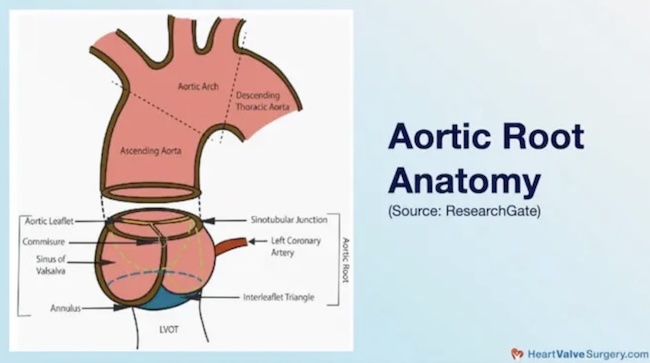
- TAVR explants are becoming more frequent. “On occasion, TAVRs are being implanted outside of existing guidelines because it’s easy and safe,” explained Dr. Badhwar. “While none of us blame someone for getting a TAVR, after looking at the totality of evidence, we are finding that the frequency of TAVR explant is now growing exponentially. The challenge, of course, is why. When TAVR is being implanted in younger patients or lower-risk patients, the most common reason they’re explanted is because of structural valve degeneration. In other words, the tissue of the TAVR degenerates early, making the procedure slightly more complicated. It usually involves up to one-third of the tissues around the aorta, including the aortic root and the ascending aorta. And so, we have to make this less traumatic and take care of these patients, but this re-operation requires some care.”
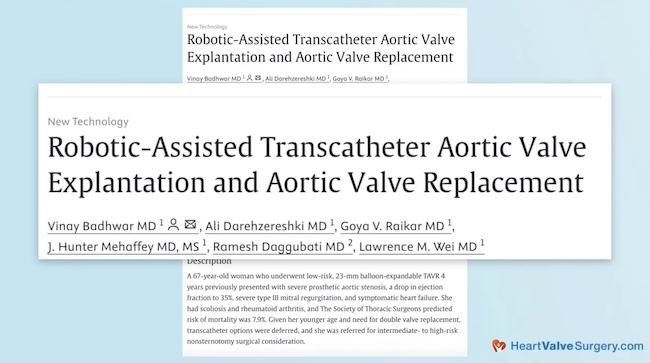
- The success of robotic TAVR explants depends on teamwork. “Can this be done robotically? Yes,” said Dr. Badwhar. “We just did the first one robotically and published it this week in the Annals of Thoracic Surgery. It was a technically demanding procedure, but it was very safe. In fact, we did two valves that day in the same patient because they also had mitral valve disease. So it is possible, but it’s still early days. We must teach other surgeons, and we all need to work together. The main objective of all our specialties in cardiac surgery, working closely with our cardiologists and heart team, is to make the right decision for the right patient at the right time.”
Thanks Dr. Badhwar and the WVU Heart and Valvular Institute!
On behalf of all the patients in our community, thank you, Dr. Vinay Badhwar, for everything you and your team are doing at the WVU Heart and Valvular Institute in Morgantown, West Virginia!
Related links:
- Ask Dr. Badhwar: Advantages of Robotic Mitral Valve Repair
- Explore the WVU Heart and Vascular Institute Microsite
Keep on tickin,
Adam
P.S. For the deaf and hard-of-hearing members of our patient community, we have provided a written transcript of our interview with Dr. Badhwar below.
Written by Adam Pick
- Patient & Website Founder

Video Transcript:
Adam Pick: Hi everybody. It’s Adam with HeartValveSurgery.com, and we’re at the Endoscopic Cardiac Surgeons Club in Northern Kentucky. I am thrilled to be joined by Dr. Vinay Badar, who is the executive chair of the WVU Heart and Vascular Institute. Morgantown, West Virginia. Dr. Babar, you and I have known each other for many years. It is great to see you again, and thanks for being with me.
Dr. Vinay Badhwar: Good to be with you.
Adam Pick: So we’re here at the conference getting a lot of just really great information. I know you’re giving talks. We’re learning a lot. We’re also getting questions from patients coming at us from all over the world. This is a really interesting question.
Given what I know about you and your specialties in minimally invasive, the question is, can TAVR explant be performed robotically?
Dr. Vinay Badhwar: So Adam, the answer is yes, but let’s maybe take one step back, is that the larger issue is, um, surgical aortic valve replacement versus transcatheter valve implantation or replacement TAVR or is an outstanding procedure that is very safe and accepted as a, as an important therapy, and I’m a big advocate for TAVR. Um, that said, it’s ideally suited for patients of higher risk and or older patients. And the data on the others on much lower risk is still in development and or particularly those that are younger of age.
While it can be done very safely, we don’t know yet the true long-term outcomes. We have a lot of hope for it, but the alternatives is to do surgical aortic valve replacement. Why we developed RAVR in conjunction with our cardiologists was to provide that alternative option to all of our patients, both in our home institution and now from around the world that come for robotic aortic valve replacement.
That said, on occasion TAVRs are being implanted outside of existing guidelines, um, because it’s easy and safe, and. While none of us blame someone for getting a TAVR, what we are finding is that looking at the totality of evidence that the frequency of TAVR explant is now growing exponentially. The challenge, of course, is why. When TAVR is being implanted in younger patients or lower risk patients, the most common reason they’re explanted is what’s called structural valve degeneration. In other words, the tissue of the TAVR degenerates early, and that becomes a slightly more complicated operation.
Usually involving up to one third is involving the tissues around the aorta, and your viewers are aware of the aortic root and the ascent aorta. I know you know that very well. And so we have to make this less traumatic. We still have to take care of these, these patients as good as any other option. And this re-procedure or reoperation requires some care.
Can it be done robotically? Yes. We just did the first one robotically and published it this week in the Annals of Thoracic Surgery. Um, and that is a technically demanding procedure, but it was very safe. In fact, we did two valves that day in that same patient because that particular patient also had mitral valve disease.
So is it possible? Yes, but that’s, it’s still early days. Right. We have to teach other surgeons. We have to all work together. Um, but the main objective of all of our specialty of cardiac surgery, working closely with our cardiologist and the heart team, is to make the right decision for the right patient at the right time.
And if the patient has a therapy that needs to be corrected, take care of it in the safest way possible through TAVR explantation.
Adam Pick: Very helpful. As always, Dr. Badar and on that on behalf of the patients, on behalf of all the folks at HeartValveSurgery.com, thanks for everything you and your team are doing at WVU Heart and Vascular Institute in Morgantown, West Virginia.
Dr. Vinay Badhwar: Always a pleasure, Adam. Thank you.