Surgeon Q&A: Why Do Mitral Valves Need to Be Re-Repaired?
Written By: Allison DeMajistre, BSN, RN, CCRN
Medical Expert: Marc Gillinov, MD, Chairman of Cardiac Surgery, Cleveland Clinic, Cleveland, Ohio
Reviewed By: Adam Pick, Patient Advocate, Author & Website Founder
Page Last Updated: March 1, 2026
Patients who undergo mitral valve repair surgery typically understand that there are no guarantees of never having to return to the operating room for a re-repair. Although research suggest that less than 5% percent of patients will experience regurgitation severe enough to need re-repair surgery, it doesn’t lessen the anxiety before each yearly echocardiogram. For this reason, a common question we receive from patients is, “What are the reasons a mitral valve re-repair is needed?”
Adam Pick, the founder of HeartValveSurgery.com, met with Dr. Marc Gillinov for an answer to this important question. Dr. Gillinov is the Chairman of Cardiac Surgery at the Cleveland Clinic in Cleveland, Ohio. He is an expert in mitral valve surgery and has successfully treated many patients in our community.
Facts About Mitral Valve Re-Repair
Here are the key insights shared by Dr. Gillinov:
- Minimal leakage after a mitral valve repair is normal but progression can be concerning. “This can happen from time to time that somebody gets a valve repair, and it looks great, but then over time the valve begins to leak again,” explained Dr. Gillinov. “Leaking equals regurgitation, and we use those two terms interchangeably. All mitral valves leak a little bit, but if the leak is moderate or more, we consider that concerning. If someone undergoes a valve repair today and five years down the road, their echocardiogram report indicates a moderate leak; several things may have happened to the valve.
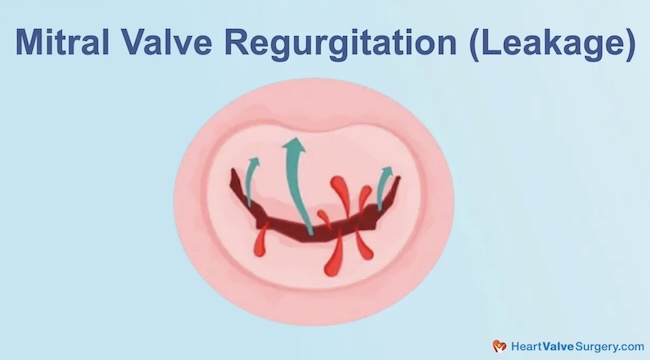
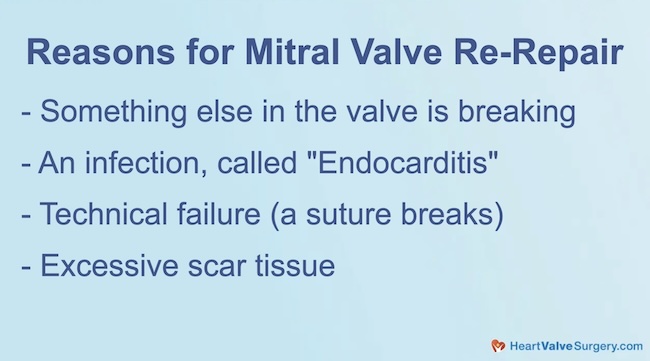
- There are different reasons why a valve may start leaking again. “Several things might have happened to the valve,” said Dr. Gillinov. “It can be something else in the valve breaks. Maybe the surgeon fixed one part at six o’clock. If the valve were a clock face, six o’clock looks good, but nine o’clock broke. Just like your car, sometimes you get one thing fixed, only to need maintenance on something else. Another thing that could happen is that it can be an infection, also called endocarditis. At other times, there may be a technical failure, such as a suture break, or excessive scar tissue can form. For instance, someone gets a cut on their hand, and it makes a big scar. The same thing can happen with the valve. You can get too much scar tissue.”
- A new mitral valve leak doesn’t always progress. “If you have a valve that’s started to leak again, which is relatively uncommon, first and foremost, don’t panic. Moderate leaks often don’t progress, and you’ll just need to continue getting an echo once a year.
- More severe leaking may need intervention. “Let’s say 10 years down the road, it’s really leaking. Now what? You’re going to need something to fix the valve, and the most common solution is to re-repair it. We can usually go back in, sometimes robotically, sometimes endoscopically, and sometimes with a regular sternal incision. More often than not, we can re-fix the valve, but sometimes it may need to be replaced.
- There are a few non-surgical options. “There is a non-surgical option termed Transcatheter Edge to Edge Repair or ‘TEER.’ There are also two devices in the United States called the MitraClip and the Pascal device, which can be used to repair a valve non-surgically. They’re not well tested in this setting, where a valve is leaking after a previous operation, but occasionally it is a nice way to get out of the situation without surgery.”

- Patients should not change what they are doing. Dr. Gillinov emphasized that the most important message is to undergo an echocardiogram (echo) every year after a valve repair. “If you develop a small or moderate leak, keep getting an echo every year, go on with your life, exercise, eat right, and do whatever you want to do. If the valve leak becomes more than moderate or severe, we will need to fix it. The first option would be a surgical team that is skilled and has experience with re-repair. It’s possible you need a replacement, and a distant third would be maybe we can fix it without surgery.”
Thanks Dr. Gillinov and Cleveland Clinic!
On behalf of all the patients in our community, many thanks to Dr. Marc Gillinov, for everything you and your team are doing at the Cleveland Clinic in Cleveland, Ohio!
Related links:
- Gillinov’s Mitral Valve Succes Story: Suzi Epstein
- Patient Webinar: Watch 3 Questions to Ask Before Mitral Valve Surgery with Dr. Gillinov
- Surgeon Q&A: Timing Mitral Valve Repair Surgey with Dr. Gillinov
Keep on tickin,
Adam
P.S. For the deaf and hard-of-hearing members of our patient community, we have provided a written transcript of our interview with Dr. Gillinov below.
Written by Adam Pick
- Patient & Website Founder

Video Transcript:
Adam Pick: Hi everybody. It’s Adam with heart valve surgery.com, and we are at the Endoscopic Cardiac Surgeons Club meeting in northern Kentucky. I am thrilled to be joined by Dr. Mark Gillinov, who’s the chairman of Cardiac Surgery at the Cleveland Clinic in Cleveland, Ohio. Dr. Gillinov, we have known each other for over 15 years. It’s great meeting up with you at these conferences. We are learning a lot. I know you’re giving several presentations here In particular, you’re talking about mitral valve disease, correct?
Dr. Marc Gillinov: Yes. Mitral valve disease and how to repair these valves.
Adam Pick: We have a question that just came in is. What are the reasons a mitral valve re repair is needed?
Dr. Marc Gillinov: This can happen from time to time that somebody gets a valve repair. The valve repair looks great, and then over time, the valve begins to leak again.
Leaking equals regurgitation. We use those two terms interchangeably, regurgitation, leakage. All mitral valves leak a little bit. Yours leaks a little bit. Mine leaks a little bit, but if the leak is moderate or more, we say that’s a bit concerning. So let’s say somebody gets a valve repair today and five years down the road they’re getting their annual echo.
And the echo report says now your valve has a leak that’s moderate. At that point, several things might have happened to the valve. What causes this valve to start leaking again, it can be something else in the valve is breaking. The surgeon fixed this part at six o’clock. If the valve were clock face, six o’clock still looks good, but nine o’clock broke, so just like your car, sometimes you get one thing fixed and you need maintenance on something else.
Another thing that could happen to make it leak is it can be an infection termed endocarditis. Sometimes there can be a technical failure, a suture breaks, which we term a dehiscence, and then sometimes there can be excessive scar tissue. Sometimes someone maybe gets a cut on their hand and they form a little white line and someone else gets a similar cut and it makes a big scar, A big red scar.
Same thing can happen with the valve. You can get an over exuberant or too much scar tissue, but the main thing is. If you’ve got a valve that’s started to leak again, which is relatively uncommon, but if you do have a valve that started to leak again, first and foremost, don’t panic. Moderate leaks often don’t progress and just get an echo once a year.
If it does leak more than that, let’s say 10 years down the road, it’s really leaking. You’ve got a really leaking regurgitate valve, now what? Then you’re going to need something to fix the valve, and the most common thing is to re- repair the valve. We can more often than not, go back in, sometimes robotically, sometimes endoscopically, sometimes irregular sternal incision.
But we can, more often than not, refix a valve. Sometimes the valve might need to be replaced, and then very rarely these days, there’s a non-surgical option termed transcatheter edge to ET repair or TEER. Which some people call tier, and there are two devices in the US called the MitraClip and the Pascal device.
These two devices, MitraClip and Pascal, can be used to repair a valve non-surgically. They’re not well tested in this setting where I had a previous operation and now the valve is leaking. But occasionally that’ll be a nice way to get out of the situation without surgery, but I think the messages are get an echo every year after a valve repair.
If you develop some small or moderate leak, keep getting an echo every year. Go on with your life exercise, eat right, do whatever you want to do. [00:04:00] If the valve leak becomes more than moderate, severe, we need to fix it. And the first option would be a surgical team that is skilled in experience with rere repair.
It’s possible you need a replacement. And a, a distant third would be maybe just, maybe we can fix it without surgery.
Adam Pick: Well, Dr. Gillinov, on behalf of patients at HeartValveSurgery.com, patients all over the world, thanks for everything you are doing, you and your team at the Cleveland Clinic in Cleveland, Ohio. Thanks for being with me today.
Dr. Marc Gillinov: My pleasure.