Surgeon Q&A: The ABC Technique for Atrial Fibrillation During Heart Valve Surgery
Written By: Allison DeMajistre, BSN, RN, CCRN
Medical Expert: Gan Dunnington, MD, Adventist Health Saint Helena
Reviewed By: Adam Pick, Patient Advocate, Author & Website Founder
Published: February 13, 2026
Atrial fibrillation (AFib) is the most common arrhythmia among adults. Many people will experience AFib either intermittently or chronically during their lifetime. Heart valve patients are even more susceptible to AFib because of the structural abnormalities a diseased valve may cause over time. Although there are surgical options for valve therapy and AFib treatment, many heart valve patients want to know whether both conditions can be treated simultaneously with a single, minimally-invasive procedure.
While attending the Endoscopic Cardiac Surgeon’s Club meeting in Northern Kentucky, Adam Pick, the founder of HeartValveSurgery.com met with Dr. Gan Dunnington to learn about the concurrent treatment of heart valve disease and AFib. Dr. Dunnington is a minimally-invasive cardiac surgeon at Adventist Health Saint Helena in Saint Helena, California. Dr. Dunington is known for performing complex minimally invasive cardiac procedures to treat AFib during heart valve repair or replacement.
Key Facts About Minimally Invasive Atrial Fibrillation and Heart Valve Disease Surgery
Here are the key insights shared by Dr. Dunnington:
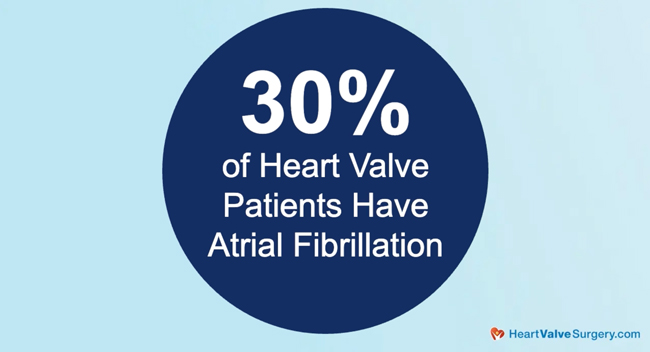
- Atrial fibrillation is common yet undertreated. “Thirty percent of valve patients have atrial fibrillation,” said Dr. Dunnington. “Unfortunately, only a quarter to one third of surgeons actually treat AFib at the time they have surgery. It’s been vastly undertreated.” Dr. Dunnington explained that when AFib is treated during heart surgery, patients have better survival, fewer complications like strokes, and, most importantly, better quality of life. “Patients feel better,” he said. “They don’t have to take some of the rhythm medications or blood thinners they took before having AFib treated.”
- Both problems should be addressed simultaneously. “For a long time, surgeons felt like they had to make this decision if they became a minimally invasive surgeon, but they weren’t sure how to do the AFib part,” said Dr. Dunnington. He explained that they shouldn’t have to make that choice, and now they don’t. “They should be able to do both,” he said. “Atrial fibrillation is extremely important, but minimally invasive surgery for cardiac surgeons is extremely important too.” He pointed out that many highly functional valve patients want everything taken care of during surgery so they can get back to work and enjoy a better quality of life.
- The “ABC Technique” is a new approach for treating AFib during surgery. “It’s called All Bipolar Clamp, or the ABC Technique,” said Dr. Dunnington. “We create a surgical ablation or Maze procedure by putting a brand on the back of the heart with a series of burn lines that looks like a maze. It has a start-to-finish approach, and using the ABC Technique, which I’ve done a couple of hundred times in the last few years, is helping make the Maze procedure faster, more efficient, and safer for both surgeons and patients. That’s what I’d like to spread to other surgeons.”

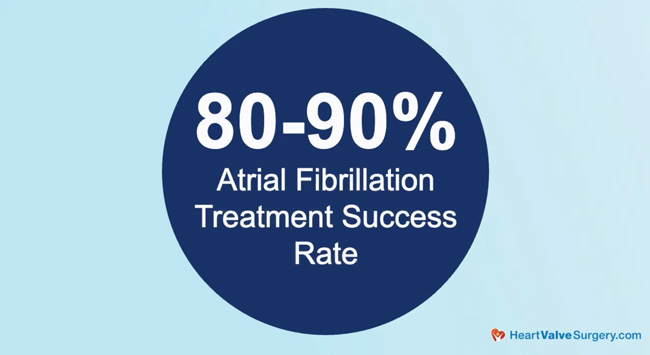
- Is it possible for AFib patients to improve their quality of life and get off medication after a surgical ablation? “Absolutely,” said Dr. Dunnington. “The success rates for treating atrial fibrillation with surgery are more than 80 to 90 percent.” He stated that treatment with medication or catheter ablation alone may have a far lower success rate of 50 percent. “Patients I see sometimes feel palpitations and their heart racing. A lot of times, they feel tired, run down, or short of breath. It may be that the valve is leaking or too tight, but AFib can cause some of those same symptoms. If you can treat the valve problem, you can treat the AFib.” Dr. Dunnington explained that treating the AFib will ultimately result in patients no longer needing antiarrhythmic drugs. “Also, if we treat the stroke center of the heart, the left atrial appendage, patients won’t have to be on blood thinners long-term. That’s the real goal that everyone is looking for.”
Thanks Dr. Dunnington and Adventist Health!
On behalf of all the patients in our community, thank you, Dr. Gan Dunnington, for everything you and your team are doing at Adventist Health in Saint Helena, California!
Related links:
- See Dr. Dunnington’s Interactive Surgeon Profile
- Top 5 Misconceptions About Atrial Fibrillation
- Explore the Atrial Fibrillation Patient Education Center
Keep on tickin,
Adam
P.S. For the deaf and hard-of-hearing members of our patient community, we have provided a written transcript of our interview with Dr. Dunnington below.
Written by Adam Pick
- Patient & Website Founder

Video Transcript
Adam Pick: Hi everybody, it’s Adam with HeartValveSurgery.com, and we’re at the Endoscopic Cardiac Surgeon’s Club in Northern Kentucky. I’m thrilled to be joined by Dr. Gan Dunnington, who is a leading, minimally-invasive heart valve and atrial fibrillation specialist at Adventist Health St. Helena in St. Helena, California. Dr. Dunnington, it is great to see you again. We’ve known each other for a long time.
Dr. Gansevort Dunnington: Absolutely, Adam. It’s really a pleasure to be here at the Endoscopic Cardiac Surgeon’s Club meeting. We’re talking about a lot of valve surgery here and atrial fibrillation and valve surgery often is like Peanut Butter and Jelly (PBJ) as 30% of valve patients have atrial fibrillation. And unfortunately, only a quarter to a third of surgeons actually treat the atrial fibrillation at the time they have surgery.
AFib has been vastly undertreated. If you treat AFib at the time of any other heart surgery, you have better survival, you have fewer complications, you have fewer strokes, and, most importantly, you just have better quality of life.Patients feel better. They don’t have to take some of the rhythm medications, the blood thinners that they had to take afterwards.
For a long time, surgeons felt like they had to make this decision if they became a minimally-invasive surgeon but they weren’t sure how to do the AFib part.
Do I do the case minimally-invasively? Or, do I treat the atrial fibrillation? And what I’m here to tell people about – kind of describing a couple techniques – is that you don’t have to make that decision. In fact, you shouldn’t make that decision. You should be able to do both. Atrial fibrillation, I think, is extremely important. But, I think minimally invasive surgery for cardiac surgeons is also extremely important.
And certainly your valve patients that are highly functional. They want to get back to work, they want to get back to life, and they want a better quality of life. And they want all things taken care of that they can have taken care of at the time of heart surgery.
Adam Pick: We’re learning lots of new things here at this meeting, one of which you’re going be talking about a new technique. Can you share a little bit with the patient, what that is?
Dr. Gansevort Dunnington: Sure, sure. We, we call it the “ABC Technique”. It’s called All Bipolar Clamp. Basically, it’s a technical aspect of the device we use and how we create a surgical ablation or a Maze procedure for atrial fibrillation involves, is putting a brand on the back of the heart, basically putting a series of burn lines.
It looks like a maze. A maze has a start to finish to get through. We’re trying to basically use the existing devices that we have right now to make the procedure faster, safer, more efficient for both surgeons and patients. So, this technique that I’ve, done a couple hundred of in the last few years, seems to kind of be checking the boxes of being more effective, faster and safer.
That’s what I want to try to spread to the other surgeons.
Adam Pick: You talked about quality of life. Let’s talk about that for the AFib patients. One of the big things is, can I get off medication after surgical ablation?
Dr. Gansevort Dunnington: Absolutely. Is this something that is possible? Yeah. Well, I, think very possible. In fact, the success rates for treating atrial fibrillation with surgery are always in excess of 80 to 90%, as opposed to when you look at the success rates of just medications or maybe catheter ablation. For the advanced AFib population, it may be far less than 50% success rates.
Patients that I see, sometimes they feel it, they feel palpitations, they feel their heart racing. A lot of times, they just feel tired and run down. They think, “Oh, I’m just getting older.” Well, no, you’re not just getting older. Just similar to valve patients, they think, “I’m just getting a little bit more short of breath. I can’t walk upstairs. I can’t do some of the things I want to do.”
Well, maybe it’s because that valve is leaking or it’s too tight. Well, AFib similarly causes some of those same symptoms. If you can treat the valve problem and you can treat the atrial fibrillation, the point is to treat the AFib so you don’t have to be on medications, you don’t have to be on antiarrhythmic drugs, and if we treat that stroke center of the heart, the left atrial appendage, you don’t have to be on blood thinners long term.
That’s the real goal that everyone’s looking for.
Adam Pick: It’s a great goal on behalf of the patients in our community, patients all over the world. Thanks to you and everything your team is doing at Adventist Health St. Helena in St. Helena, California. Thanks for being here again.
Dr. Gansevort Dunnington: Absolute thanks, Adam.