Pleural Adhesions After Heart Valve Surgery: What Should You Know?
Written By: Adam Pick, Patient Advocate, Author & Website Founder
Page Last Updated: April 8, 2026
I just received an interesting patient question about pleural adhesions after heart valve surgery. The patient shared with me, “I had robotic mitral valve repair. I now appear to be experiencing symptoms that seem to match pleural adhesions which are often not discussed as a complication. Dr. Gillinov quickly addressed this in your recent video interview. Can you help the patients in our community learn more about the risks and the treatment of pleural adhesions?”
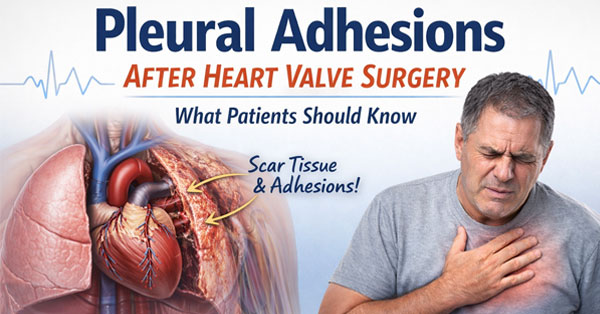
To help everybody learn about pleural adhesions, I just reviewed some articles and materials across the web. Here is what I learned.
What Are Pleural Adhesions?
Pleural adhesions, or pleural scarring, are a condition that can develop after heart valve surgery, and while the term may sound alarming, it is often a normal part of healing. The lungs are surrounded by a thin lining called the pleura, which allows them to move smoothly as you breathe. After robotic-assist surgery in the chest, inflammation can cause small areas of scar tissue to form between these layers, creating what doctors call pleural adhesions. According to the Cleveland Clinic, pleural scarring can occur after surgery, infection, or inflammation and may or may not cause symptoms depending on how extensive it is. For many patients, these changes are mild and discovered only during routine follow-up imaging.
Pleural adhesions happen because heart surgery takes place in close proximity to the lungs. During surgery, the body naturally reacts to irritation, bleeding, or fluid in the chest by activating the healing process. When you’ve had robotic surgery (incision on the right side of the chest), the lung can stick to the chest wall during healing. The Society of Thoracic Surgeons explains that inflammation and tissue healing are expected after cardiac surgery, and internal scarring can be part of normal recovery. Importantly, this does not usually mean something went wrong — it simply reflects how the body repairs itself after a major procedure.
So you know, pleural adhesions can also happen to patients who undergo median sternotomy (a broken sternum).
Diagnosing, Managing & Treating Pleural Adhesions
Many patients never realize they have pleural adhesions because symptoms are often mild or absent. When symptoms do occur, they may include shortness of breath, chest tightness, or a type of pain called “pleuritic pain”, including stabbing pain, or discomfort when twisting, taking deep breaths, yawning, coughing, and sneezing. It should also be noted that pleuritic chest pain can also be a sign of pericarditis/postpericardiotomy syndrome which is relatively common after cardiac surgeries, including valve surgery.
The American Thoracic Society notes that temporary breathing changes are common after chest surgery because the lungs and surrounding tissues need time to recover and re-expand fully. For this reason, doctors may use chest X-rays or CT scans if symptoms linger, helping determine whether adhesions, fluid buildup, or other factors are contributing to how a patient feels.
In most cases, treatment is conservative and focused on supporting recovery rather than performing additional procedures. Walking, deep-breathing exercises, and pulmonary rehabilitation are often recommended because they help expand the lungs and reduce stiffness in the chest. The American Association for Thoracic Surgery emphasizes early movement and breathing exercises as important strategies to lower the risk of lung-related complications after heart surgery. Good pain control is also critical — when patients are comfortable enough to breathe deeply and stay active, healing tends to progress more smoothly.
Occasionally, pleural adhesions or related complications require additional treatment. If fluid collects around the lungs, doctors may recommend drainage to help improve breathing. In rare cases where scar tissue significantly limits lung expansion or causes persistent symptoms, a minimally invasive surgery known as adhesiolysis may be considered. Thoracic surgery literature shows that these interventions are typically reserved for patients with meaningful symptoms or measurable impact on lung function, and most patients improve without needing further surgery.
Lastly, a 2023 research study observed a potential link between taking NSAIDs (eg, aspirin, Advil, Motrin, Aleve) and a reduction in pleural adhesion formation.
The Long-Term Impact of Pleural Adhesions
The encouraging news is that pleural adhesions rarely affect the long-term success of heart valve surgery. As healing continues, many patients notice steady improvement in breathing, energy, and overall quality of life. Leading heart centers consistently emphasize that recovery after heart surgery can include temporary setbacks, but outcomes are overwhelmingly positive when patients stay engaged in rehabilitation and follow their care team’s guidance.
For most people, pleural adhesions are simply one step along the recovery journey — not a barrier to getting back to a full and active life.
Related Links:
- Pleural Effusion & Heart Surgery: What Should You Know?
- “Are Pleural Effusions Common After Heart Surgery?” asks Jan
- Dressler’s Syndrome: Steve’s Story
Keep on tickin!
Adam
References:
– Cleveland Clinic. Pleural Disorders (Pleural Disease).
– Society of Thoracic Surgeons (STS). Patient Information – Recovery After Heart Surgery.
– American Thoracic Society. Patient Information Series – Postoperative Pulmonary Complications.
– American Association for Thoracic Surgery (AATS). Patient Care & Recovery Guidance.
– Light RW. Pleural Diseases. 7th Edition. Wolters Kluwer.
– Brunelli A, et al. Postoperative pleural complications after thoracic surgery. European Journal of Cardio-Thoracic Surgery.
Written by Adam Pick
- Patient & Website Founder