The BELIEVERS Clinical Trial to Evaluate TAVR for Bicuspid Aortic Valve Patients
Written By: Allison DeMajistre, BSN, RN, CCRN
Medical Expert: Aakriti Gupta, MD, Interventional Cardiologist, Cedars-Sinai Medical Center, Los Angeles
Reviewed By: Adam Pick, Patient Advocate, Author & Website Founder
Published: February 2, 2026
The safety and efficacy of transcatheter aortic valve replacement (TAVR) for aortic stenosis has been demonstrated thanks to several clinical trials conducted over the past decade. Unfortunately, these research studies only included patients with calcified tricuspid aortic valves. Patients with bicuspid aortic valves were not included in these studies.
However… There is promising news for patients with bicuspid aortic valve stenosis, thanks to the launch of a unique research study known as the BELIEVERS Clinical Trial at Cedars-Sinai Medical Center in Los Angeles, California. To learn more about this study, Adam Pick, the patient who founded HeartValveSurgery.com, spoke with Dr. Aakriti Gupta, a leading interventional cardiologist at Cedars-Sinai. Dr. Gupta is a co -principal investigator on the BELIEVERS trial.
Key Facts About the BELIEVERS Clinical Trial
Here are the key insights shared by Dr. Gupta:
- Past TAVR clinical trials and the exclusion of bicuspid aortic valve patients. “First, I want to lay the foundation by stating that TAVR was approved for aortic stenosis through very rigorous randomized clinical trials,” said Dr. Gupta. “Surgery used to be the go-to option but to prove that we can perform TAVR and it’s going to be safe and feasible, we had a multitude of randomized controlled trials showing TAVR was as good as surgery. But, a very important detail there is that patients with bicuspid aortic stenosis were excluded from those trials. So, we do not have state-of-the-art evidence to prove that TAVR is a feasible option for patients with bicuspid aortic stenosis. There could be a chance that patients are incurring harm from having a TAVR instead of surgery. It’s also possible that TAVR is better than surgery. We don’t know because we don’t have that evidence.”
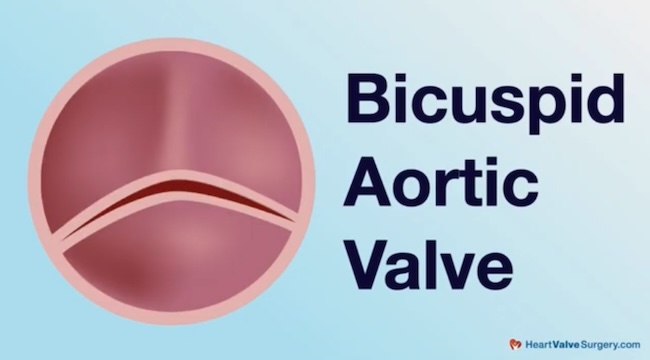
- Getting evidence through a clinical trial. Dr. Gupta explained that most hospitals in the country will only offer surgery for most 60-year-old patients with bicuspid aortic stenosis. “I think to change that paradigm or to keep that paradigm, we want to produce the best evidence,” she said. “For that, we are conducting the BELIEVERS Trial. The Patient Centers Outcome Research Institute (PCORI) is funding the trial with Dr. Raj Makkar as the principal investigator. I am the co-investigator.”
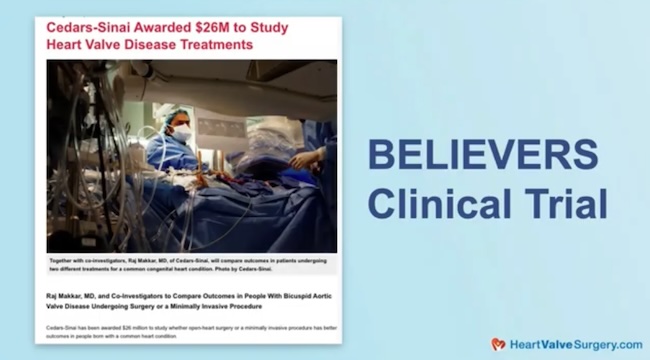
- The BELIEVERS clinical trial process. “The trial will randomize patients with bicuspid aortic stenosis to either TAVR or surgery,” Dr. Gupta said. “We will follow patients for up to 10 years and produce the long-term data needed to make an informed decision.” Dr. Gupta pointed out that many patients prefer TAVR for its convenience. They can go home the day after a TAVR instead of having open heart surgery to repair their valve. “It should not just be based on convenience, but what is best in the long-term,” she said. “That is what we are trying to do.”
- Participants in the BELIEVERS clinical trial have a lot to gain and something to give. Dr. Gupta explained that patients should consider that they are not only part of the trial and getting treatment, but they are also contributing to the knowledge that will benefit thousands of patients after them. “Just the way patients who participated in the previous trials helped to get TAVR approved in the first place, now more patients can benefit. I always tell my patients that they are going to add to the body of evidence and contribute to the field by being part of the trial.”
Thanks Dr. Gupta and Cedars-Sinai Medical Center!
On behalf of all the patients in our community, thank you, Dr Aakriti Gupta, for everything you and your team are doing at Cedars-Sinai Medical Center in Los Angeles, California!
Related links:
- Find out more at Dr. Aakriti Gupta’s Interactive Surgeon Profile
- Inside Access: The Heart Valve Catheter Lab at Cedars-Sinai
- Ask Dr. Gupta: What About TAVR for Aortic Regurgitation?
Keep on tickin,
Adam
P.S. For the deaf and hard-of-hearing members of our patient community, we have provided a written transcript of our interview with Dr. Gupta below.
Written by Adam Pick
- Patient & Website Founder
Video Transcript:
Adam Pick: Hi everybody, it’s Adam with HeartValveSurgery.com. We are at Cedars-Sinai Medical Center in Los Angeles, California. I’m thrilled to be joined by Dr. Aakriti Gupta who is a leading interventional cardiologist that specializes in minimally invasive heart valve therapies which use small catheters instead of open-heart surgery. Dr. Gupta, it is great to see you again and thanks for being with me today.
Dr. Gupta: Thank you, Adam for being here. It’s a pleasure.
Adan Pick: As a bicuspid aortic valve patient, I’m very excited for this conversation. I understand that Cedars is in the process of launching a very unique clinical trial. That is evaluating transcatheter aortic valve replacement, or TAVR, for patients with bicuspid aortic valves. There’s a lot of patient with bicuspid aortic valves in our community and they want to hear about, “What it is you’re studying?” and “What the impact could potentially be?” Can you share with our community?
Dr. Gupta: Absolutely. Thank you for that. Excellent question, Adam. I want to start, to lay the foundation by stating that TAVR got approved for aortic stenosis through very rigorous randomized clinical trials. Surgery used to be the go-to option but to prove that we can perform TAVR and it’s going to be safe and feasible, we had a multitude of randomized controlled trials, which showed that TAVR was as good as surgery for the most part.
But a very important detail there is that patients with bicuspid aortic stenosis were excluded from those trials. So, we actually do not have state-of-the-art evidence to prove that TAVR is a feasible option for patients with bicuspid aortic stenosis. Nevertheless, patients would come to our office and often say, “I don’t want open heart surgery. I want a TAVR.”
We are able to offer it right now in an off-label fashion, where it’s not guidelines recommended. There is no state-of-the-art evidence to show There could be a chance that patients are actually incurring harm from getting a TAVR treatment instead of surgery. Or, it’s completely possible that TAVR is actually better than surgery.
We don’t know because we don’t have that evidence. Now, if you went to majority of the hospitals in the country, if you’re 60-year-old and you had bicuspid aortic stenosis. They will offer only surgery at majority of the institutions. I think to change that paradigm or to keep that paradigm, we want to produce the best evidence.
And for that, we are conducting the BELIEVERS trial. It’s being funded by Patient Centers Outcome Research Institute (called PCORI). Dr. Raj Makkar Cedars is the principal investigator. I’m a co-investigator. This trial is going to randomize patients with bicuspid aortic stenosis to either TAVR or surgery.
And we will follow patients for up to 10 years and produce the long-term data that is needed for the kind of evidence that is needed to really make an informed decision. Not just based on convenience, because TAVR, you know, patients like to not have their chest opened and they like to go home the next day.
It should not be just based on convenience, but what is best in the long term? Is it going to last the patients long enough? It’s possible that one or the other wins. And that is what we are trying to do.
I would just add finally, that patients should think about it this way. That not only are they part of the trial and getting the treatment, but also contributing to the knowledge that will benefit thousands of patients after them. Just the way patients who participated in the previous trials helped to get TAVR approved in the first place and now patients can benefit. That’s what I always tell my patients. You’re going to really add to the body of evidence and contribute to the field by being a part of the trial.
Adam Pick: Wow. Well, Dr. Gupta, thanks to you on behalf of all the patients at heartvalvesurgery.com, all the bicuspid aortic valve patients all over the world for the work that you’re going to be doing on the BELIEVER trial. Thanks so much for being with me today.
Dr. Gupta: Thank you, Adam. It’s such a pleasure.