Inside Access: Endoscopic Cardiac Surgery Training Lab
Written By: Allison DeMajistre, BSN, RN, CCRN
Medical Expert: Mario Castillo-Sang, MD, Minimally-Invasive Heart Valve Surgeon, Saint Elizabeth Healthcare, Edgewood, Kentucky
Reviewed By: Adam Pick, Patient Advocate, Author & Website Founder
Published: January 12, 2025
Endoscopic cardiac surgery is a minimally invasive procedure that uses a small camera called an endoscope inserted through tiny incisions made in the chest wall. The minimally invasive endoscopic approach can mean smaller scars, less pain, and shorter hospital stays compared to traditional open-heart surgery, where the chest bone, or sternum, is opened to access the heart.
An innovative new endoscopic technique called Totally Endoscopic Cardiac Surgery (TECS), pioneered by Dr. Mario Castillo-Sang, a cardiothoracic surgeon at Saint Elizabeth Healthcare in Edgewood, Kentucky, is transforming this minimally invasive heart valve surgery not only through its approach, but also by expanding the patients it can treat.
While attending the Endoscopic Surgeons Club (ESC) Annual Meeting last month, Adam Pick, HeartValveSurgery.com’s founder, took the opportunity to meet with Dr. Castillo-Sang in his Endoscopic Cardiac Surgery Training Lab to learn more about TECS and how this exciting new technology is changing the approach to heart valve surgery. Dr. Castillo-Sang was also joined by Jude Sauer, the founder of LSI Solutions and developer of the innovative surgical instruments that have helped make TECS possible.
Advances in Total Endoscopic Cardiac Surgery
Here are the key insights shared by Dr. Castillo-Sang and Jude Sauer:
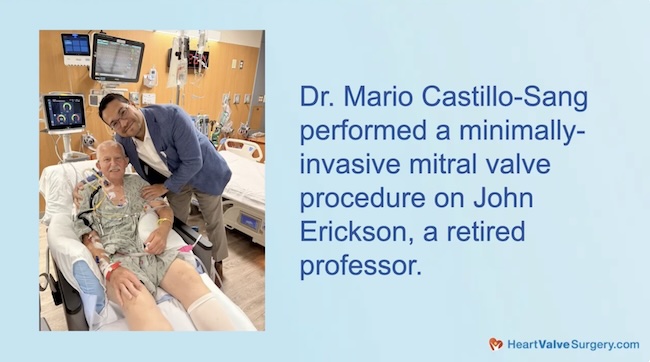
- The high turnout at the ESC Annual Meeting this year and the increased interest in endoscopic cardiac surgery. Dr. Castillo-Sang shared his techniques with meeting attendees as they watched him perform a live, minimally invasive mitral valve procedure on John Erickson, a retired professor. Adam noted that he saw things he had never seen before, and that Dr. Castillo-Sang talked a lot about the advantages of endoscopic techniques, specifically with long-shafted instruments, and the possibility of scaling these techniques. Adam asked Dr. Castillo-Sang what he thought was empowering endoscopic interests and what made so many people attend this year’s meeting. Dr. Castillo-Sang replied, “Adam, I think you bring up an excellent point. Historically, since 1997, we have been performing endoscopic cardiac surgery. In fact, the person who started it is in the auditorium right now, Hugo Vanderman. He was doing this with a two-dimensional scope, with instruments that were adequate but not excellent. Today, the reason why this is picking up and getting more exposure is because the surgeons now have a lot more technologies to carry out the operation and the techniques to deliver it safely and efficiently.”
- LSI Innovations and its contribution to endoscopic advancement. “LSI is one of those companies that has facilitated many of these advancements,” said Dr. Castillo-Sang. “My staff will tell you that I always say there are two things that have facilitated cardiac surgery. One is long-acting cardioplegia, which is a solution we use to stop the heart. Now we can give it and arrest the heart safely for 80 minutes. In the past, we had to redose the medicine every 15 minutes. The second is something called a “Cor-Knot.” Talking about facilitators, this is an incredible tool that automatically ties surgical knots. Usually, surgeons tie surgical knots by hand, and if you’re doing it minimally invasively, you push the knot with a long-shafted device we call “chopsticks.” Today, almost every surgeon in the world uses the Cor-Knot automatic suture fastener device instead of tying the knots.”
- Innovation to benefit both physicians and patients. Adam asked Jude Sauer about his vision for Cor-Knot and how it could address a need for physicians while ultimately helping patients. “I actually invented it for pediatric surgery more than 30 years ago,” said Mr. Sauer. “It was an overnight thing that we’ve turned into something that’s helped patients. Now, we have over 20 million fasteners in patients across the world.”
- FDA approval of a 3D scope has been a game-changer. Dr. Castillo-Sang talked about the importance of the endoscope throughout the ESC meeting. He said, “In the past, we were using a 4K high definition with a 2D scope. Last year, the FDA approved the 3D scope, and we are using it now because it provides depth perception and the ability to unconsciously measure distance without effort, which efficiently accelerates the process. For example, I put 20 stitches to replace a mitral valve.” Dr. Castillo-Sang explained that with Cor-Knot, he can place two stitches at a time, making the surgery much faster and more efficient. “The synergy between the 3D scope and the double sutures gives us the tools to perform these operations much faster, safely, and efficiently, and through a tiny hole.”
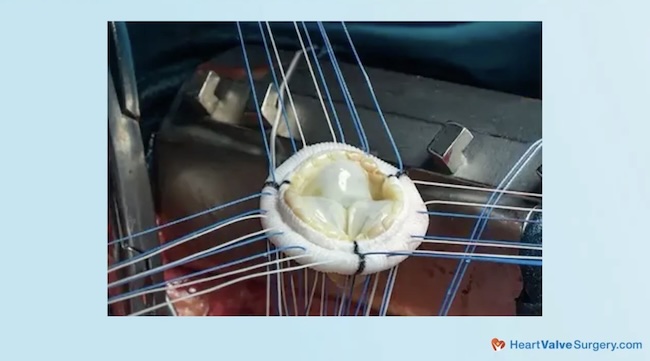
- The ESC meeting attendees can also learn more about the techniques Dr. Castillo-Sang and the LSI team have been working on for years inside the training village they have set up. Dr. Castillo-Sang said, “The LSI team has set up the training village so attendees can come in and see what 3D looks like.” Adam gave it a try, put on a pair of 3D glasses, and was astonished at the difference the 3D view made as he watched a video of stitches being placed, two at a time, with the Cor-Knot device. Adam commented that a valve could then be attached and implanted. “Exactly,” said Dr. Castillo-Sang. “If you look at the screen, it’s showing a video of how the valve is sutured in place. That’s how it’s lowered into the chest through that super tiny incision.” Adam also simulated placing an actual suture by preloading a suture, deploying two at a time, and then pulling them out, just like in an actual surgery. “That is unbelievable,” said Adam. “I can’t thank you enough for the transformation this is having on patients.”
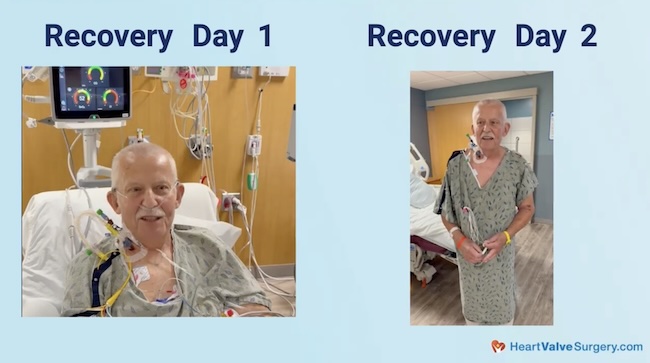
- Checking in with John Erickson, the patient who underwent the minimally invasive mitral valve replacement earlier in the day. Dr. Castillo-Sang said he was doing really well. “He was extubated in the operating room about 30 minutes from the finish of the operation and is in the intensive care unit doing very well.” Dr. Castillo-Sang expected Mr. Erickson to be discharged home after two to three days.
Thanks Dr. Castillo-Sang, Saint Elizabeth Healthcare and LSI Solutions!
On behalf of all the patients in our community, thank you, Dr. Mario Castillo-Sang, for everything you and your team are doing at Saint Elizabeth Healthcare in Edgewood, Kentucky! Thank you also to Jude Sauer and his team at LSI Solutions for the incredible innovations they continue to contribute to endoscopic cardiac surgery!
Related Links:
- View Dr. Mario Castillo-Sang’s Interactive Surgeon Profile
- Check out the Saint Elizabeth Healthcare Microsite
- See highlights from the Endoscopic Cardiac Surgeons Meeting!
Keep on tickin,
Adam
P.S. For the deaf and hard-of-hearing members of our patient community, we have provided a written transcript of our interview with Dr. Castillo-Sang and Jude Sauer below.
Written by Adam Pick
- Patient & Website Founder
Video Transcript:
Adam Pick: Hi everybody. It’s Adam with heart valve surgery.com, and we are at the Endoscopic Cardiac Surgeons Club meeting in northern Kentucky. I’m thrilled to be joined by Dr. Mario Castillo-Sang. Who is a minimally invasive expert. Specific to valve surgery. He’s also the program director of this meeting. Also thrilled to be joined by Jude Sauer, who is the founder of LSI Solutions,
Dr. Castillo-Sang just performed a live operation, shared techniques with the attendees of this meeting, I saw things that I have never seen before. You’ve been talking about the advantages of endoscopic techniques specific with long shafted instruments. And the possibility of now scaling these techniques. What’s empowering endoscopic interests that has made so many people come to this meeting?
Dr. Mario Castillo-Sang: Adam, I think you bring up an excellent point. If you go, historically since 1997, we have been doing endoscopic cardiac surgery. In fact, the person who started it is in the auditorium right now, Hugo Vanderman., he was doing this with a two dimensional scope, with instruments that were adequate but not excellent.
Today, the reason why this is picking up and getting more exposure is because the surgeons now have a lot more environment to carry out the operation, the techniques deliver it safely, efficiently.
LSI is one of those companies that has facilitated many of these things, my staff will tell you that. I always say there are two things that facilitated cardiac surgery. One is long-acting cardioplegia. That’s a solution with which we stop the heart and now we can give it and have the heart arrested.
Safely stopped for 80 minutes. In the past, every 15 minutes we had to redose the medicine. That’s one. The second one is something called a corner incredible tool talking about facilitators. This is an auto, auto tire, if you would. Usually surgeons will tie with their hands, and if you’re doing it minimally invasive, you push the knot with a long-shafted device.
We call them chopsticks. Today, almost every surgeon in the world, instead of tying, uses this automatic suture faster.
Adam Pick: So you saw that as a defined need for the physicians that would ultimately help the patients, is that correct, you?
Jude Sauer: I actually invented it for pediatric surgery more than 30 years ago. It was an overnight thing that we’ve turned into something that’s helped patients. Now, we have over 20 million fasteners in patients across the world.
Adam Pick: On behalf of those patients, thank you for the vision that you’ve had. I’ve gotta ask you, you’ve mentioned this word scope. Several times in the auditorium.. Can you tell the patients all about that?
Dr. Mario Castillo-Sang: So, the, in the past, as I mentioned before, we were using a 4K high definition with 2D scope last year, the FDA approval.
The 3D scope, and we are using that now because it gives us that depth perception, right? That ability to measure distance unconsciously without having to actually do an effort and that accelerates the process. To give an example, I put 20 stitches to replace a mitral valve.
But every time that I placed, I was placing two at a time automatically. And you can see that where I’m going with this, the process is accelerated, it’s efficient. The combination of synergy between the 3D scope and having those double sutures pass at the same time are giving us the ability, the tools to do these operations a lot faster, safe efficiently.
And through a tiny little hole.
Adam Pick: I understand it right, for all the attendees who are coming here, they want to learn about these techniques that you’ve worked years and years on with folks like Jude and the LSI team. This is some kind of training lab It is that we’re looking at here, right?
Dr. Mario Castillo-Sang: It’s a training village that, uh, the team from LSI has put, so, so all the attendees can come in and foresee what 3D looks like. Now put your glasses on. Okay. You have it to make you forceps.
Adam Pick: Oh wow.
Dr. Mario Castillo-Sang: Yeah. You see that?
Adam Pick: Wow. I would love to put this so I there so you can see it really fast. I know you can’t really see it, right?
Dr. Mario Castillo-Sang: And there it goes. Wow. Two at a time by hand.
Adam Pick: Wow. This is something where you then could attach to a valve
Dr. Mario Castillo-Sang: Exactly. And implant the valve right in. That is correct. If you look at the screen, it’s showing a video. That’s how the valve is sutured in place.That’s how it’s lowered into the chest. And that’s the incision is a super tiny incision.
Jude Sauer: Grabbing a suture is one thing, but placing a suture is a different thing. Put those on. You’re going to position it right here. In between the two, you are going to preload your needles, you go all the way, you’ll fire completely, but just go a little bit. Okay? So then you go in and keep looking at the screen. Start redeploying your needles. Oh, my redeploy your needles.
Dr. Mario Castillo-Sang: A little squeeze, like a gentle squeeze. Okay, now open and there it goes. Oh, my two sutures at once. Wow. Does that make sense?
Adam Pick: Wow. I keep pulling out.
Dr. Mario Castillo-Sang: Keep going. And they stay in order, they stay organized. Right.
Adam Pick: Wow, that is unbelievable. I can’t thank you enough. For the transformation this is having on patients. How did the patient do today?
Dr. Mario Castillo-Sang: Really well. The patient was extubated in the operating room at about 30 minutes from finish of the operation and is in the intensive care unit, doing very well.
Adam Pick: Your expectation for this patient to go home. Today’s day zero. In terms of recovery. When do you think the patient will go home?
Dr. Mario Castillo-Sang. Two to three days. Amazing. Well, again, thank you to everybody here. And Dr. Castillo saying thanks for your support. Of course. Thank you for heart valve surgery. Doing all this for our patients.