
Pericarditis After Heart Surgery: What Should Patients Know?
Written By: Allison DeMajistre, BSN, RN, CCRN
Medical Expert: Melita Viegas, MD, Congenital Cardiac Surgeon, Cedars-Sinai, Los Angeles, California
Reviewed By: Adam Pick, Patient Advocate, Author & Website Founder
Published: August 12, 2026
When patients are preparing for any surgery, the surgeon will explain the risks and possible complications. For patients anticipating congenital heart surgery, it’s understandable for both patients and their families to feel as though the stakes are much higher than in other operations. Having a firm understanding of the potential problems that may arise, either during or after cardiac surgery, is imperative.
One of the complications that many patients in our community have questions about is pericarditis. To learn more about pericarditis and how it’s managed, we spoke with Dr. Melita Viegas, a leading congenital cardiac surgeon at the Guerin Family Congenital Heart Program at Cedars-Sinai Medical Center in Los Angeles, California.
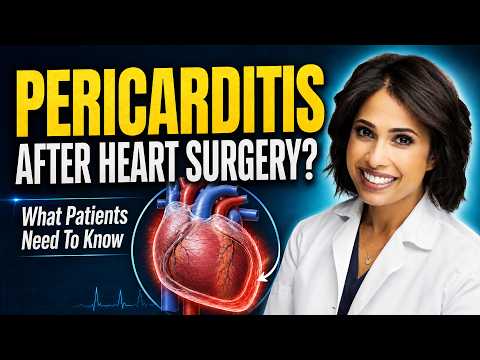

Video available online at:
https://www.youtube.com/watch?v=va-iwOWxOjc
Facts About Pericarditis After Heart Surgery
Here are the key insights shared by Dr. Viegas:
Pericarditis is not uncommon after cardiac surgery. Dr. Viegas said, “It’s one of those things that happen quite frequently in the realm of complications. It’s probably on the lower side because it is so easily treatable.”
What is pericarditis? Dr. Viegas explained that the pericardium is the sac that the heart sits in and can become irritated after it’s been ‘invaded’ during the operation. She said, “Its natural response is to become inflamed, and when that happens, it produces fluid that tends to collect. After almost every surgery, we leave behind chest tubes that usually get rid of that fluid.
When the fluid persists, there are other treatments for pericarditis. “We can see signs on an EKG if there is continued inflammation or an angry pericardium,” said Dr. Viegas. “We just treat it with something as simple as the anti-inflammatory medication ibuprofen. Sometimes we have to escalate it with some other medications, but the true goal is just to decrease the inflammatory response.”
Thanks Dr. Viegas and Cedars-Sinai Medical Center!
On behalf of all the patients in our community, thank you, Dr. Melita Viegas, for everything you and your team are doing at Cedars-Sinai Medical Center in Los Angeles, California!
Related links:
Keep on tickin,
Adam
P.S. For the deaf and hard-of-hearing members of our patient community, we have provided a written transcript of our interview with Dr. Viegas below.
Written by Adam Pick
Patient & Website Founder

Written by Adam Pick - Patient & Website Founder
Adam Pick is a heart valve patient and author of The Patient's Guide To Heart Valve Surgery. In 2006, Adam founded HeartValveSurgery.com to educate and empower patients. This award-winning website has helped over 10 million people fight heart valve disease. Adam has been featured by the American Heart Association and Medical News Today.
Video Transcript:
Adam Pick: Hi everybody. It's Adam with HeartValveSurgery.com, and we're in Los Angeles, California at Cedar-Sinai Medical Center. I'm thrilled to be joined by Dr. Melita Viegas, who is a leading congenital cardiac surgeon at the Guerin Family Congenital Heart Program here at Cedards. Dr. Viegas, it is great to see you again, and thanks for being with me today.
Dr. Melita Viegas: Thank you for having me.
Adam Pick: So in the world of congenital cardiac surgery. You go into the operations with a specific goal, but sometimes there can be complications. One of those complications we hear from patients in our community is pericarditis. Can you tell the folks out there, what is pericarditis and how is it managed?
Dr. Melita Viegas: Absolutely. That's a great question. It is one of those things that happens quite frequently in the realm of complications. It's probably on the lower side just because it's so easily treatable. Pericarditis is inflammation of the pericardium.
In very simple terms, the pericardium is the sac that the heart sits in and it is upset that we have invaded its space and operated in it. Its natural response is to become inflamed. And when it becomes inflamed, it produces fluid and that fluid just tends to collect. After almost every single surgery we leave behind chest tubes, that usually gets rid of that fluid.
But, we can see signs on an EKG if there's continued inflammation or an angry pericardium. We just treat it actually with anti-inflammatory, something as simple as, um, an ibuprofen and, and that's really it. Sometimes ,we have to escalate it with some other medications, but the true goal is to just decrease the inflammatory response.
Adam Pick: Great. Well, Dr. Viegas, on behalf of the patients in our community, people all over the world, thanks to everything you and your team are doing here at Cedar-Sinai. Thanks for much for being with me today. Of
Dr. Melita Viegas: Of course.
New Patient Posts

Heart Hospital Map

Search for heart hospitals that specialize in heart valve treatment.
Adam's Video Library

Learn about heart valve surgery and patient success stories at Adam's video library.