Barbara Dances Again Thanks to Medtronic Evolut TAVR
Posted By: Adam Pick, Patient Advocate, Author & Website Founder
Medical Expert: Ramin Hastings, MD, Interventional Cardiologist, Englewood Health
Published: March 24, 2026
Transcatheter Aortic Valve Replacement (TAVR) has transformed the treatment of heart valve disease. Over time, the number of these minimally invasive procedures has increased dramatically to just over 100,000 procedures in the US in 2023.1
Ongoing clinical research continues to refine TAVR technology and patient outcomes. The SMART Clinical Trial, for example, found that patients with severe aortic stenosis (symptomatic severe aortic stenosis) and a smaller annulus (a condition more common in women) experience better valve performance† when treated with the Medtronic Evolut TAVR.2-4-5
Barbara’s Struggle with Aortic Stenosis
Meet Barbara Arnofsky, a 78-year-old retired computer programmer, mother, and grandmother from Verona, New Jersey. When Barbara began feeling unusually tired and noticed she was slowing down, she attributed it to aging—until activities like dancing, needlepoint, and travel became difficult.
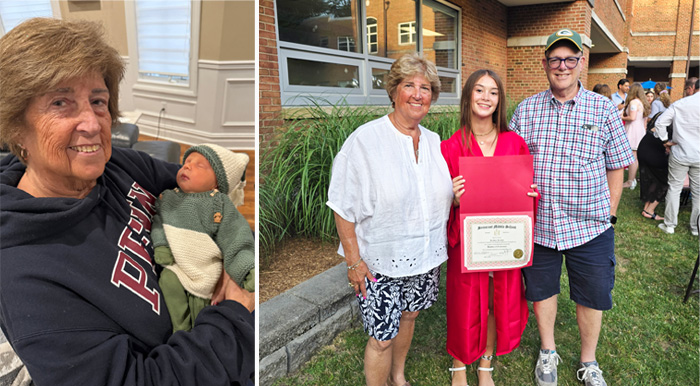
“I felt like I was slowing down. I was gaining weight,” Barbara recalled. “I was embarrassed. I didn’t want people to think I was old.”
Her diagnosis revealed severe aortic stenosis—a condition that restricts blood flow through the heart’s aortic valve, causing fatigue, shortness of breath, and other symptoms that can seriously impact quality of life.

Dr. Hastings Recommended Medtronic Evolut TAVR
Barbara was referred to Englewood Health in Englewood, New Jersey, where Dr. Ramin Hastings, Director of the Structural Heart Program and an interventional cardiologist, reviewed her case.
 Dr. Ramin Hastings
“Barbara was a classic severe aortic stenosis patient who could benefit from TAVR,” said Dr. Hastings. “She had severe disease, but with TAVR, her hospital stay in most cases would only be a day or two.”
Given Barbara’s anatomy, medical profile and the results of the SMART Clinical Trial, Dr. Hastings selected the Medtronic Evolut TAVR valve, which provides a large valve opening5 for blood flow and superior valve performance† in women with small heart valves.3
Dr. Hastings stated, “Barbara was the quintessential small valve patient. For me, in that patient population, the Evolut is a clear winner.”
How Is Barbara Doing After TAVR?
Barbara felt the difference immediately after her TAVR procedure.
“I could breathe. I felt younger. I could walk up and down steps again,” she shared.
Her rapid recovery allowed Barbara to return quickly to the things she loves—traveling, spending time with family, and even dancing again.
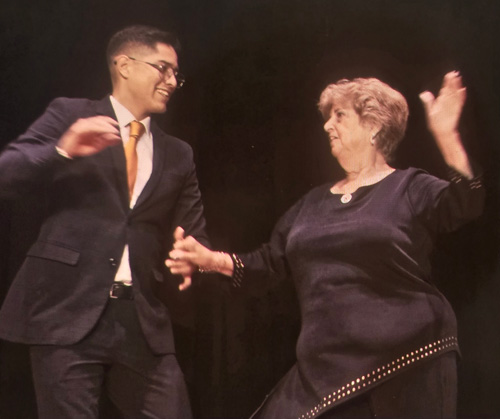
TAVR risks may include, but are not limited to, death, stroke, damage to the arteries, bleeding, and need for permanent pacemaker. Talk to your doctor about the risks and benefits of a TAVR procedure. Inspired by her success, Medtronic invited Barbara to share her story at a recent cardiac conference, highlighting how TAVR can restore not just health, but joy and confidence.
Inspired by her success, Medtronic invited Barbara to share her story at a recent cardiac conference, highlighting how TAVR can restore not just health, but joy and confidence.
Our Community Is Grateful
Barbara’s story is a testament to the power of innovation and compassionate care.
We extend our gratitude to Dr. Hastings, the entire team at Englewood Health, and Medtronic for their ongoing commitment to improving heart health through the Evolut TAVR system.
Related Links:
- Women’s Heart Health Alert: SMART Clinical Trial Reveals Medtronic Evolut Treatment Advantage
- Patient Webinar: 6 Expert Tips for Women with Aortic Stenosis
- Low-Risk TAVR: What Should You Know?
- Free Patient eBook: Top 7 Facts About Medtronic Evolut TAVR
Keep on tickin’ Barbara!
Adam
† Based on the 1 year follow-up results from the SMART clinical trial which showed differences in valve performance‡ for Evolut™ compared to SAPIEN™* and no differences in safety outcomes. SMART primarily studied small annulus patients, predominantly women2. Additional clinical trials on women, regardless of their annulus size, have shown comparable mortality rates in women and men treated with TAVR3 and lower mortality rates for women treated with TAVR compared to women treated with surgical valve replacement4 at 1 year after the procedure.
‡ Valve performance is as defined as freedom from bioprosthetic valve dysfunction (BVD) through 12 months. BVD is defined as a composite including any of the following: hemodynamic structural valve dysfunction (mean gradient ≥ 20 mmHg), non-structural valve dysfunction (severe prothesis-patient mismatch or ≥ moderate aortic regurgitation), clinical thrombosis, endocarditis, and aortic valve reintervention.
References:
1.STS/ACC TVT Registry 2015-2023 National Slide Set. National Cardiovascular Data Registry: STS/TVT Registry. Available at: https://www.ncdr.com/WebNCDR/docs/default-source/tvt-quality-tools-and-reference-documents/tvt-national-slide-set_11_22_24.pdf. Accessed Sept 24, 2025.
2.Tchétché D, Mehran R, Blackman DJ, et al. Transcatheter Aortic Valve Implantation by Valve Type in Women With Small Annuli: Results From the SMART Randomized Clinical Trial. JAMA Cardiol. Published online October 09, 2024.
3.Forrest, J.K., et al., Transcatheter Aortic Valve Replacement in Women Versus Men (from the US CoreValve Trials). Am J Cardiol, 2016. 118(3): p. 396-402.
4.Skelding, K.A., et al., Transcatheter Aortic Valve Replacement Versus Surgery in Women at High Risk for Surgical Aortic Valve Replacement (from the CoreValve US High Risk Pivotal Trial). Am J Cardiol, 2016. 118(4): p. 560-6.
5.Flameng W et al. Prosthesis-patient mismatch predicts structural valve degeneration in bioprosthetic heart valves. Circulation. 2010 May 18;121(19):2123-9.
Written by Adam Pick
- Patient & Website Founder

Video Transcript:
Barbara Arnofsky: My name is Barbara. I’m 78 years old. I like to travel. I do dancing. Love to visit with my grandchildren, watch them play soccer. It’s one of the joys of life. I love being a grandma.
Dr. Ramin Hastings: I am Ramin Hastings. I’m an interventional cardiologist and the director of the Structural Heart program here at Englewood Health. Barbara is like a classic TAVR patient in my mind. She had severe aortic stenosis on her echocardiogram.
Barbara Arnofsky: I couldn’t keep up with my children, couldn’t keep up with my grandchildren. I didn’t want to do anything because I didn’t want anybody to see that I was slowing down.
Dr. Ramin Hastings: The technology just continues to explode in this area. Looking at how safe the procedure is now compared to, you know, when I was in training 10 years ago, it’s like night and day. Our ability to be able to do multiple patients in one day and get them, almost all of them discharged the following day, is really made TAVR such an incredible procedure and probably one of the greatest advances in medicine in the last couple hundred years.
Barbara Arnofsky: So, I called my doctor, had every appointment, and he said, you’ve got a little problem and I think we can take care of it with a TAVR. And it didn’t really scare me because he was having great success and I was a perfect candidate.
Dr. Ramin Hastings: It’s the ability to give a lifesaving procedure that’s gone so far in terms of quality and safety and to be able to match the kind of results that you need with a big open heart surgery with just a very minimally invasive procedure and be able to do that within a matter of seconds, which is how long it takes to deploy a valve. And so that’s really exciting to be able to offer that to our patients. You know, she was the quintessential SMART Clinical Trial patient. She sized out for somewhere between a 20 or 23 SAPIEN versus the 26 Evolut.
Because she was so young and active we definitely wanted to give her the best possible valve in terms of, you know, being able for her. To get back to doing all the things that she wanted to do. And so for me, in that patient population, the Evolut is a clear winner.
Jorie Soskin: What message would you like to share with this diverse group of people?
Barbara Arnofsky: I would like to thank you all very much for making all of this possible and extending my life and giving it the quality that I want and that so many people deserve. Thank you very much and keep up the good work.