
Aortic Stenosis: Symptoms, Diagnosis & Treatment
Written By: Adam Pick, Patient Advocate, Author & Website Founder
Medical Experts: Marc Gillinov, MD, Cleveland Clinic; Junaid Khan, MD, Sutter Health
Page Last Updated: February 19, 2026
If you, or your loved one, were recently diagnosed with aortic stenosis, I imagine you might have several questions about this heart valve disorder.
Many patients and caregivers often ask me, "What is aortic stenosis?", "Is my heart valve narrow?", "How can aortic valve stenosis impact my heart?", "What are the symptoms?", "Can it be life threatening?" and "How is it treated?"

As a former patient that required aortic valve replacement surgery due to this disease, I recently filmed this video with Dr. Marc Gillinov, the Chairman of Cardiac Surgery at the Cleveland Clinic, to help you learn about aortic stenosis.

Video available online at:
https://www.youtube.com/watch?v=6qzjsWudN3c
What Is Aortic Stenosis?
In the simplest terms, this heart valve disorder is a condition in which your aortic valve has become narrowed. When a valve becomes narrow, or stenotic, it can negatively impact the flow of blood through the heart and the body. There are many different causes of of this disease including congenital birth defects, infections, and degenerative conditions (like aging).

Aortic Valve Stenosis
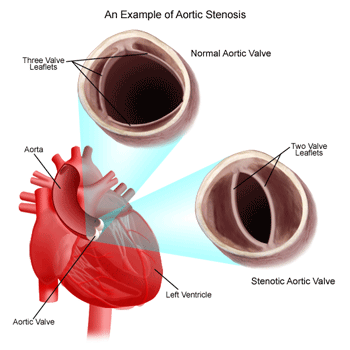
So you know, normal aortic valves have three tissue leaflets (or flaps). These leaflets open-and-close like "swinging doors" managing bloodflow. Valves with stenosis, however, are rigid and fail to "swing" properly. Over time, this can lead to many complications for the patient -- including atrial fibrillation, an enlarged heart and congestive heart failure.
Anatomy of Aortic Stenosis
To better understand the patient risks from this disease, it might help to learn about the anatomy of the aortic valve. During my research, prior to surgery, I learned that the aortic valve is located between the left ventricle, or lower chamber of the heart, and the largest artery, the aorta. The left ventricle pumps oxygen-rich blood into the aorta, which carries blood to the brain and the rest of the body.
When the aortic valve becomes stenotic, the ability of the left ventricle to pump blood out of the heart to the aorta and other arteries is compromised. Your organs no longer receive a sufficient supply of oxygen-rich blood. Plus, blood can "back up" into the lungs, causing shortness of breath.
By evolutionary design, the aortic leaflets should open-and-close with a tight seal. Much like the plumbing valves in your home (which control the flow of water through pipes), the aortic valve controls the flow of blood through your heart.
When the left ventricle contracts, the aortic valve opens. This allows blood to flow out of the left ventricle and into the aorta.
When the heart relaxes between contractions, the aortic valve closes. This prevents blood in the aorta from returning to the left ventricle.
Interestingly, many patients diagnosed with this condition were born with a bicuspid aortic valve. A bicuspid aortic valve is a congenital heart valve defect in which the aortic valve has only two leaflets, not three (shown below).
Other causes of this disorder include rheumatic heart disease, infection and other congenital issues. As I personally experienced, aortic valve stenosis often results from "calcification" in which calcium deposits in the blood build up on and inside the valve. Ultimately, a calcified aortic valve with stenosis lacks flexibility, creating additional stress on the cardiac muscle.
What Are Aortic Stenosis Symptoms?
Patients with a narrow valve can be symptomatic or asymptomatic. During my research, I reviewed several resources from the Cleveland Clinic, the Mayo Clinic and the American Heart Association, which identified these common symptoms:
Shortness of breath, especially during exercise or when you lying down
Fatigue, especially during times of exercise
Coughing, especially when lying down
Heart palpitations, flutters, sensations of a rapid heartbeat
Swollen feet or swollen ankles
Heart murmurs
Excessive urination
Chest pain or chest tightness
Feeling faint or fainting
Dizziness
While the above-referenced symptoms are common, it is critical to note that patients with this type of valvular disease can be asymptomatic. Personally, I only experienced one symptom prior to seeking help. Upon the results of my echocardiogram, I learned that my heart valve condition was severe and my left ventricle was already enlarged.
Is Aortic Stenosis Harmful To Your Health?
The immediate answer to that question is... Yes. Over time, as aortic valve stenosis progresses, the amount of blood ejected from the left ventricle (the ejection fraction value) is reduced. This can have multiple effects upon the human heart.
The left ventricle of the heart can thicken, or get stronger, to compensate for the increased efforts needed to pump blood through the body. The medical term for this condition is cardiomegaly, although most patients will hear that their hearts are enlarged or dilated. At first, this helps overcome aortic valve stenosis. However, over time, the left ventricle progressively increases in diameter, stiffens, and gradually loses its ability to generate enough force to compensate for aortic valve stenosis.
Patients can develop abnormal heart rhythms such as atrial fibrillation.
Congestive heart failure.
Needless to say, this type of heart disease is very dangerous. For this reason, I recently met with Dr. Junaid Khan, a leading cardiac surgeon at Alta Bates Summit Medical Center, to learn more about this valvular disorder.
Video available online at:
https://www.youtube.com/watch?v=pvvZ85DpJ1w
To further emphasize the potential risks of this condition, please consider:
A recent study published in The Journal of American College of Cardiology found that within just 3 years of the onset of symptoms, 75% of patients are dead unless the disorder is surgically treated.
A study by Dr. Ross Braunwald found that 50% of patients died within two years of symptom manifestation unless surgically treated.
For these reasons, I strongly encourage patients to get regular check-ups to monitor cardiac function if they (i) experience the symptoms referenced above, (ii) have a heart murmur, or (iii) have been previously diagnosed with a stenotic aortic valve.
Are There Different Types Of This Valve Disorder?
Like most heart disorders, there are varying degress of diagnosis. The most common categories of this condition are mild, moderate and severe. Typically, patients with mild or moderate stenosis do not require surgical treatment. However, if mild or moderate stenosis remains untreated and progesses into a severe diagnosis, the left ventricle can dilate resulting in many complications that could require aortic valve repair or aortic valve replacement surgery.
While a stethoscope can detect this type of heart disease, an echocardiogram can best determine the severity of the aortic valve disorder. If you are curious, the key determinants for classifying aortic valve stenosis are valve area, aortic velocity and mean pressure gradient.

Other tests used to diagnose the diseasee include a transesophageal echocardiogram (TEE), an angiogram (cardiac catheterization), radionuclide scans and magnetic resonance imaging (MRI).
You Might Also Like
To help you learn more about aortic stenosis, here is additional information to educate and empower you:
Written by Adam Pick
Patient & Website Founder

Written by Adam Pick - Patient & Website Founder
Adam Pick is a heart valve patient and author of The Patient's Guide To Heart Valve Surgery. In 2006, Adam founded HeartValveSurgery.com to educate and empower patients. This award-winning website has helped over 10 million people fight heart valve disease. Adam has been featured by the American Heart Association and Medical News Today.
Upcoming Surgeries



Heart Hospital Map

Search for heart hospitals that specialize in heart valve treatment.
The Patient's Guide
This book has helped over 47,000 patients and caregivers from diagnosis to recovery.