

Technology Update: Robotic Aortic Valve Replacement With Dr. Hussam Balkhy
While the Da Vinci robot is primarily used for mitral valve repair procedures, a handful of clinical cases have leveraged robotic technology for aortic valve replacement.
To get an update on robotic aortic valve replacement, I recently interviewed Dr. Husam Balkhy, the director of minimally invasive and robotic surgery at The Wisconsin Heart Hospital. As you may recall, Dr. Balkhy has performed aortic valve replacement using the Da Vinci robot and the ATS 3f Bioprosthetic valve, a horse valve replacement.

Video available online at:
https://www.youtube.com/watch?v=D9YUpfAyMFg
To help those in our patient and caregiver community that are hearing impaired, I have included a transcript of this video interview with Dr. Balkhy below.
Adam: Hey, everybody. It's Adam and I am here at STS in San Diego. I'm very happy to be sitting next to Dr. Sam Balkhy from the Wisconsin Heart Hospital and we are answering your questions that you posted at the blog. One of the questions was about robotic valve surgery and we've heard a lot about robotic valve surgery for the mitral valve, mitral valve repair, and but we've also heard some questions about aortic valve surgery using the robotic and Dr. Balkhy has some incredible experience with that and so I was hoping, Dr. Balkhy, you might be able to give us an update on developments in that type of procedure.

Dr. Husam Balkhy – Wisconsin Heart Hospital
Dr. Balkhy: Sure. Thanks, Adam, and I wanted to let you know that we actually just had a meeting with some of the interested surgeons on that front. I know you featured in your blog in the past one of the clinical cases that we did. Very few clinical cases have actually occurred with the aortic valve. Robotic surgery is very successful in mitral valve repair. The aortic valve, on the other hand, presents a different set of problems and issues and thus far we're still kind of in the preparatory phase of defining how we can tackle the aortic valve with the robotic technology. And so what has transpired since you and I last talked about this, we presented on your blog, is that we're literally waiting for the development of a sutureless aortic valve that can be implanted with robotic technology and the reason that that is good is that we will be able to basically take away the calcium that encases the aortic valve leaflets prior to implanting this valve and I think that would be an improvement upon the new percutaneous valves that are in development that are kind of, you know, the rage these days which are -- It's obviously a very good technology but there has been a slightly increased instance of heart stroke, increased pacemaker requirements and probably some leaks around those valves that are implanted through the vein percutaneously and so I think the robotic technology can really add to that by allowing the calcium around the valve to be taken away and then a nice tight fitting sutureless valve to be implanted so I think we're probably about a year or so or a year and a half away from having that type of valve available in the U.S. We are still working, however, on the approach and the port placement and the ability to visualize the valve very well and then we've conducted, you know, a lot of good experimentation for in some clinical cases to that end in very, very selective patients.
Adam: Thanks for the incredible support that you've given all of our community and the education. I just want to thank you on behalf of all the patients out there for the technological advancements that you're trying to pursue to make all of our heart valves be the healthier. Thank you very much.
Dr. Balkhy: Thank you, Adam. You've done great work.
Keep on tickin!
Adam
Written by Adam Pick
Patient & Website Founder

Written by Adam Pick - Patient & Website Founder
Adam Pick is a heart valve patient and author of The Patient's Guide To Heart Valve Surgery. In 2006, Adam founded HeartValveSurgery.com to educate and empower patients. This award-winning website has helped over 10 million people fight heart valve disease. Adam has been featured by the American Heart Association and Medical News Today.
Comments





Adam's Newest Blogs


New Community Posts
Blog Categories
- Adam's Updates
- Aneurysms
- Aortic Stenosis
- Aortic Valve Repair
- Aortic Valve Replacement
- Atrial Fibrillation
- Before Surgery
- Bicuspid Aortic Valve
- Heart Valve Replacement
- Medical Technology
- Mitral Regurgitation
- Mitral Valve Repair
- Patient Stories
- Pulmonary Valve
- Recovery
- Ross Procedure
- Surgeons & Hospitals
- Tricuspid Valve
Adam's Newest Blogs
Blog Categories
- Adam's Updates
- Aneurysms
- Aortic Stenosis
- Aortic Valve Repair
- Aortic Valve Replacement
- Atrial Fibrillation
- Before Surgery
- Bicuspid Aortic Valve
- Heart Valve Replacement
- Medical Technology
- Mitral Regurgitation
- Mitral Valve Repair
- Patient Stories
- Pulmonary Valve
- Recovery
- Ross Procedure
- Surgeons & Hospitals
- Tricuspid Valve
Blog Categories
- Adam's Updates
- Aneurysms
- Aortic Stenosis
- Aortic Valve Repair
- Aortic Valve Replacement
- Atrial Fibrillation
- Before Surgery
- Bicuspid Aortic Valve
- Heart Valve Replacement
- Medical Technology
- Mitral Regurgitation
- Mitral Valve Repair
- Patient Stories
- Pulmonary Valve
- Recovery
- Ross Procedure
- Surgeons & Hospitals
- Tricuspid Valve
Surgeon Spotlight

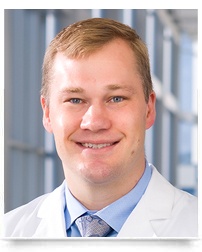
Dr. Christopher Heid is a leading cardiac surgeon at UT Southwestern in Dallas, Texas who specializes in heart valve repair and replacement operations.








New Posts From Our Community

Heather Leigh from
Brooklyn / Nyc
Hi all!! Surgery went well- robotics worked so it was just...
Meet Heather

Adam Pick from
Torrance, California
Hi there! As part of the new community update, all the...
Meet AdamNewest Community Post
Heather Leigh from
Brooklyn / Nyc
Hi all!! Surgery went well- robotics worked so it was just...
Meet Heather
Find Heart Valve Surgeons
Search 1,500 patient-recommended surgeons
Surgeon Spotlight
Dr. Christopher Heid is a leading cardiac surgeon at UT Southwestern in Dallas, Texas who specializes in heart valve repair and replacement operations.