
Edwards SAPIEN Transcatheter Valve Trials
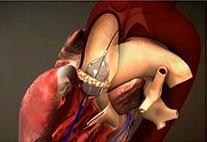
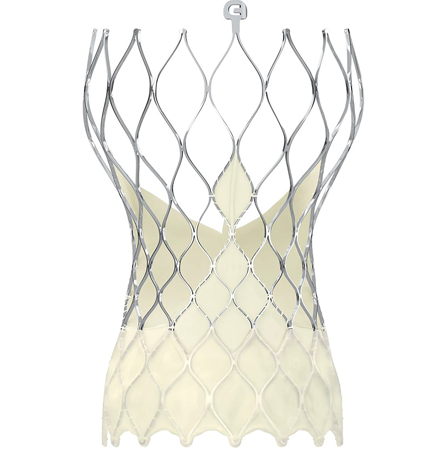
The move to minimally invasive procedures for heart valve surgery took another step forward last week when Edwards Lifesciences announced that the first set of patients were treated in a United States feasibility study using the Edwards SAPIEN transcatheter heart valve.
The Edwards SAPIEN valve is used for addressing congenital conditions (e.g. aortic stenosis and pulmonary stenosis). The study will enable physicians to offer a minimally invasive alternative to symptomatic patients with a failing pulmonary valve.

The company said the study of thirty patients at three hospitals would enable the collection of safety and effectiveness data, ultimately in support of a commercial approval application. The U.S. Food and Drug Administration, or FDA, conditionally approved the investigational device exemption clinical trial in late 2007.
Edwards’ physician partners performed the first U.S. transcatheter pulmonic case on a compassionate basis in December 2005, all of which have been successful, the company noted.
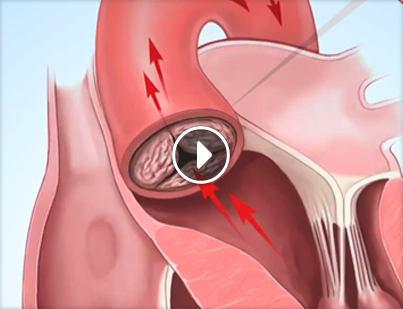
The company added that Edwards SAPIEN transcatheter heart valve is also currently being studied in a pivotal trial for the treatment of patients with severe aortic heart valve stenosis, in which narrowing of the aortic valve restricts blood flow.
Keep on tickin!

Adam Pick is a double heart valve replacement patient and author of The Patient’s Guide To Heart Valve Surgery, a unique book which integrates the clinical facts of heart valve surgery with the personal experiences of an actual heart valve surgery patient.


July 25th, 2008 at 12:06 pm
My son has Tetrology of Fallot. He had it repaired at 13 months of age and then had a homograph to replace his pulmonary valve at the age of 12. He is now 17 and his cardiologist says he will need it replaced within the next few years. I am very interested in any information you might be able to direct me to regarding the transcatheter replacement of this valve. We live in Arizona and I am not aware of where this procedure is available.
November 18th, 2008 at 12:34 pm
They are doing this procedure at Medical City Dallas Hospital, in Dallas, TX.
January 9th, 2009 at 8:58 am
I am a sixty six year old male. I have been informed that I need aortic valve replacement due to stenosis. After becoming familiar with the conventional surgical procedure I am interested in a less invasive operation.
I live in Meridian, Mississippi. Is it possible for you to advise me of the hospitals that offer the transcatheter method of valve replacement and any other advice.
Thank you and have a wonderful day.
Hank
March 17th, 2009 at 8:45 am
I have implanted for 2 years now, an Edwards model 2800TFX Aortic perimount theon bioprosthesis that is defective and regurgitating 46% though the middle. I know that possibly soon it will have to be replaced.
My surgeon advised me that you were working on this new SAPIEN transcatheter. My question is…..Can your new SAPIEN be implanted into your old Perimount bioprostheses????? Please advise…..Bernard
August 7th, 2009 at 2:25 am
Hello!
I am a 28 y.o. male, who was born with a biscupid aortic valve. Until a year ago it worked fine and my heart compensated the additional work it had to do. Two weeks ago, I was told I’ll have aortic heart valve replacement soon. The surgeon later contacted me and I was told that the new valve will be inserted by using this new transcatheter technique.
One the one hand I am happy to have a less stressfull surgery without the heart- lung machine and open heart surgery, but on the other I am not sure whether this technique is suitable for a young man like me, and if I should better opt for the “traditional” open heart surgery procedure and a “standart” artificial valve. How long do this Edwards Sapien transcatheter valve last and how high do I have to crank my INR value later?
Thanks for all your comments.
August 9th, 2009 at 7:49 pm
Hannes, sounds like you have a real dilemma. Think I would research this a bit before agreeing to it. You might find some info at the Edward’s web site or even see if you can get a phone number and call them for more info. Of course the transcatheter would be easier on you physically, but the life of the more traditional replacement valves might be more attractive. I’m 67 and had my aortic valved replaced 02/09. I picked a mechanical valve because I didn’t want to face another surgery when I was 80+, even a minimally invasive. I take warfarin every day and have had no side affects. My dose is pretty low, about 19 mg per week spread out over the week. The hardest thing was getting into the routine of taking it every day. That is the only heart related medication I take, for which I thank God every day. So look into it further and make sure this is the way you want to go…you should have a choice of the type valve because you have to live with it. Oh, my mechanical valve also makes no clicking noise.
Midge