
Adam's Heart Valve Surgery Blog
Get the latest news, patient advice and insights about heart valve surgery from Adam Pick, patient, author and website founder
HeartValveSurgery.com 6.0 Launches!
Written By: Adam Pick, Patient Advocate, Author & Website Founder
Published: June 8, 2026
Hi Everybody!!!
As part of our 20th anniversary celebration, I'm pleased to share that HeartValveSurgery.com has taken a significant step forward in its evolution. This morning, we launched the sixth generation of our platform which we believe is the most advanced set of technologies for patient education, connectivity, empowerment and action.

Video available online at:
https://www.youtube.com/watch?v=QYZzkt02uD0
Our Patient Community Just Got Better!
Written By: Adam Pick, Patient Advocate, Author & Website Founder
Published: June 8, 2026
Woo-Hoo!!!
As you may have seen, we just launched the sixth generation of the HeartValveSurgery.com platform. As part of this global relaunch, I wanted to make several meaningful improvements to our online Community based on your feedback over the years. That said, here is video that describes the new Community features!
Video available online at:
https://www.youtube.com/watch?v=xCytI2qnuq0
What Are The "Top 8" Community Updates?
As you will see, there are over 20 new updates to the Community. With that in mind, I'm excited to share the "Top 8" updates we've made.
Join 999 Heart Valve Patients on Today's Webinar
Page Last Updated: June 4, 2026
[Update: The patient education webinar, "Long-Term Heart Valve Success", was extraordinary. You can now watch a video replay of the webinar on YouTube at this link. Or, you can watch the video playback below. You can also download our new free eBook, "Long-Term Heart Valve Success", at this link.]
What should you know about success planning for the lifetime management of heart valve disease? How are new medical advances, late-breaking research, and innovative treatment strategies impacting patients today and in the future?
Get answers to these important questions when Dr. Doug Johnston, Chief of Cardiac Surgery, and Dr. Anita Asgar, Chief of Interventional Cardiology, at Northwestern Medicine, join me for a LIVE and FREE patient webinar, "Long-Term Heart Valve Success", today, June 4, at 6pm EST.
Video available online at:
https://www.youtube.com/watch?v=hmkweIzrCn8
MemorialCare Joins Our Community!
Published: May 13, 2026
We are excited and honored to announce that MemorialCare has joined the our community!

"Ask Adam Anything" Gets Amazing Patient Response at AATS!
Published: May 3, 2026
Dear Patients, Doctors & Friends,
OMG! I am overwhelmed by our community response to the "Ask Adam Anything" event at the 106th Annual Meeting of the American Association for Thoracic Surgery (AATS) in Chicago!

As you might recall… Last week, I posted a request for patient questions about heart valve disease management and treatment. Within minutes, my inbox started to fill-up with fascinating patient questions. Since then, I have received more than 200 questions. To prepare for the all-day video shoot at AATS, I spent Friday night going through the patient questions in preparation for "Ask Me Anything" session at AATS. Fyi, we invited 10 leading heart valve surgeons to join us for this special interactive event.
Clinical Trial Update: The COMMENCE Study 10-Year Durability Results Released at AATS
Medical Expert: Lars Svensson, MD, Cleveland Clinic
Published: May 3, 2026
I just learned from Dr. Lars Svensson, Chief of the Heart, Vascular and Thoracic Institute at the Cleveland Clinic, that the 10-year results of the COMMENCE clinical trial just were shared at the American Association for Thoracic Surgery Conference that is happening right now in Chicago, Illinois. The COMMENCE trial is evaluating a new type of heart valve replacement, the INSPIRIS RESILIA, designed for enhanced durability using bovine tissue treated with an integrity preservation technology to resist calcification.

INSPIRIS RESILIA Tissue Valve Studied in COMMENCE Trial
Ask Heart Valve Experts Your Questions at AATS!
Published: April 28, 2026
This weekend, I will attend the American Association for Thoracic Surgery (AATS) conference in Chicago. If you didn't know, AATS is one of the most important annual gatherings of heart surgeons that was started in 1917.
At AATS, I am going to film a new "Ask Adam Anything" educational video series for patients. The expert panel of interviewees for this special event are world-renowned heart valve surgeons including Dr. Marc Gillinov (Cleveland Clinic), Dr. Patrick McCarthy (Northwestern Medicine), Dr. Bill Brinkman (Baylor Scott & White), Dr. Juan Pablo Umana (University of Miami), Dr. Eric Roselli (Cleveland Clinic), Dr. Ismail El-Hamamsy (Mount Sinai) and many more.

This is your opportunity to get real answers from leading heart valve surgeons. If you have a question about heart valve disease—whether it's about diagnosis, treatment options, recovery, or long-term care—you can ask it. I'll do my best to get your questions answered directly by one of these leading surgeons.
> Simply email your questions to adam@heartvalvesurgery.com and I'll take it from there.
I look forward to helping you get the answers you need!
Keep on tickin,
Adam
In Uganda, We Help Naome Get Life-Saving Mitral Valve Surgery
Published: April 12, 2026
Thanks to all the wonderful support of this community and the HeartValveSurgery.com Charitable Giving Fund, I am thrilled to share an inspiring update about Naome, a bright and joyful 11-year-old girl from Lira, Uganda, who recently underwent a successful mitral valve replacement at the Uganda Heart Institute (UHI) in Mulago Hospital.

Naome at Uganda Heart Institute
Little Luka Gets Ross Procedure with PTFE Valved Conduit in Japan
Published: April 4, 2026
I just received a fascinating email from Andy Roe, an American living in Japan with his wife and five children. In his email, Andy shared that his 11-month old son, Luka, was diagnosed with severe aortic stenosis. Like many parents, Andy researched the Ross Procedure, an advanced type of aortic valve replacement operation, that might help Luka. However, Andy was surprised to learn that human donor valve replacements, which are an essential part of the Ross Procedure, are not available in Japan. Instead, Luka would get a custom Polytetrafluoroethylene (PTFE) Valved Conduit.

Luka (11-Month Old Aortic Stenosis Patient)
Happy Heart Festival Update: The Lifetime Management of Congenital Heart Disease Session
Published: March 28, 2026
Great news! The video playback from the Happy Heart Festival about the lifetime management of congenital heart disease was just posted. So you know, I was very fortunate to moderate this educational session with a remarkable panel from the The Guerin Family Congenital Heart Program at Cedars-Sinai Medical Center including Dr. Jay Pruetz (fetal cardiology), Dr. Melita Viegas (pediatric cardiac surgery), Dr. Stephen Nageotte (pediatric interventional cardiology), and Dr. Prashanth Venkatesh (adult congenital cardiology).
Video available online at:
https://www.youtube.com/watch?v=uNLB4vzuo1k
Listening to these experts share insights about how Cedars-Sinai supports patients from diagnosis through adulthood — across Guerin Children's and the Smidt Heart Institute — was truly eye-opening. The conversation reinforced how rapidly congenital heart care is evolving and how coordinated, lifelong management is transforming outcomes for patients and families.
Related Links:
Learn About The Guerin Family Congenital Heart Program at Cedars-Sinai
Patient Webinar: Lifetime Management of Congenital Pulmonary Valve Disease
Keep on tickin!
Adam
Adventist Health St. Helena Joins Our Community!
Published: March 23, 2026
Great news! I am thrilled to share that Adventist Health St. Helena has become the newest sponsor of HeartValveSurgery.com!

Heart Valve Innovation: Robotic TAVR Explantation
Published: March 23, 2026
In case you missed it... The world's first robotic TAVR explantation procedure was just performed by Dr. Vinay Badhwar at WVU Heart and Vascular Institute. Watch this video interview with Dr. Badhwar to discover how this groundbreaking innovation may redefine the approach to complex TAVR explants and aortic valve reoperations.
Video available online at:
https://www.youtube.com/watch?v=q9Ur7IH3Ck0
Many thanks to Dr. Vinay Badhwar and his team for educating our patient community about robotic TAVR explants!
Related Links:
TAVR Explants and the Lifetime Management of Aortic Stenosis
Hannah's TAVR Explant: From Palliative Care to Life-Saving Miracle
Keep on tickin!
Adam
Atlantic Health Joins Our Community!
Published: March 16, 2026
I am thrilled to share that Atlantic Health has become the newest sponsor of HeartValveSurgery.com!

Liam Neeson's Son, Daniel, Reveals Hidden Congenital Heart Valve Defect
Published: March 6, 2026
In case you missed it... Daniel Neeson, the 29-year-old son of actor Liam Neeson, just revealed that he underwent heart surgery to treat a congenital heart valve defect known as bicuspid aortic valve (BAV). As you may know, I was unexpectedly diagnosed with a bicuspid aortic valve which led to my Ross Procedure over 20 years ago.

Liam Neeson and Daniel Neeson After Surgery
Happy Heart Festival: A Day of Joy and Hope
Published: February 28, 2026
Today was different. Today was special. Today was something I had never experienced before. Thanks to the incredible teams at Camp del Corazon, Cedars-Sinai Medical Center, and Edwards Lifesciences, I had the honor of attending the Happy Heart Festival — a powerful celebration dedicated to children and families living with congenital heart disease. From the moment the event began, it was clear this was more than a gathering. It was a community coming together to celebrate strength, resilience, and possibility.

Padma's Story: Heartbeats of Resilience
Guest Author: Padma Iyre, Heart Valve Patient & Author
Published: February 27, 2026
The patient stories shared by the people in our community never cease to amaze me. The unique experiences and personal hardships of patients that are openly shared with me are downright inspiring. For example, I just received this update from Padma Iyer, a heart valve patient that didn't just experience highs and lows during her journey. Nope. Padma and her family experienced an outright chaos which thankfully transformed into something wonderful.
Please note that Padma's story below is not intended to cause fear for the patients and care partners in our community. Instead, this post is a celebration of Padma, her courage, her will and her desire to help others. Many thanks to Padma for sharing her story with us!

Padma Iyer (Heart Valve Surgery Patient)
AI-Enhanced Stethoscopes May Close Deadly Diagnosis Gap in Heart Valve Disease
Published: February 25, 2026
Right on the heels of National Heart Valve Disease Awareness Day, we have some important medical technology news to share... Artificial intelligence may soon help physicians detect one of the most overlooked cardiac conditions: heart valve disease.
As you may know, diagnosing heart valve disease can be challenging. People are often asymptomatic or their symptoms are subtle. Unfortunately, as a result, many patients are not diagnosed until their disease has progressed to a severe stage that could cause permanent cardiac damage or death. While echocardiograms remains the gold standard for diagnosis, it is not practical as a universal screening tool, leaving routine stethoscope exams as the front line of detection — and a frequent point of missed opportunity.

Ken Travels to Kentucky for Endoscopic Mitral Valve Repair
Published: February 17, 2026
Over the past few months, I have been fortunate to support Ken and Ginny Grant from Virginia. Ken is a mitral regurgitation patient who was recently told that his leaking valve had progressed from moderate to severe. Ken needed surgery. After researching his treatment options, Ken wanted a minimally-invasive mitral valve repair. However, Ken struggled to find a local heart team to perform that unique operation.
As you can see and read below, I am happy to share that Ken just had a successful endoscopic mitral valve repair performed by Dr. Mario Castillo-Sang at St. Elizabeth Health in Northern Kentucky.

Dr. Castillo-Sang, Ginny and Ken Grant
Chatbot Q&A: Alpha Gal Syndrome and Heart Valve Replacement Selection
Published: February 12, 2026
Our new Heart Valve Chatbot is helping patients all over the world. If you didn't know, we created this free educational tool using artificial intelligence. The interactive Heart Valve Chatbot, which can speak in 85 different languages, was built with the support of over 1,000 cardiologists, heart surgeons, medical teams and patients. That said, I'm amazed at how the Heart Valve Chatbot is providing people instant answers to their questions about heart valve disease.

For example, I just received a very interesting question from B about the potential impact of Alpha Gal Syndrome on heart valve replacement selection. B's question was, "Hi Adam, I am due for an aortic valve replacement. I have been selected as a very good candidate for transcatheter aortic valve replacement (TAVR). I have also been diagnosed with Alpha Gal Syndrome with moderate to high levels. Since TAVR valves are made of materials including cow tissue and pig tissue, I have had mixed reviews on whether or not to have TAVR versus a mechanical valve replacement. What is your take on this? I have aortic stenosis. My valve was abnormal from birth. I was told a year ago that the aortic valve has gotten tight."
Join 800 Women Patients on Today's Webinar!
Page Last Updated: February 5, 2026
[Update: Great news! Earlier today, our patient webinar, "6 Expert Tips for Women with Aortic Stenosis, was fantastic! To watch a playback of the video at YouTube, please click this link or watch the video below. You can also download our new eBook with the six tips for women with aortic stenosis.]
I'm excited to announce that our LIVE and FREE patient education events continue today, Thursday, February 5, 2026, with a special webinar, "6 Expert Tips for Women with Aortic Stenosis". The featured speakers are world-renowned experts that specialize in women's heart disease including Dr. Kathryn Berlacher, Dr. Zarina Sharalaya, and Marcus Burns, NP. The webinar will be hosted by Adam Pick, the patient who founded HeartValveSurgery.com in 2006.
Video available online at:
https://www.youtube.com/watch?v=yK-z95WIMzA
Plus... A live "Questions & Answers" session will enable YOU to ask Dr. Berlacher, Dr. Sharalaya and Marcus your questions about women's health and aortic stenosis during the webinar.
This is going to be great. I look forward to seeing you on the webinar!
Keep on tickin!
Adam
Blog Categories
- Adam's Updates
- Aneurysms
- Aortic Stenosis
- Aortic Valve Repair
- Aortic Valve Replacement
- Atrial Fibrillation
- Before Surgery
- Bicuspid Aortic Valve
- Heart Valve Replacement
- Medical Technology
- Mitral Regurgitation
- Mitral Valve Repair
- Patient Stories
- Pulmonary Valve
- Recovery
- Ross Procedure
- Surgeons & Hospitals
- Tricuspid Valve
The Patient's Guide
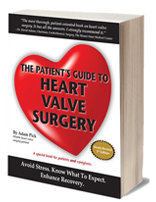
This book has helped over 47,000 patients and caregivers from diagnosis to recovery.
Heart Hospital Map

Search for heart hospitals that specialize in heart valve treatment.