
Clinical Update: Transcatheter Aortic Valve Replacement From Germany (With Patient Video)
The excitement surrounding minimally invasive heart valve procedures continues to build. In addition to mini-sternotomy approaches, mini-thoracotomy techniques and robotic surgery, transcatheter technologies are being closely watched-and-monitored for clinical success.
A transcatheter solution for patients suffering from aortic valve stenosis (the narrowing of the aortic heart valve) is most likely to be of most benefit for elderly patients for whom the risk of open heart surgery would be too great.

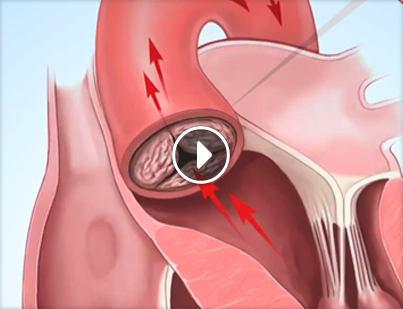
Calcified Aortic Valve With Stenosis
The most recent surgical results obtained specific to this minimally invasive technique for aortic valve replacement at the German Heart Center in Munich, Germany suggests:
- From June 2007 to September 2008, aortic valvular prostheses were successfully implanted with the transcatheter technique in 150 patients with high-grade aortic stenosis.
- The 30-day mortality was 11.8%, which can be compared to a figure of 24% for conventional aortic valve replacement surgery.
- The most common post-procedural complications were cardiac arrhythmia, vascular problems, and cerebrovascular events.
- Six months after the procedure, the patients’ clinical condition had markedly improved with good hemodynamic functioning of the new prostheses.
Calcific aortic stenosis is the most common acquired heart valve defect in Western countries, with a prevalence of more than 3% in persons over age 75. Up to the present time, the treatment of choice for high-grade aortic stenosis has been surgical aortic valve replacement.
As many as 60% of patients, however, cannot be operated on because of advanced age and major comorbidities, even though they suffer from severe symptoms and have a poor prognosis under conservative treatment.
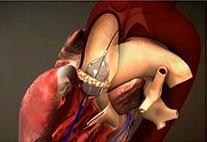
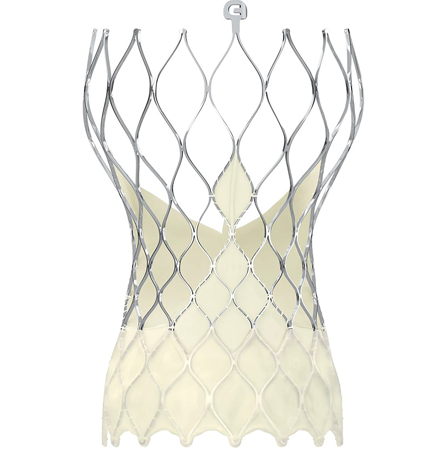
The advantage of transcatheter valve implantation is that it can be performed on the beating heart without the need for a heart-lung machine. In the procedure, an aortic valve prosthesis crimped to fit inside the catheter is brought into aortic position and then unfolded. The Edwards SAPIEN valve is one of the industry’s leading transcatheter solutions (shown below).

Here is a patient testimonial for the Edwards SAPIEN solution for minimally invasive aortic replacement surgery. At 88, Joseph Riley, had the procedure done successfully in 2008.
Keep on tickin!

P.S. To leave a comment, please click here.
About The Author: Adam Pick is a double, heart valve surgery patient and author of The Patient’s Guide To Heart Valve Surgery. This unique book integrates the clinical facts of heart valve surgery with the personal experiences of 78 former valve surgery patients to help patients and caregivers better understand the opportunities and challenges of heart valve surgery. To learn more about Adam and his heart valve surgery book, click here.
- Previous: “Close To My Heart” Project Looking For Female Heart Surgery Patients
- Next: How Did Barbara Bush Prepare For Heart Valve Replacement?


April 26th, 2009 at 6:26 am
It is great to hear about the transcatheter aortic valve replacement. My Mom is 76 and at The Cleveland Clinic in OH. was not possible to do the open heart surgery due to her weakness. Since she has small frame and most likely her veins are small not sure if the transcatheter aortic valve replacement can be done on her. I need to find out the best place in the world to do this procedure.
May 1st, 2009 at 1:47 am
pl.inform me whether the transcatheter aortic valve replacement approach
is being done in INDIA anywhere and also the cost of this approach. my mom aged 83 underwent balloonic valvoplasty in nov2008 and but there is no significant reduction in the gradient around the valve PG 91 PM 65 but now without symptoms. pl.guide us.