
"Is Robotic Mitral Valve Repair Surgery Safe Compared to a Sternotomy?" asks Ken
I received a great question from Ken. In his email, Ken writes, "Hi Adam - After being diagnosed with mitral valve prolapse in 1995, I now need surgery to fix the valve. During my research, I have come across robotic valve repair surgery. My question... Is this procedure safe compared to a sternotomy?""
To answer Ken's question, I recently met with Dr. T. Sloane Guy, MD, a leading heart surgeon. The highlights of our conversation are provided in this video interview. (For the hearing impaired members of our community, I have provided a written transcript below.)

Video available online at:
https://www.youtube.com/watch?v=G_Y0MM8l0jc
I hope that helps you learn more about the safety, the benefits and the outcomes for robotic mitral valve repair techniques -- in the hands of a very experienced surgeon. Many thanks to Dr. Sloane Guy for sharing his clinical experience and research with our community.
Keep on tickin!
Adam
P.S. Here is a written transcript of my video interview with Dr. Guy:
DR. SLOANE GUY: My name is Dr. Sloane Guy. I have performed thousands of cardiac procedures, of varying types. About half of those have been valve procedures. Most procedures performed in the United States are bypass surgeries. I do bypass surgery. But, I do more valve surgery than bypass surgery. My original interest in cardiac surgery began with my mentors, starting with Dr. Bill Frist of Vanderbilt University Medical Center. The types of procedures cardiac surgeon do are incredibly interesting and the technical challenges was something that attracted me. I noticed that these heart surgeons are some of the best over-all doctors in the hospital. If you are on a deserted island and you can only have one kind of doctor, you want that guy to be a heart surgeon.
ADAM PICK: Hi everybody, it is Adam with HeartValveSurgery.com. I am here with Dr. Sloane Guy. We are answering your questions that were posted at the website. This question Dr. Guy comes in from Ken, who writes, "Hi Adam. After being diagnosed with mitral valve prolapse in 1995, I now need surgery to fix the valve. During my research, I have come across robotic valve repair surgery. The question is... Is this procedure safe compared to a sternotomy?"
DR. T. SLOANE GUY: Absolutely yes. There are many different ways to do mitral valve repair surgery -- ranging from a full sternotomy, or cracking of a chest, to so-called mini-thoracotomies, where you make small incisions under the right breast. The real advantage, in my opinion, of the robot is, it allows you to make probably, the smallest possible incisions to accomplish a mitral valve repair. In my practice, my largest incision for a robotic mitral valve repair is 15 millimeters. There is no way you can do the operation through that size incision without the robot. But, the robot is just an instrument, the surgeon controls it. The difference between that and standard instruments is its range of motions. And that allows you to essentially crawl in, into the patient's left atrium, inside their heart, with the camera, with the instruments and have the same range of motions as you would have with your own hands. That is the real advantage. It is the small incisions and the ease of use of the equipment.
ADAM PICK: Can you tell me what the benefits and expected outcomes of Robotic Mitral Valve Repair surgery?
T. SLOANE GUY, MD: So the greatest benefit is that the incision size is incredibly small. We do not do any rib spreading -- which is what causes a lot of the pain from the mini-thoracotomy or port access procedures. We do not split the sternum, which causes a lot of pain. So the pain is clearly less. Our lengths of stays are less. Our expected length of stay after this operation in a healthy person would be about three (3) days. And I think the greatest benefit is actually the period of time after the patient is discharged to when they would have healed from a standard operation. The patients tend to recover more quickly. If you want to play golf the week after surgery, this is really the only option.
ADAM PICK: Can you tell us what your experience in terms of outcomes and repair rate is for someone with mitral valve prolapse?
DR. GUY: With mitral valve prolapse or myxomatous prolapse of the mitral valve, the repair rate is, and should be, near 100%. Almost all those patients can be repaired. If the amount of prolapse is complex, they really need to be treated at what we would call a "reference center" or "center of excellence" that focuses on it and does a lot of them. No patient with myxomatous disease should get anything but a repair, by and large. I am very much a believer in empowering patients. I think the internet has gone a long way to doing that. But I think, patients need to become familiar with all the options. One of the things I tell all my patients is that there is about 10 ways to fix your mitral valve. I have done all 10 and I can introduce you to a surgeon -- who I would trust with my own family -- that does it each of those 10 ways. I believe our way is better because we make the smallest incisions. Do not simply take a referral from your cardiologist and go sign up. Spend the time to learn about the procedures, go on the internet, even seek second opinions before you decide who to go to, because that is a very, very important decision.
Written by Adam Pick
Patient & Website Founder

Written by Adam Pick - Patient & Website Founder
Adam Pick is a heart valve patient and author of The Patient's Guide To Heart Valve Surgery. In 2006, Adam founded HeartValveSurgery.com to educate and empower patients. This award-winning website has helped over 10 million people fight heart valve disease. Adam has been featured by the American Heart Association and Medical News Today.
Comments





Adam's Newest Blogs


New Community Posts
Blog Categories
- Adam's Updates
- Aneurysms
- Aortic Stenosis
- Aortic Valve Repair
- Aortic Valve Replacement
- Atrial Fibrillation
- Before Surgery
- Bicuspid Aortic Valve
- Heart Valve Replacement
- Medical Technology
- Mitral Regurgitation
- Mitral Valve Repair
- Patient Stories
- Pulmonary Valve
- Recovery
- Ross Procedure
- Surgeons & Hospitals
- Tricuspid Valve
Adam's Newest Blogs
Blog Categories
- Adam's Updates
- Aneurysms
- Aortic Stenosis
- Aortic Valve Repair
- Aortic Valve Replacement
- Atrial Fibrillation
- Before Surgery
- Bicuspid Aortic Valve
- Heart Valve Replacement
- Medical Technology
- Mitral Regurgitation
- Mitral Valve Repair
- Patient Stories
- Pulmonary Valve
- Recovery
- Ross Procedure
- Surgeons & Hospitals
- Tricuspid Valve
Blog Categories
- Adam's Updates
- Aneurysms
- Aortic Stenosis
- Aortic Valve Repair
- Aortic Valve Replacement
- Atrial Fibrillation
- Before Surgery
- Bicuspid Aortic Valve
- Heart Valve Replacement
- Medical Technology
- Mitral Regurgitation
- Mitral Valve Repair
- Patient Stories
- Pulmonary Valve
- Recovery
- Ross Procedure
- Surgeons & Hospitals
- Tricuspid Valve
Adam's Video Library

Learn about heart valve surgery and patient success stories at Adam's video library.
Surgeon Spotlight

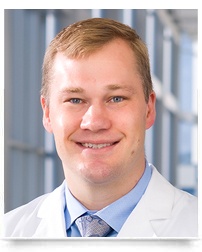
Dr. Christopher Heid is a leading cardiac surgeon at UT Southwestern in Dallas, Texas who specializes in heart valve repair and replacement operations.
New Posts From Our Community

Heather Leigh from
Brooklyn / Nyc
Hi all!! Surgery went well- robotics worked so it was just...
Meet Heather

Adam Pick from
Torrance, California
Hi there! As part of the new community update, all the...
Meet AdamNewest Community Post
Heather Leigh from
Brooklyn / Nyc
Hi all!! Surgery went well- robotics worked so it was just...
Meet Heather
Find Heart Valve Surgeons
Search 1,500 patient-recommended surgeons
Adam's Video Library
Learn about heart valve surgery and patient success stories at Adam's video library.
Surgeon Spotlight
Dr. Christopher Heid is a leading cardiac surgeon at UT Southwestern in Dallas, Texas who specializes in heart valve repair and replacement operations.