|  
  |  
Heart Valve Replacement And Heart Valve Repair Blog For Patients With Aortic Stenosis, Mitral Regurgitation, Mitral Valve Prolapse, etc.

Patient Question Of The Day:
"Did Your Heart Pound Like
Crazy After Heart Valve Replacement
Surgery?" Asks Josh

>> Read 45+ patient responses.


Adam Pick - Heart Valves Author & Blogger
Adam Pick
Double Heart Valve Surgery Patient
and Author of The Patient's Guide
To Heart Valve Surgery


> Read My Story Here


Dr. Chitwood Performs His 400th Robot-Assisted Mitral Valve Repair, Says Edwards Lifesciences

Anytime my inbox lights up with an email from Medtronic, St. Jude Medical or Edwards Lifesciences, my heart skips a beat (pun intended).

But seriously, those three companies are the leading heart valve manufacturers on the planet. That said, if they are emailing lil’ ole’ me, it is usually of interest. Well, I just received an email from Edwards which attests to the growing popularity of robot-assisted heart surgery. Here is what I found in my inbox this morning.

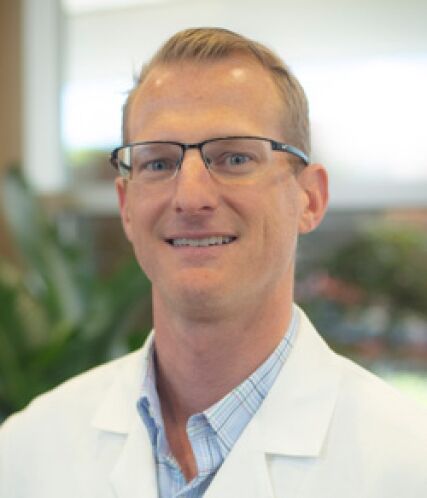
Randolph Chitwood, Heart Surgeon Specializing In Robotic Heart Surgery

Dr. W. Randolph Chitwood Jr., a globally recognized cardiothoracic surgeon, today performed his 400th robotic-assisted mitral valve repair at Pitt County Memorial Hospital (PCMH), the teaching hospital for the Brody School of Medicine at East Carolina University (ECU). Chitwood has performed more robotic-assisted mitral valve operations than any surgeon in the world.

Eleven cardiac surgeons from across the country observed the historic 400th robotic-assisted procedure while attending a two-day training program. Chitwood’s robotic-assisted surgery training center at the Brody School of Medicine at ECU was the first site in the U.S. to offer formal training in robotic-assisted mitral valve repair procedures.

“By integrating computer-enhanced technology with the surgeons’ technical skills, robotic-assisted procedures enable surgeons to perform better surgery in a manner never before experienced,” said Chitwood, president of the international Society of Thoracic Surgeons, director of the East Carolina Heart Institute and professor of cardiovascular surgery at the Brody School of Medicine at ECU.

Chitwood is a pioneer in the development and expansion of robotic-assisted mitral valve repair surgery. In 1994, he began his pursuit to improve minimally invasive cardiac surgery, specifically the mitral valve repair procedure, and did the first minimally invasive mitral valve repair in North America in 1996 at PCMH. Recognizing that endoscopic methods already used in surgery on other parts of the body could provide better visibility and access to the mitral valve, Chitwood devised a set of special instruments to simplify the repair procedure.

In 1999, Chitwood applied his endoscopic expertise to robotic technology and contributed to the development of the da Vinci® Surgical System, a $1.5 million robotic surgical device made by Intuitive Surgical of Sunnyvale, Calif. In 2000, Chitwood used the da Vinci® System to perform the first complete, robotic-assisted mitral valve repair in North America as part of a multi-center, FDA-approved trial. It was the second such procedure in the world. In November 2002, the FDA approved the robotic-assisted mitral valve repair procedure, and to date, several thousand mitral valve repairs with da Vinci® have taken place around the world.

“Intuitive Surgical extends its congratulations to Dr. Chitwood and his colleagues on this historical occasion,” said Lonnie Smith, chief executive officer of Intuitive Surgical Inc. “We appreciate Dr. Chitwood’s seminal contributions to the advancement of robotically assisted mitral valve repair, which have enabled us to extend the benefits of da Vinci cardiac surgery to patients worldwide.”

Mitral valve repair produces far better outcomes than valve replacement, a once-prevalent surgical treatment for a leaky or narrowing mitral valve. An estimated 40,000 patients a year, many under the age of 50, have operations on their mitral valve, as many patient sstruggle from symptoms of mitral valve regurgitation. More than 90 percent of these cases require a sternotomy, or cracking of the sternum, and a 12-week recovery. With the da Vinci® Surgical System, surgeons make only three small incisions, scarring is minimal, infection rates are lower, and recovery time decreases dramatically, to two weeks.

“Not only is this technique far less invasive than traditional open-heart procedures, making it safer and far less painful for the patient, but repair of the valve, as opposed to replacement, has many additional benefits,” Chitwood said.

Using the traditional valve replacement method, surgeons would replace a mitral valve with an “off-the-shelf” mechanical device. These mechanical valves require lifelong dependence on blood-thinning medications, and some require additional replacement surgery every 10 or 12 years.

Diagram Of Da Vinci Surgical Incisions

This milestone signifies the future for robotic-assisted cardiac surgery, as surgeons are now being trained to perform this highly complex mitral valve repair procedure through Chitwood’s program. With the da Vinci® Surgical System, surgeons insert two or three slim instruments and a camera into the patient through tiny, dime-sized incisions. The camera allows the surgeon to view the operation in three dimensions and magnify the surgical field up to 10 times, while the other two arms hold surgical instruments manipulated by the surgeon. Seated at a computer console 10 to 15 feet from the operating table, the surgeon views the images on the console, controlling surgical instruments that mimic the movements of a human wrist.If you would like to see a robotic mitral valve repair video, click this link to view my surgeon, Dr. Vaughn Starnes, discuss and perform a mitral valve repair using a robotic system.

The techniques of mitral valve repair include: inserting a cloth-covered ring around the valve to bring two leaflets covering it into contact with each other, helping them close properly as the heart beats; removal of redundant/loose segments of the leaflets; and re-suspension of the leaflets. Chitwood has used the Cosgrove-Edwards Annuloplasty System, made by Edwards Lifesciences of Irvine, Calif., on all 400 robotic-assisted mitral valve procedures.

“We’re proud to celebrate this milestone with Dr. Chitwood and his team, who are pioneers in the performance of robotic mitral valve repair and actively train others in the surgical community,” said Donald E. Bobo, Jr., Edwards Lifesciences’ corporate vice president, heart valve therapy. “The Cosgrove-Edwards band’s adaptable design allows it to be implanted with both minimally-invasive and robotic surgery techniques that many surgeons are training on and using in their practices today.”

However, it should be noted that ALL PATIENTS ARE NOT candidates for robotic heart valve surgery. Each patient must be evaluated on a case-by-case basis.

Keep on tickin!

Adam Pick is a double, heart valve surgery patient and author of The Patient’s Guide To Heart Valve Surgery, a unique book which integrates the clinical facts of heart valve surgery with the personal experiences of an actual heart valve surgery patient.

>> Additional Blogs About Heart Valve Surgery:


4 Responses to “Dr. Chitwood Performs His 400th Robot-Assisted Mitral Valve Repair, Says Edwards Lifesciences”

  1. Don Magby Says:

    Adam
    I really appreciate all of the information and support that you are providing for we the “weak of heart” public. I am in the beginning stages of a mitral valve replacement. I am scheduled for a T.E.E. next Monday to get a little more information for the surgeon. I have a couple of questions for you if you don’t mind.
    I live in the Sacramento area and have Kaiser insurance. In the past I have heard some real horror stories about Kaiser. It’s all my work provides and to this point I have been extremely healthy so I did not worry too much about the level of care given at Kaiser. Have you heard any feedback from anyone else about the level of care I can expect to receive if I have a Kaiser doctor and hospital perform my surgery? I am not what I would call well off, but I might be able to finance this on my own if I thought it was worth the difference in care.
    At this point, the cardiologist I have spoken to says that she does not feel that I would be a candidate for mitral valve repair. I guess the leaflets did not form right to begin with and they are in a shape not condusive to repair, in her opinion. If I stick with my insurance, I can always ask for a second opinion, but I wonder if the next doctor will have any more information than the first. Do you know of a good surgeon in this area that I could, at the very least, have take a look at my information to confirm that I would not qualify for repair instead of replacement.
    I guess I can think of at least one more question for you if you don’t mind. I am 45 years old. I live, at this time, a very active lifestyle. I enjoy softball, dirtbiking, playing with grandkids, and just about any kind of activity that could cause some really nasty internal bleeding if I were on blood thinners. At this point I am mostly only considering tissue valve replacements. Is there a big difference in the amount of time I can expect one valve to last as compared to another as far as makers?
    The only cardiologist that I have talked to so far said that she was not sure if I could even get a tissue mitral valve any more. She said she had not seen one in quite a while. If it comes to it, are the suppliers of the valves open to me contacting them for information to give to my doctors? Besides the lifestyle, my mindset and beliefs steer me away from taking drugs of any kind any more than absolutely neccessary. I really don’t want a mechanical valve, but I would really like to not have to have 2 to 3 more surgeries in my lifetime.
    Thanks so much for you time
    Don

  2. latonjia trice Says:

    I am one of Dr. Chitwood’s surgery patient, in March 2008, I received a partical value replacement, Dr. Chitwood and his awesome team were a wonderful group of surgeons. I just wanted to share that I had the surgery on March 25, and on May 25 I returned back to work and I feel absolutely great.

  3. J Brewster Says:

    Dear Don

    Do not stop looking until you have spoken to at least two or three surgeons that specialise in mitral valve repair (not just “heart surgery”, and specialise in YOUR kind of mitral valve, with repair rates>80%. There are surgeons out there with repair rates over 97%, and in most kinds of mitral valve regurgitation a repair will give you a longer, and better quality life than any replacement.

    J

  4. Winona Blake Says:

    Hi Adam and Don,
    This website has been such a helpful resource for me since I was informed in June 2008 that I needed mitral valve surgery - and repair as the preferred route.
    I sent my records and DVD’s to Cleveland Clinic last week for review. Today I received a call from tne surgeon’s office that I can probably have robot assisted repair - both leaflets of the mitral valve, the tricuspid valve, chordae repair, and they always do the annular ring on all repairs there.
    I also have 2 second opinions set up in the next 2 weeks at hospitals in Boston (I live in NH).
    Don, the website for Cleveland Clinic has a lot of information, and the Resource Nurses are very helpful. I have done a lot of online research on my situation. There is a wealth of information available. The American College of Cardiology is very clear about the superiority of repair outcomes versus replacement of the MV and stongly recommends seeking out/being referred to a 1.) Center of excellence, 2.) That does high volume surgical repairs, and 3) A surgeon who is an expert at repair. I googled those terms and to find a lot of information. One item of interest is that there are only about 10 heart treatment centers in the US that meet those three criteria.
    Good luck in your selection. keep us informed.
    I will do the same. So far, unless I hear some very compelling information to sway me differently, I will have my surgery at Cleveland Clinic on Sept 17th.
    Winona

Leave a Reply

*
To prove you're a person (not a spam script), type the answer to the math equation shown in the picture. Click on the picture to hear an audio file of the equation.
Click to hear an audio file of the anti-spam equation


NAVIGATION LINKS: Home | The Book | Adam's Blog | Valve Surgery Learning Center | Patient Success Stories | Book Testimonials | Questions? | Contact Me | Resources | Sitemap
All rights reserved. Use of this website, Heart-Valve-Surgery.com assumes acceptance of the terms herein. All logos, pictures and trademarks in this site are property of their respective owner. This website has been developed and presented by Adam Pick, author of "The Patient's Guide To Heart Valve Surgery." Patient's stories herein, and the language used regarding heart valve replacement and heart valve repair, is intended to inform and educate. HOWEVER, it does not imply that you or anyone else will receive the same outcome. As with any medical procedure, results will vary among individuals, and there could be pain or substantial risks involved. These concerns should be discussed with your health care provider prior to any treatment so that you have proper informed consent and understand that there are no guarantees to healing. Adam Pick does not offer medical advice on this website. This information about valve replacement and repair is offered for educational purposes only. Do not act or rely upon our information without seeking independent professional medical advice. The transmission of this information does not create any relationship between you and Adam Pick. Adam Pick does not guarantees the accuracy, completeness, usefulness, or adequacy of any information available at or from this transmission.
Heart Valve Replacement and Heart Valve Repair