“Are There Potential Angiogram Risks or Angiogragraphy Dangers?” Asks Karen
By Adam Pick on September 3, 2007
Yesterday, I received an interesting email from Karen, who has been diagnosed with severe aortic stenosis. Her cardiologist told her that an angiogram will be needed prior to surgery. Karen’s questions to me were about the exam and angiogram risks.
More specifically her questions were, “Does an angiogram hurt? Is it painful? Is there any potential danger or angiogram risks during the test?”

Unfortunately, I have no personal experience that enables me to respond to the questions about the pain of an angiogram. Although I did have a double heart valve replacement (aortic and pulmonary valves), I did not have an angiogram prior to surgery. Because, I was relatively young and in good, physical condition, my surgeon (Dr. Vaughn Starnes), did not feel it was necessary.
That said, many patients will have an angiogram during the diagnosis period and/or the day before surgery.
“Angiogram?” you may be wondering, “What the heck is an angiogram? What are the potential angiogram risks or dangers?”
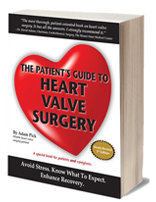
I know. I know. There are lots of questions about the process leading up to heart valve surgery. That’s one of the reasons I wrote my book, The Patient’s Guide To Heart Valve Surgery – to help patients and caregivers better understand each step of the cardiac surgery experience.
Anyways, back to the topic of angiograms and potential angiogram risks. Coronary angiography is the process of creating an angiogram of your heart using dye, a thin, flexible, hollow tube called a catheter and a rapid succession of x-rays resulting in a motion picture.
According to the Mayo Clinic, patients are awake during the procedure so that you can follow instructions. Throughout the procedure you may be asked to take deep breaths, hold your breath, cough or place your arms in various positions. Your table may be tilted at times.
Most cardiologists consider cardiac catheterization safe and low-risk. Depending on your personal pain threshold, getting an angiogram is relatively painless because local anesthesia is used. The whole process can usually take between 30 – 45 minutes.

A coronary angiogram is different than an ordinary, non-invasive x-ray because the dye is injected into the heart arteries with the catheter. This enables the x-ray to contrast the arteries with the surrounding body tissue. The cardiologist can then see which arteries are narrowed or blocked, even the very smallest ones, and recommend the best method to solve problem via balloon angioplasty, a coronary artery bypass graft (bypass surgery), stent placement, or treatment with drugs prior to / during heart valve surgery. Ultimately, the angiogram will also help determine how well the heart is functioning by looking carefully at it’s main chamber, the left ventricle.
Potential Angiogram Risks
According to the Mayo Clinic, there are some risks associated with angiograms. “As with most procedures done on your heart and blood vessels, coronary angiography does pose some risk. Major complications are rare, though. Among the potential risks and complications are:
- Heart attack
- Stroke
- Trauma to the catheterized artery
- Irregular heart rhythms (arrhythmias)
- Allergic reactions to the dye or medication
- Perforation of your heart or artery
- Kidney damage
- Excessive bleeding
- Infection
- Blood clots
- Radiation exposure from the X-rays
Considering the above, you truly want to make sure that you find a trusted and reputable cardiologist to perform the angiogram. Recently, I read a horrible book called Coronary. The book details a massive lawsuit brought against several cardiologists, cardiothoracic surgeons, and Tenet Healthcare because several physicans (e.g. Dr. Moon in Redding, California) were performing fraudulent angiograms and bypass surgeries on patients.
- Finally, you should know that not all patients require angiograms prior to heart surgery – heart valve replacement and heart valve repair included. Please read “Do All Patients Have An Angiogram Before Heart Valve Surgery?” for several patient inputs and discussions.
If you would like to learn more about angiogram procedure from the patient perspective, please click on this link – Ken’s Cardiac Catheterization.
I hope that explains this diagnostic test and the angiogram risks.
Keep on tickin!
Adam
Written by Adam Pick
- Patient & Website Founder

|
Mary Lou Derksen says on September 5th, 2007 at 11:56 am |
|
I have recently had a cardiac angiogram (the second I’ve ever had). It is not painful at all. When they inject the contrast material that makes it possible for them to view your blood vessels on the screen, you feel a warm sensation that is kind of neat—different than other warm sensations you may feel. Your groin may be a bit tender for a day or two, but that is the closest to pain you should experience. |
 |
|
davon trice says on November 21st, 2008 at 4:24 am |
|
hi i received an angeogram on the 15 of november by the 19 it was swollen, red, and very painful so i went to the e.r and they just prescribed stronger pain medication and called it a day. after the 19 it continued to spread redness all around the area and at the puncture site there is a huge knot. please help me find out whats wrong i dont have insurance to get second opinions so i have to deal with the one they gave me but i dont want it to lead to “death”. please contact me soon |
|
|
Bill O'Donnell says on December 15th, 2008 at 6:55 pm |
|
I know personally four people who had catastrophic strokes due to angiograms. If the risk of serious side-effects from this procedure is so low (one web site says .03% – .3%) what is the statistical liklihood that one non-medical person (I) could personally know four people whose lives were ruined by this procedure? I believe the risk to be much higher. Besides, out of one million procedures, a risk level of .3% is 3,000 people. That’s about as many as were killed in the World Trade Center towers. No thanks. |
|
|
stacey says on December 29th, 2008 at 12:39 am |
|
Very nice article, however you did not mention a very serious risk of angiogram procedure is sudden cardiac arrest. Last year 12-21-07 my father received medicare and was able to escape his HMO. He chose a cardiologist and being a medically uninformed man minimized his past medical history. His preexisting heart conditions included the fact that January 2007 he was diagnosed with appendicitis at his HMO. The pain from the inflammation caused a small heart attack, that he was unaware. The surgeon on call examined his horrible cardiac history and refused to do the very simple surgery. The surgeon stated that his heart would not withstand the surgery. He was treated with IV antibiotics for about 6 weeks and it resolved {though checking internet I read this treatment for appendicitis worked only 20 percent of the time, and that within a year it would return.} It was then that the hospital told him 75 percent of his heart was dead {due to heart attacks and radiation for lung cancer that he also had}, I don’t think he told the cardiologist this and he went ahead with the most invasive test of dads heart. Dad was resuscitated easily {being in the cardiac dept of the hospital} however he passed away 18 days later. I don’t blame the cardiologist or dad. One was trying to help another was trying to live life. Dad complained that morning of heart pain and required 4 nitro tablets to take a shower, as I said he was in pretty sorry shape. But as I think if maybe he was a little more informed and therefore the Dr. would be they could have stabilized him a little more before the angiogram. Though again, perhaps it was coincidence considering how poor he was feeling prior. I don’t know, but my dad did suffer cardiac arrest during an angiogram and perhaps you may want to list that potentiality. Thank you and wish you continued good health. |
|
|
Jane Stone says on February 8th, 2009 at 6:37 pm |
|
Last May my father went in to have angiogram again. He had already had a by-pass surgery that failed, and stents put in. During this procedure the balloon that was used tore the main artery and killed my father. He leaves behind wife of 53 years and nine living children. We miss him daily. |
|
|
BrandiT says on May 2nd, 2009 at 1:42 am |
|
So as a person that has experienced an angiogram at the age 23, maybe I can shed some light on what you were mentioning previously. Yes, there is so pain but as you were saying you are contrasedated. I was not. I also had numerous arterial clots in both legs, right arm and my heart. What is more uncomfortable is the dye, it does have a burning sensation and does make you feel as if you are urinating yourself. (Which is embarrassing) |
|
|
barbara says on July 2nd, 2009 at 10:36 am |
|
my comment is really a question. my father is 88 we’ve been told the risk of a angiogram is 1-2%. my question is was the study on young people or is there a study of risk factors on the elderly. is it true the vessels in a elderly man are thin and is there a chance of them being punctured. |
|
|
Bebe Rockwell says on July 3rd, 2009 at 10:31 am |
|
I had Mitral valve replacement but prio to surgery I had an angiogram. |
|
|
Andrea says on July 4th, 2009 at 10:03 am |
|
My mother had the test done june 23rd 2009 in the morning. My mom died that evening. The surgeon explained that my mom was not a good candidate for the test. I called my girlfriend and told her about my lost. she explained that her mother in law was going for the same test on the 24th of June. Her mother in law died on that morning. two death less than 24 hours. Whose to blame! |
|
|
jean caudle says on December 11th, 2009 at 1:10 am |
|
dec.9 2009 my son had an angiogram today. two hours afterthe procedure his lympth gland (ear area) is swollen and he looks deformed. he was given benadril plus another medicine for allergic reaction. so far nothing has worked. they ,the doctors do not know what the problem is. jean |
|
|
colin alexander says on December 19th, 2009 at 8:58 pm |
|
I am a 64 y.o male and have been advised to have an angiogram. I am currently diagnosed as suffering anxiety and panic attacks and frankly I’m scared of the procedure. |
|
|
Rachel says on January 22nd, 2010 at 12:06 am |
|
I kissed my mom on the cheek and said “I’ll see you later” before they wheeled her in for an angiogram on Jan. 5. We lost her that day, and I am devastated. |
|
|
Tony says on June 16th, 2010 at 9:19 am |
|
I WISH I had known the anesthesia was local and not general. Monday night, my mother, who has been in the hospital awaiting heart surgery, underwent an AG and developed a small stroke. Later that night, she called me and my sister and her speech was incoherent. We thought it was because she was recovering from general anesthesia. If they had caught it within three hours she could have had TPA to reverse it! I feel like it’s my fault that I didn’t press my dad into calling the hospital and telling them to check her out! |
|
|
PAM says on November 2nd, 2010 at 10:16 am |
|
My mom was scheduled to have an angiogram on 11/2/10. When they told her what the risk where an how they procedure would be preformede she back out. |
|
|
Brian says on December 27th, 2010 at 9:00 pm |
|
My Dad is scheduled for an Angiogram in about 16 hours. he is a hemophiliac (a.k.a. a Bleeder, one who’s body does not produce/or destroys one of the factors in the blood) In his case, he needs to infuse himself with factor 8 to stop a bleed. He has been ordered to take plavix, take baby aspirin and NOT infuse before the procedure. The factor may help the blood clot, but the p[lavix and aspirin will keep the platelets from sticking. So the blood will litterally thin as water without the infusionof factor 8. Does ANYONE know why someone with his conditionwould be asked to do all this stuff contrary to what he’s been told regarding the care of his condition for all of his 63 years? Thanks in advance. |
|
|
Brian says on January 5th, 2011 at 2:38 am |
|
Hey guys, just wanted to follow-up that my dad survived his Angiogram. He’s resting well and they opened up some incredibly clogged arteries. They will be going in again to get at a couple arteries in his heart that are pretty much totally plugged, except for some collatoral circulation around them. That will happen in a few weeks most likely. Just wanted to post a follow-up so people know what happened since my last post. I hope the next angiogram goes as well too. 🙂 Good luck to everyone out there who is either waiting for or who’s loved one is coming up on having an angiogram. |
|
|
Roz says on January 10th, 2011 at 1:57 am |
|
Hello |
|
|
shirley mullins says on March 11th, 2011 at 4:39 pm |
|
my 84 year old dad has just had a angiogram after having heart attack where two stents have been placed, unfortunately he is still recovering having had a bad turn after surgery and we nearly lost him. He now has an chest infection and is now in heart block. his history also is he had TB when he was 21 and only has one lung having this infection it does not seem to be shifting with the anibiotics they are giving him, he is very sleepy,oh and aneamic 9.2 blood count yesterday. I know thay have done what they had to do because of the heart atteck but he was walking about in no pain and now he a total confused not moving old man with not a very good out look Just feel they should have left him alone!!!! |
|
|
Gary says on March 24th, 2011 at 5:05 pm |
|
Evening all. 16th march, i had my first angiogram, on the slab I was told the procedure is best done via the wrist and not the groin. The incition was made and within seconds I was in agony, several times I said this was too painful and to stop, yet he continued. the pain was so bad I was close to passing out. I was then given morphine to reduce the suffering. Eventually, I was given two options, to cancel or to continue but going through the groin. I chose the second option. On the 19th I was back in hospital because the pain was still present. I had a scan and was told that I now have a blood clot, this is now being treated with medication. My advice is to avoid the wrist. |
|
|
Cari lynne says on June 21st, 2011 at 4:19 am |
|
How long after an angeogram can you drive |
|
|
Gary says on June 24th, 2011 at 8:32 am |
|
Hi Cari Lynne, If you have the angiogram via the themeral (groin) then about 4 days but please check for any infections first and onky drive if your comfortable. If like me, I had the angiogram via the Radial aproach (wrist) 16th March and still although I drive there is still pain and discomfort in which they (medical executive) and aparently it’s normal…. |
|
|
Mal says on July 16th, 2011 at 6:51 pm |
|
I had an Angiogram in Oct 2009 and had a cardiac arrest, I was revived by a shock from a defibrillator. I was told cardiac arrest is more common than they’d like it to be. I ended up having a triple bypass a few days later. |
|
|
Ron Gager says on September 7th, 2011 at 7:57 am |
|
I have been told that persons with calcification may prove to suffer from hyperoxaluria, an inherited genetic condition, which restricts the body’s ability to rid itself of surplus calcium. I am also told that food containing lots of oxalic acid should be avoided as it knocks calcium sulphate out of suspension allowing it to pile up on bends in arteries (as with meandering rivers which drop sediment on bends when slowing up on the inside of the curve). Spinach, rhubarb, swiss chard and beets are high in oxalic acid. Google the U.S. FDA (Federal Drug Aministration’s free website) for a table of % content of most foods. |
|
|
NK says on September 20th, 2011 at 12:01 am |
|
I am scheduled for an angiogram on the 28th of September. And perhaps they will put a stunt at the same time. CT Angiogram revealed the following: 1. severe significant senosis within the distil LAD near the left ventricular apex. 2 Moderately significant stenosis within the digital LADnear the 1st daigonal branch. 3. Difffuse disese within the right coronary artet with seveal areas of calcification that obscures the vessel lumen with likely of at least one area of moderate significant stenosis in this region. Cardiologist seemed very busy to explain clearly exceptthat he is setting for an angiogram with a catheter. I am very worried and nervous. I am 65 years plus.Is there anybody who can expalin this in simple English? How dangerous is the angigram and the angioplasty with stunts if they have to perform it? I will appreciate your resopnse at nrkhan60@yahoo.com. Many thanks. |
|
|
Adrienne says on October 23rd, 2011 at 3:46 pm |
|
My mom suffers from severe COPD. She has had an increasingly difficult time breathing, short of breath and wheezing. She does not feel major pain in her chest, however complains of pain/soreness. |
|
|
Denise says on December 8th, 2011 at 1:05 pm |
|
I just found out I have to have a angiography with stenting of both common iliac arteries . I have 75% calcification blockage from my aorta. I had a couple teeth extracted and on prednisone that makes infections hard to heal |
|
|
Jess says on December 8th, 2011 at 3:33 pm |
|
Hi, I am 14 and was told I will need an angiogram sometime before I graduate. ((A little bit of history: I was diagnosed with atypical kawasaki disease when i was 2 and have several coronary artery aneurysms as a result. My cardiologist says that the need for this procedure is because as i get older, the muscle makes it difficult to see the aneurysms on an echo.)) |
|
|
rodelia generoso says on January 4th, 2012 at 8:37 pm |
|
I am 60 years old and suffering from acute renal failure. my latest creatinine level is 1.99. a few months ago it was always at the range of 2.4 – 2.56. at present I am diagnosed to have heart enlargement and suspected blockage in the heart arteries. I was advised by my cardiologist to have an angiogram which may eventually lead to a more serious process to treat the blockage. I am worried that the process might lead to further damage of my kidney.Please advise me on what to do. Thanks. |
|
|
Wasim Khan says on March 7th, 2012 at 7:34 pm |
|
Have you Heard About EECP Watch a patient being treated with EECP therapy and listen to what physicians have to say about this safe, non-invasive and highly effective therapy. |
|
|
Deepak says on April 11th, 2012 at 11:27 am |
|
My mother was admitted to d famed Max Hospital for routine drip to balance low sodium and high potassium levels. During a routine blood test it came up with mild enzyme levels indicative of some cardiac attack of a silent nature. She was 76 with no history of a cardiac condition. However the Doctors were pleased with the results to help them attain their monthly target by another number. Angiogram was mandated by them. The sodium levels were not controlled and she was taken in for d test. The family was told that d procedure had a fatality rate of under 0.1 percent. We agreed and were called in a hour later to be told that one of d main artery was occluded to d extent of 80 percent while d other two were ok. A medicated stent was advised to which we signed on d dotted line. 15 minutes after our consent we were called in to be told by d nervous doc that they wud put in d stent next day as d patient had some tachycardia. The cath lab tried to move her to the ICU since she had her first cardiac arrest in d lab. They say they tried but could do no more. The Doctor post her death said it was quite common. They met their targets and d family lost everything. DO AVOID DR VIVEKA KUMAR IF U VALUE UR OR UR FAMILIES OR LOVED ONES FALLING INTO HIS HANDS. this true narration happened at Max Hospital, Saket! New Delhi on March 30th, 2012. AVOID ANGIOGRAM UNLESS THE BENEFITS ARE MORE THAN D RISKS. |
|
|
Viv says on January 28th, 2013 at 9:57 pm |
|
I would like to preface my comments by saying, “this is just my account of my actual angiogram experience. I am speaking strictly as a patient, not a medical professional.” That being said, I am in my early 40’s and had my first and only angiogram almost 2 weeks ago. I cannot tell you how nervous I was. But I look back and wish someone had told me what I am about to share with you. There is almost no pain at all. The puncture site (in my groin) was numbed. I was awake during the procedure but everyone talked with me and explained what was going to take place.Even when the dye was injected, I did not feel pain. When the procedure was over, a nurse applied pressure to the puncture site (to make sure there wasn’t any bleeding. Lastly, I had to lay still for a few hours. I felt sore but no pain. I wasn’t given any pain meds to go home with because I wasn’t in any pain. Results of the Angiogram showed no major blockages. Yay. It was never painful…. |
|
|
mary martin says on February 19th, 2013 at 12:39 pm |
|
i had an angiogram eight months ago and i had bad reactions to the procedure. i know i suffered a heart attack, but couldnt get the nurses or the doctor to tell me that i did. since ive asked several for advice after giving my symptoms if that might have happened to me. the angiogram was fine it was after the procedure is when i believe when i had the heart attack. i was given a pill that treats high blood pressure and a heart attack from reoccuring. i use to work at this same hospital as a cna so i know that when anything happens its in the nurses report. so i am going to ask to see my medical records and take it from there!!! please help me with some advice. |
|
|
Melissa says on May 21st, 2013 at 4:25 pm |
|
I was just told that I had to haa e an angiogram. I am 55 years old and my doctor thinks I have small vessel heart desease and another option i believe is prinzmetals angina. All other mri and stress teats show nothing. I have repccuring hest and arm pain angina mostly from someone yelling or just atress. Sometimes after going up the stairs. That being said, I feel fhat my doctor may have under played the risks and when i mentioned them she said the percentages were lower. my half brother died at 58 of a heart attack and my sister has heart failure at 66. We gave genetically high cholestrol without meds mine was 335 it shot up after menopause abd is 235 . Retaking it again this week. I have had Teynauda syndrome since i was in my 20 ‘s so the Prinzmetals came tk mind. I am also afraid of possible blockages that didn’t show a year ago. I was on metropolol and mention and she agreed i should have been on a beta blocker sibce i have Reynauds Syndrome. i am lying here a tear here Nd there reading this portant blog, worried that I won’t wake up or will have a heart attack and i have no eeally close family in the state i live in now since I was divorced after 26 years five years ago. i will get things in order just in case . I do have my half brothers and sister at a disrance and a special man that I love who has his own issues to deal with. The doctor looked at me and said the benefit outweighs the risk. I pray shes right.. God bless to all |
|
|
leo Gouws says on September 10th, 2013 at 1:59 am |
|
Hi, I had an angiogram and a stent was put in but the balloon did not want to release so the dokter had pul it and the baloon burst in my heart |
|
|
Nickita Gurnani says on July 23rd, 2014 at 1:52 pm |
|
My dad is 53yrs old .his Certinine level is 2.4 2day .dr r sayng 2 go for angiography 2maro shd v allow dem 2 do or nt pls help me.dr evn says his heart has decreased working by 30%.cn u pls pls reply me as soon as pos so dat I can make decision |
|
|
SHAMBHU PASWAN says on August 1st, 2014 at 2:03 am |
|
patients are patient and dr is doctor, same views can never be observed. This is good article on risks of angiograms , patients will be relieved of from uncertain fears and doubts. |
|
|
Christine says on August 6th, 2014 at 12:10 pm |
|
My mother died on August 1 in her angiogram. The balloon that was used tore the pulmonary artery and it was catastrophic. This was her second angiogram so she was not afraid. Be aware of the risks and evaluate all options. The doctors say this is a rare to have happen, but it does happen. |
|
|
mema barn says on November 30th, 2014 at 3:48 pm |
|
I have an embolism in my eye from detached Retina surgery. Since I am too old for surgery 83 they want to do an angiogram. I have not had heart problems so is there .a risk to do this |
|
|
binkyboo says on November 14th, 2015 at 1:04 am |
|
My heart stopped as soon as the needle went into my thigh. I have no heart or artery disease and I never found out why this happened. This was a year ago. I was told I could have been allergic to the die the freezing or the narcotics given. |
|
|
Chris says on March 9th, 2016 at 9:53 am |
|
Only yesterday, my Mother’s friend tragically died of a massive heart attack during an angiogram, caused by the catheter nicking an artery. This was in the UK, not some third world country. |
|
|
Anne Quinn says on June 4th, 2016 at 1:24 pm |
|
All of this is very disturbing as there is now a non invasive heart screening available which is 99.13 accurate when compared to angiogram |
|
|
Gail Waine says on March 19th, 2017 at 2:07 am |
|
I had an Angiogram last Fri, March the 10th, the problem I’m having is that where they took the Angiogram was from my Femoral Artery. Now I have a large Bump and its’ getting larger and really hurts from the site they injected the dye. It’s the size of a walnut, a large on. The pain goes down the left side of my leg to the knee, and over to the right and left of the large lump. Is it a blood clot. My blood pressure has been 180/110 hr 95. please email me at gailwaine@rogers.com as I am worried. |
|
|
Farzana Sayed says on August 3rd, 2017 at 8:02 pm |
|
My uncle had a major heart attack last night now he is under control but now the doctors are telling to do angiography and the main problem is that he is a diabetic patient so is it OK if we go for angiography instead of he having diabetes. Please help me out |
|
|
T Blanchfield says on November 1st, 2017 at 5:35 am |
|
My step Dad died a few weeks ago due to complications during his angiogram. My Mum has had 2 angiograms without any issues (apart from pain at the entry site on her wrist for several weeks afterwards). We all thought it was a relatively safe procedure (including him) and now he’s gone – aged 67. We are absolutely devastated. |
|
|
manu shrivastava says on May 30th, 2018 at 4:25 pm |
|
hi……while i did not recommended coronary angiography….my father in law went through in commando hospital and passed away…doctors say that his bp went down during the procedure…but he was very well before and there was no problem!! what could go wrong in that case? |
|