The Realities of Cardiac Depression after Open Heart Surgery
By Adam Pick on August 2, 2007
I just received an interesting email from Carol that directly relates to heart surgery recovery. Carol writes, “Hi Adam – My husband had mitral valve replacement three weeks ago. I’m curious… Did you experience depression after heart valve surgery? Is it common for patients to experience cardiac depression following heart valve repair or heart valve replacement?”
Let me start by answering Carol’s first question. Yes, I did experience both heart surgery and depression. I had my pulmonary and aortic valves replaced in 2005. As for cardiac depression, I did not have any immediate form of depression during my 5 days in the hospital or during the first three weeks following my heart valve replacement surgery recovery. However, as I entered into my fourth week of recovery, I did begin to experience many symptoms of this post-operative condition.

Needless to say, this was not a very fun time in my life. Pre-surgery, I was a very upbeat person. For me, the glass was always “half-full”. I’m an optimist that believes anything is possible. Post-surgery, however, I was exactly the opposite. I was lethargic, anxious, confused, pessimistic and isolated. I was also having issues sleeping.
What a miserable experience for me and all of my caregivers, especially my fiance (Robyn). I was a mess. And, my family… I don’t know how they put up with me!!! Thank goodness those dark days are lonnnnnnnnnnng gone.
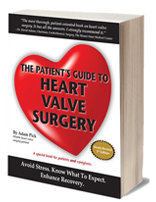
To better understand cardiac depression, I researched the this topic for my book. I created a survey that was completed by many former heart valve surgery patients. As you would imagine, several survey questions directly related to depression.
The survey results are very, very, very interesting. In one of the questions, I asked the former patients, “Did you experience any form of cardiac depression during your recovery?”
Before I give you the results, my previous research suggested that between 30% – 75% of heart surgery patients experience cardiac depression. My research also suggested that more men than women are impacted by depression after heart valve surgery.
With that said, here are the results from my survey. According to the patients surveyed, 32% of patients experienced heart surgery and depression. That’s a pretty significant number.

Now, the questions become… How do you avoid cardiac depression? And, if you experience this condition after surgery, how do you get your recovery back on track?
Keep on tickin!
Adam
Written by Adam Pick
- Patient & Website Founder

|
Ben stewart says on December 17th, 2008 at 8:56 pm |
|
This is not a comment just looking for some advice. I met a girl about three months ago and everything was going perfect. She had heart surgery about a month ago and she is very depressed and I know I had something to do with it. I had no idea what the surgery would do to her and I was not patient with her at all. I think I have lost her and I guess what I am asking is this. I want to understand what she is going through and what I can do to be helpful. Right now she will not talk to me, but I am praying that will change. If anyone could help me out, that would be great. thanks. |
 |
|
robyn thomson says on December 20th, 2009 at 6:38 am |
|
I too have lost a partner after his heart surgery-I had not expected his depression and anger -he too wont talk to me and has no contact with me at all -which has devastated me -he is 71 and I am 61 ,I was told to find someone younger ! I thought Id spend the rest of our lives together…….and support him through this process.But I am so scared that he wont change his mind.Ever ! I too am at a loss………help |
|
|
Sally says on February 12th, 2010 at 12:40 am |
|
Thus subject does not apply just to older patients as we are experiencing this with our 16 year old daughter as well. She is also depressed and angry, after a PFO closure procedure done to correct a hole in her heart about a month ago. As the author of the book stated, it seems the 4th week is the worst yet. But prior to learning that she had a hole in her heart, we were first told she had a brain tumor, but it turned out she was having small strokes due to clots that were making it through the hole to her brain. But what we do know is that she has had a lot of built up stress and it has been very difficult for her to deal with, and she also had troubles with her boyfriend who didn’t know how to deal with his own fears, so he just avoided her and broke her heart without meaning to. So I think it is a universal experience, and one that doctors should better prepare their patients for going into it, as well as their families. |
|
|
Michelle says on October 31st, 2010 at 8:01 am |
|
I had mitral valve repair three months and five days ago. I’ve had quite a few complications and I’ve turned very bitter. The first three weeks I was fine. Everyone told me I looked great and I was doing great each time I did anything. I felt euphoric, I faced death and I beat it, I could do anything! Then week 3.5 I was admitted for atrial fibrillation, week 5.5 readjusted for inflammation of my pleural and pericardial tissue. That was a huge blow. I was on new medications with terrible side effects. I could not drive and felt dizzy all the time. I also started feeling anxious all the time, having 30,000 PVCs per day can do that. My husband was great and still is great. He has not pushed me out of my comfort zones, he allows me to recover at my own pace. I try hard not to drive him crazy. At week 8 I felt fantastic, I was going to cardiac rehab, driving myself, doing things around the house, and going to school. I was on top of the world. Then one week ago I was back in the ER with chest wall inflammation, two days after that with a fever, and two days following that for a new crazy heart beat. Ive fallen off the horse again. Now I’m withdrawing from the dilaudid they had me one and can’t look at my bruised up arms from so many failed IV attempts. We talk ourselves up before surgery so that we fear it less, we tell ourselves that we will be fixed up and better than ever. Yes I’m not having heart failure and I can breath well but in the beginning it’s just a trade off. The disappointment is unbearable. The depression is the worst and sometimes we isolate ourselves so we don’t become a burden on others or stop hanging around friends that try to push us past our limits. |
|
|
GF BEDGOOD says on December 27th, 2010 at 8:40 pm |
|
I have had 2 heart valve replacement surgeries since 2001. Depression is REAL, 20 years ago I would have said the opposite. Until you personally experience this evil condition you can not understand the emotional hell your life becomes. It is like a 500 pound weight tugging at your every thought, every waking moment……. |
|
|
michelle says on October 11th, 2011 at 1:23 am |
|
my husband is a moody man, and some times can be nasty when unhappy. i often become a verbal whipping boy. He is on day three in his recovery form triple bypass and valve repair surgery. I hoped that his near brush with death would change his out look on life, and he’d stop taking so much(me) for granted. He has some fluid build up in his left lung, and is having difficulty breathing. good a reason as any to be nasty. I was already at the end of my rope before. i understand that post operative depression is not uncommon. How soon can this happen? How do i best deal with him when he gets home? signed, already giving up. |
|
|
Vicki Pierson says on November 28th, 2011 at 8:20 pm |
|
Don’t give up, he needs you now more than ever. I’m 6 months post mitral valve repair and I don’t think I’m over the depression yet. I was completely asymptomatic so the diagnosis was a real shock. Not only do I not feel grateful, I feel guilty for not feeling grateful. Physically I feel fine and the operation was a success as far as the heart is concerned, but being a “heart patient” has destroyed my self image. I have traded a symptom-free athletic life for shoulder pain, shortness of breath, and a big scar down the middle of my body. I should be glad that I no longer have to worry about heart failure, but since I didn’t know I would ever need to worry about that, it doesn’t seem like such a great blessing. Intellectually I know I should count my blessings, so that makes it even harder to face my real emotions. This conflict makes me angry, and your husband may have similar feelings. I wish I had known about Adam’s website before surgery- a lot of thing could have been different. When I got my diagnosis, I asked my (now former)cardiologist about support groups, he laughed and said “There’s no need. You just have the surgery and get on with your life.” Boy was he wrong, and I intend to tell him! About Adam’s site, I mean…. |
|
|
Susie says on November 29th, 2011 at 5:38 pm |
|
Hi, I am a 49 year old that is 4 weeks post op of aortic valve replacement and ascending aneurysm repair and single bypass. I have been doing pretty well and only had the “blues” briefly off and on but today is 4 weeks to the day of surgery and I am anxious and tearful and now plain sad. Yes I know this is expected but my personality is always up beat, comical if not sarcastic to get through things….my family is amazing and I am just concerned I made need medication to get over the hump of this. I am still dealing with significant pain and midsternal and into my shoulders. Did any of you go on antidepressants briefly or even recommend it? Thank you and I hope you all heal quickly and you are my heros for posting such personal things and helping others… |
|
|
Vicki Pierson says on November 29th, 2011 at 10:23 pm |
|
My family doctor has suggested antidepressants since I am still struggling. Her rationale is that we don’t hesitate to wear glasses if we can’t see, or antibiotics when we have an infection, so there should be no stigma about taking advantage of a tool to help reverse a temporary condition. I have the prescription in my purse but haven’t filled it because I think I’m better off trying to understand why I feel this way so I can learn to live with it (My current theory is that heart surgery doesn’t mesh well with my athletic self image and I need time to rebuild a different image that I can still feel good about.). If depression has just hit you when you were previously cheerful, antidepressants may be right for you. At 4 weeks I was pretty much a zombie and feeling rather sorry for myself, but I had no idea I was actually suffering from depression. Awareness is more than half the solution, and you seem to have identified your problem objectively. I’d suggest that you talk frankly with your doctor about short term antidepressants and see if yours is of the same opinion as mine. Good luck! |
|
|
Susie says on November 30th, 2011 at 1:46 pm |
|
Thanks for the thoughts Vicki I see my doc in 2 days |
|
|
Ed Rutkowski says on December 7th, 2011 at 7:42 pm |
|
After reading Adam’s survey results and the previous comments, I would say that my post heart surgery experiences with regard to depression have been atypical. For years prior to my heart surgery for mitral valve prolapse with severe regurgitation and atrial fribulation I took anti-depressants. Since surgery I have discontinued the anti-depressants and no longer have any of the same feelings of anxiety and “blues” that I experienced for those years prior to my surgery. To those who deal with the post-operative depression, my very best wishes. Anxiety about surgery and the aftermath can be daunting, though I had tremendous confidence in my surgeon and the facility that my outcome would be positive. Recovery can be a slow process, and though otherwise very healthy before surgery, a month after my surgery I was hospitalized with some lung issues. I write this only to say that no one should automatically anticipate and worry that post surgical depression will be an inevitable side effect. It seems there is no logic why depression occurs and it is very real and can be overwhelming when it does. But try not to allow yourselves to become depressed anticipating that overcoming depression will automatically be part of your recovery process. In my case, at least, the surgery actually was a cure. God bless. |
|
|
Roberta says on January 3rd, 2012 at 1:25 am |
|
Hi there all. I came upon this by accident. But so glad I did. |
|
|
Susie says on January 5th, 2012 at 5:36 pm |
|
Roberta, I understand your fear…I am so sorry you have such anxiety about surgery. I did too! Being a cardiac nurse and having the surgery where I work added more stress. I just wanted to get in and get it over with! I discussed pain managemnt with my anesthesiologist before surgery and they gave me some medication for anxiety before surgery. Immediate post op was an eye opener but I got through and had great nurses! If you have read any of my other posts I’ve had ” issues” like everyone else but I am now 9 weeks post op and just started swimming too. Suffice it to say…it does get better. You will feel better…I can breath so much better. I hope you find a surgeon you trust and someone to allay your fears to help you go forward. Good luck and I’ll answer any question you have… Susie |
|
|
Roberta says on January 5th, 2012 at 7:59 pm |
|
Thanks for the kind words Susie, So glad you are doing better. I think that for now I am going to waiteven though I was told I had a 50% chance for sudden death. But with my panic attacks and agoraphibia I just can’t bring myself to do this surgery. It is hard enough just getting to an appointment. I know this sounds crazy, but there has never been a Dr that I trust and due to Insurance and no income, I really can’t just go see anyone I want. I don’t have much family support and no friends as I relocated to another state to be closer to family. I am on pain meds for my back problems. antianxiety meds for panic disorder, along with others. The dr did schedule a cardiac cath to be done on the 19th of Jan. I more than likely will cancel due to anxiety. Also I can’t lay flat for hours after due to my back issues. The Dr said , Oh we’ll give you fentanyl for the procedure but nothing before it. I just think I am too depressed to survive the surgery if I had it. |
|
|
Susie says on January 7th, 2012 at 8:42 pm |
|
Roberta, |
|
|
Steve says on March 3rd, 2012 at 3:47 pm |
|
Although this thread is about post-operative depression, I want everyone to be aware that it can sometimes comes months later. I was 50 when I found out I needed a triple by-pass, had no problems prior to my annual physical. I was and am a non smoker, weight within 10 lbs of the “chart” weight, no drug history, just a guy who thought I was in great health compared to everyone else. Needless to say, the 2 valves and the widow maker had to be corrected. Right or wrong, my surgeon told me afterward that based on my condition I would have never made it to my 52nd birthday. I was mostly likely going to have a massive heart attack and not be able to be saved. I had just recently celebrated my 52nd birthday when major anxiety began, and then finally, the depression. I feel it every time my heart skips a beat or any pain associated near my chest. It took months before the depression set in so some people need to be aware that it may come sometime later, and when it does you should seek help right away. |
|
|
louise says on June 9th, 2012 at 10:11 pm |
|
hi. i am a 64 yr old female. i had a cervical disc fusion in 2009, then aortic valve replacement in 2010. i put this off due to fear almost too long. when i woke up from surgery i was told i would’ve been dead in 24 hrs without the surgery. big scare! they gave me pain meds to help extra due to 5 herniated discs in my back which makes lying on my back agony. i am now facing total hip replacement (both hips), so am in constant severe pain. do not put off life saving heart surgery due to fear of pain. theymll help with that. i can breathe comfortably now for the first time in years and didn’t suffer from depression, even though i am financially strapped (they just have to accept what i can give) and have very little support (very small family and no husband). you can get through this and things will get better. |
|
|
Kathy says on June 11th, 2013 at 4:44 pm |
|
Hi.. Two weeks after valve replacement, my best friend went into cardiac arrest. After two horrible weeks in the hospital, she died. Now I’m in week eight and her family hasn’t so much as put a death notice in the paper, much less planned any services for her. Depression has always been an issue, but now it’s like a way of life. I’m really not sure how to get past this. I feel very guilty about feeling sorry for myself. My depression seems to me, a very selfish condition. And that sucks too. I thought she would be here to keep me company while I’m stuck in the house instead of working in the garden or rock hunting, like we loved to do…. We were ten days apart. We’d been friends our entire lives. We turned 55 this year. Now I feel like “Okay, I survived. Now what?” |
|
|
Roberta says on June 19th, 2013 at 11:57 am |
|
Hi, I initally wrote on here in Jan 2012. |
|
|
Alexander says on September 26th, 2013 at 11:50 pm |
|
hello, my name is Alexander. |
|
|
Steve says on October 8th, 2013 at 11:13 am |
|
My 90 year old mother had TAVR surgery to replace a heart valve last Wednesday. At this point doctors say physically she is doing pretty well, emotionally she is not. She wants to sleep most of the time, does not want to get out of bed and most troubling, does not want to eat. With concern for this she now has a feeding tube. The family does not want to over react and wants to be supportive. Doctors are becoming “moderately” concerned. Some of the comments and information here have been helpful but any other thoughts would be appreciated. |
|
|
Mads Bjorn-Roli says on April 17th, 2014 at 7:35 pm |
|
I had valve replacement and aorta replacement exactly 3 months ago. They said I would feel better after surgery. But I went from being happy to suicidal and wish I never did the surgery. They fixed my heart and said am doing great, then they send me out in the real world with out listening to me as a person how I really felt. I lasted for one week trying going back on the job marked. I was not ready, and ended up in the psychiatric hospital instead. I asked for mental help already before surgery, they never did anything to get me mental help. Big reward to the heart s urgent and his team. They created a strong heart, but their ignorance took away my thank for saving my life, as am not living. |
|
|
Susie says on April 17th, 2014 at 8:48 pm |
|
This is for Mads Bjorn-Roli It will be ok, Susie |
|
|
Kathy says on April 17th, 2014 at 9:35 pm |
|
Dear Mads Bjorn-Roli |
|
|
Kathy says on April 18th, 2014 at 8:12 am |
|
Good morning! Dear Roberta, I pray you are still with us! Until I got notice of the most recent post, yesterday, I did not even remember that I had posted, almost a year ago! I know it’s late, but I do apologize for not responding, and thank you for your kind words. I’m wondering if you ever had your surgery. I pray that you have and that all is well. |
|
|
Ginny says on June 22nd, 2014 at 9:01 pm |
|
My anger and depression came a couple of weeks following heart catheterization. I didn’t know what was wrong with me because my cath was fine. I work, exercise, but was so angry now and can’t stop crying. I feel better now that I know this sometimes follows heart procedures and hope it clears up on its own. Good luck to you all, you aren’t alone. |
|
|
Dylan Ross says on July 3rd, 2014 at 1:24 pm |
|
Hi im a 35 yearold father of a 4yr old & I had aortic valve and ascending aorta replacement 7 months ago due to endocarditis( a surprise). I was diagnosed with a bicusbid aortic valve with stenosis and after a second opinion Stanford medical center found aortic aneurysm. To top this mess off im epileptic and have battled seizures for years! Due to the infection of the old valve I have been on antibiotics for 7 months and will be for another year and its wrecking my stomach and energy. IM IN THE DEPTHS OF CARDIAC DEPRESSION!! it helps to hear that I’m not the only one I did read Adam’s book and it helped me prepare for surgery. Especially getting a second opinion! Now I’m trying to get my blood pressure down to get the rehab going but they freek when a 35 year old male’s blood pressure gets over 150/95. My surgeon and cardiologist laugh when I ask about cardiac rehabilitation so im kinda lost…. |
|
|
David says on August 10th, 2014 at 4:09 am |
|
My name is David and I had aortic valve replacement january 31, 2014. I was scared before the surgery but nothing like now. I feel like fucking killing myself every waking moment and the doctors dont give a fuck. If I ever go over the edge, I will take the surgon and the cardiologist with me, believe that. Today is august 10, 2014 and im still in the “rehabilitation center”. Hell is what it is and its 24 miles away from the nearest hospitol so it takes a squad 20 minutes to get here and by the time they get me in the ambulance and to the e.r. its about 40 minutes. I keep having panic attacks and fits of rage and I dont know how much longer I can take it. I’m 41 years old. they said I would be back to work and live a normal life in 3 or 4 weeks, what a joke that was. I dont have any kids and my parents are dead and no wife or girlfriend so ive went through this shit alone. I tried God, Jesus and prying and I dont think they are listening and I just get madder. It will be over one way or the other, but I will probably never recover from the emotional and mental anguish and they dont give a fuck about none of it. I tried to get better pain meds and some form of seditive to keep me calm, but they dont give a fuck. Im scared to do anything, they fucked my left shoulder up and my back kills me all the time and I cant sleep untill Im so exulsted I just shut down only to wake up to the horror of still being alive. And nobody gives a fuck……nobody. Theres so much more, I could write a book. I thought this would be alot different than this. The doctors are ruthless about after care. They did not say one fucking thing about none of this. They was all nice and caring before thr surgery, now I want to cut their fucking heads off with a butter knife. What a fucking shame and this should be illeagal. I hate this fucking country with a passion now. And fuck all you doctors who read this you fucking butchers!! |
|
|
4redhorses says on January 21st, 2015 at 11:01 am |
|
i am working through childhood abuse issues in therapy and had heart surgery at the age of two years old. I recently experienced a day unrelated to any trauma memories of the blackest feeling I can ever imagine surviving. I barely made it through that day, I got through it by counting to ten over and over, I could not go past ten because eleven seemed to have more syllables than I could think. I should have gone to the ER but there was no way that I could drive. My brain functioning was altered in a way that I have never experienced, and I have never been so suicidal due to an unbearable ‘black’ feeling inside me. After reading about this I believe it may have been a bio-chemical ‘flashback’ of sorts to the heart surgery since I have been having flashbacks and panic attacks for about two years due to severe childhood abuse. This day of ‘blackness’ was like anything I have experienced during this process before or since. |
|
|
4redhorses says on January 21st, 2015 at 11:03 am |
|
David I am so sorry you are going through this hard time, I hope it has gotten better, you are definitely helping others by sharing your experience. |
|
|
Carol E. Ness says on May 16th, 2015 at 9:24 am |
|
My brother had a mitral valve repair last fall (2014). His personality has changed dramatically and he is suffering some mental problems. My brother was involved in a car accident in February of this year with several broken ribs and some minimal lacerations. Looking at his vehicle, it is amazing he survived and wasn’t seriously injured. Approximately six weeks later, my brother walked from his apartment and collapsed in the lobby of a nearby motel. Nearly six weeks after, just this week, my brother rented a room at a motel near my home and jumped out of a second story window and has 3 compression fractures in his back. I, and other family members, have noticed odd, bizarre, and radical changes in my brother’s behaviors, attitudes, and personality. A psychiatrist has noted concussion after the car accident and now thinks traumatic brain injury as well, although CT scans and MRI’s don’t show anything. My brother is experiencing a long list of symptoms associated with traumatic brain injury but something else is also occurring with him. The car accident, the collapse, and the jumping from a window all are in a cyclical time period and patterns leading up to these events are present. I’m scared to death that the next time could be fatal. What do we do? What is happening to my brother? My brother is in the hospital at present and his psychiatrist has put in for a court committal (which may only be for 5 days). Any help or advice would be greatly appreciated. Thank you. |
|
|
mary says on June 6th, 2015 at 9:53 am |
|
I had mitral valve stenosis. First surgery was in 2006 with a mechanical valve. I felt worse and worse and the doctors decided 1 year later to take out the mechanical valve and replace it with a porcine valve. I almost died and my family was called. I wish he would have let me go. With all the transfusions I contracted Hep C. I’ve been depressed so long and it just gets worse. No one believes me or why I should be depressed, after all, I’m alive. Mary |
|
|
mary says on June 6th, 2015 at 10:32 am |
|
I know how he feels. I have a stock pile of pain pills for when I get the guts up to use them. Do you listen to him? Really listen? I’ve gotten to the point I don’t talk about it anymore. People just don’t understand. |
|
|
Henry Frederick says on May 14th, 2016 at 2:39 pm |
|
I can relate to how you and others feel after invasive surgery: It has been 7 weeks since I underwent 6 1/2 hours of surgery for a massive ascending aorta aneurysm repair and aorta heart valve replacement. And that followed a month of hospitalization for pneumonia during which I caught the flu (and because of insurance screw-ups, spent time in three different hospitals), which delayed the surgery and fueled my apprehension: As I kept being told by the docs if I didn’t undergo the invasive surgery I would certainly be dead at any time. So I had the surgery. Depression and anxiety have become daily obstacles to recovery: At the age of 54, looking at the bottle of Hydrocodone on the kitchen counter makes me mentally sick until the unbearable physical pain sets in and a pill is swallowed; reinforced by the scar I see in the mirror and the metal wires I feel when I press against the middle of my chest. Even cutting out 1 to 2 dosages a day, the dependency and then the disgust in acquiescing to this pill – an addictive narcotic, just brings me down even more. There’s also the beta blocker and the baby aspirin regimen (both in the weeks leading up to the surgery and since). I already take Adderall (also a powerful narcotic to combat very difficult ADHD), plus a rescue inhaler (ventolin) and a long-acting steroid inhaler (advair) for lifelong asthma. But it’s not just the pain meds on top of the other drugs. Nor is it just the scar or the feeling of helplessness (still a lot of pain attempting to drive, excessive sweating and energy drain. Then there’s the two-ends of the adcvice spectrum (even when unsolicited) of those either condemning (‘suck it up,’ ‘go get counseling,’ ‘you must be mentally ill’) and then there’s the syrupy-sweet enablers ‘(aw poor you – go take a walk and feel better’ and the endless chants of ‘praying for you’ as if some evil force is causing this). Besides the daily walk and trying to get back into some semblance of life’s daily routine, it’s just not that simple! People may be well meaning, but just don’t understand — they expect you to be so happy because the surgery was a life saver. Was it? |
|
|
Frederick M. says on September 6th, 2016 at 2:49 pm |
|
I had an aortic dissection type A, after the surgery i started to experience depression ,at the age of 38 i didn’t expect that this will happen to me i don’t even had any symptoms,no hypertension no organ problems, i don’t drink alcohol that much, i don’t smoke. I am a healthy guy as i know and i do exercise regularly. Now 3 months after the sergury i feel so depressed like what other experienced, physical pain is still there, still thinking a lot because i can’t accept what happened to me even it happened 3 months ago and sometimes my emotion is breaking me apart. So irritating to hear someone saying “sorry for what happened to you” it somehow made me think that i am useless. |
|
|
brian minnick says on February 3rd, 2017 at 1:19 am |
|
Fredrick i also had type a and mechanical valve if u would like to chat my email is orangeventura@yahoo.com i was 45-year-old. |
|
|
Stanley Edwards says on February 10th, 2017 at 3:00 pm |
|
I know Help is out there for someone who had heart bypass and can go back to work I applied for disability but it’s taking forever is there any grants I can apply for sweetie I didn’t do my depression can pay my bills that are due at my apartment had to turn in my car it’s really crazy |
|
|
Josephine Harkay says on April 25th, 2017 at 9:21 pm |
|
I had a TAVR (trans-catheter aortic valve replacement) procedure and also got a pacemaker 6 months ago. My various doctors say I look great ( I am 85) but I feel tired, mildly depressed, I have a very hard time getting up to start my day. As a nurse so wisely said, the heart just does not like to be messed with. I suspect the medications I have to take now are also a contributing factor. |
|
|
Alexi Kalenkowitz says on May 3rd, 2017 at 4:26 pm |
|
Hi You Guys, I’m 9months out from aortic replacement and a single bypass and boy do I understand the depression. I had alway been slightly “crabby” but I had no idea the depth to which you can sink. I won’t elaborate but I felt just like David, Mary and Henry have discribed. I also had 45 years of ciggerette smoking, drinking and weed/other drugging to get over. Then my PCP started switching around the antidepressants I was taking. After a number different drugs he prescribed Zoloft. Like majick suddenly the depression cleared. I’m telling you it was like being reborn. I now wake up and smile and say to myself, ” Yes, I get another day!”, and that is my only concern. I intend to name my first kid Zoloft. I’m 60 and I feel like the best is yet to come. |
|
|
Alexi Kalenkowitz says on May 3rd, 2017 at 4:35 pm |
|
You are so right, but if your Dr’s. can get your antidepressent right, all that go’s away. And you might even feel better than befor your surgery. |
|
|
Mistyeyed says on June 12th, 2017 at 3:45 pm |
|
It’s been over 2 years since my husband’s quintuple heart bypass surgery. He is a vacant person and self-oriented now. Angry when asked about where he is or what he’s doing as if his rights are being violated or his freedom is restricted. Just simple daily married people communications, he sees as infringing on him. Impetuously goes places, looks around, buys things, stays away doing whatever without touching base. Not able to converse without taking issue with everything. Opinionated. Uncomprising. Talks over people when they are talking. NOT the same person. Very hard and even more sad. I’ve lost the man I loved for 46 years. I’ll love him forever even though the real him didn’t come home from the hospital |
|
|
Gigi Downey says on July 21st, 2017 at 3:39 pm |
|
I am a psychiatrist and have been diagnosed with severe aortic valve stenosis. I recall that my dad, who had had depression his entire life, was much worse after surgery and never did recover, despite medications. My concern is that I also have had Major Depression, recurrent, which is helped with medications. I am very concerned about depression that worsens to the point of not responding to meds or treatment. |
|
|
Gigi Downey says on July 21st, 2017 at 3:41 pm |
|
I hope that you get help for your depression. As a psychiatrist and as |
|
|
Julie says on September 22nd, 2017 at 3:22 pm |
|
Close to the end of July, I had heart surgery to remove a tumor from the left atrial of my heart. Since I have been more somber. Not depressed but like “whatever”. I have been back to work 3 weeks now and I hate it. I hate people (which I work with all day long) and I even hate my boyfriend now. Everything that is said and done is wrong. I have high anxiety when I ride in the passenger seat. I even get it a little bit when I drive. I can’t figure out how to fix it. Crying doesn’t help but it comes allot. I want to be in my house 24/7 and do nothing. I have no motivation to get up and move and I know that I need to exercise. Since I have no motivation, when doing things I am always short of breath. Guess I need to talk to someone about this. Either that or just crawl in a hole. |
|
|
rubart says on September 28th, 2017 at 9:14 pm |
|
I had two valves fixed, via the “full cut,” and I was dreading the possibility of depression afterward. I had some deep depressions in the past and I know how horrible they can be. I couldn’t help dreading, what if, after my surgery . . . ? Miraculously, I never got depressed! Not everyone is so fortunate. But because I know how depression feels, here’s the best advice I can give if it happens to you: do NOT try to talk yourself out of it by things like “counting your blessings.” The worst thing you can do is deny your honest feelings. Instead, acknowledge them and own them. At the same time, though, remind yourself that what you’re feeling isn’t reality, it’s likely your body’s reaction to being invaded. The world can seem so dark and cold that you think, “I have every reason to be depressed–just look around!” But that’s like a drunk telling you how life “really” is. Just as it’s the alcohol in him talking, so it’s the off-kilter hormones, chemicals, etc. in your body doing the talking. That doesn’t mean you’ll immediately feel better, but it can push you to get help rather than giving up on reality. We can’t help how we feel, but we CAN get help if what we’re feeling is bringing us down. Always remember that, in good times and not-so-good times, there’s ALWAYS help. Wishing you all a recovery as easy–and even joyful–as I was blessed to have. P.S. – Guess I should give my own tip along the lines of the “sneeze.” If, after surgery, you go more than one day without a bowel movement, demand a laxative. My hospital was the best, but for whatever reason they didn’t monitor this closely. So it’s up to you to do the self-monitoring. You don’t want to go days without having a bowel movement because you’re too lethargic to care. By the time the fourth or fifth day rolls around, you’ll care all right! Trust me on this. |
|
|
Mary Stackhouse says on January 11th, 2018 at 1:42 am |
|
My husband had a triple bypass in 2014. He has become a virtual asshole from hell, specifically to me and especially during stressful times (our youngest daughters marriage, our eldest daughters miscarriage, opioid and benzodiazepines reduction). He knows there is something wrong with his brain. He can not remember things from 5 minutes prior yet argues on the price I paid for our beds 9 years ago. His vocabulary is filled with f bombs and I am the caregiving 🎯 target. |
|
|
Sandra Mckeehan says on February 26th, 2018 at 12:16 pm |
|
My son is 25 and had aortic valve replacement he is so depressed |
|
|
Pam Rugtiv says on May 31st, 2018 at 6:14 pm |
|
My brother-in -law had many of these same changes in character after his multiple bypass surgery. The doctor told my poor sister that her husband had suffered an oxygen insult to the brain and put him on diazepam and/or ativan. Wasn’t much help. |
|
Adam's Newest Blogs
Adam's Newest Posts



Heart Hospital Map

Search for heart hospitals that specialize in heart valve treatment.