Bicuspid Aortic Valve: Symptoms, Diagnosis & Treatment Options
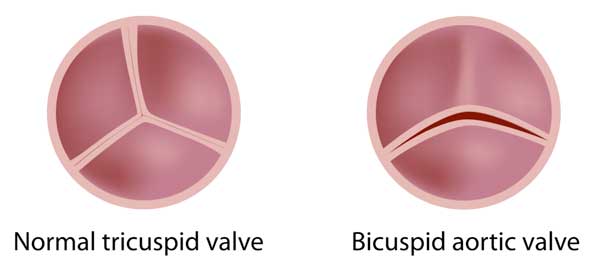
After I was unexpectedly diagnosed with severe aortic stenosis and aortic regurgitation, I learned that I suffered from an anatomical disorder known as a bicuspid aortic valve. While normal aortic valves have three leaflets, my aortic valve only had two leafltes.
Like many patients, I immediatley started asking questions including:
- What is a bicuspid aortic valve? What does it look like?
- Why are these valves problematic for patients?
- What are the bicuspid aortic valve symptoms?
- Is this form of heart disease dangerous?
- When and how is this disorder treated?
After my aortic valve replacement surgery, I created this website to help future patients and caregivers quickly answer these and other questions.
What Is A Bicuspid Aortic Valve?
In the simplest terms, a bicuspid aortic valve (BAV) can be a serious heart valve disorder in which the valve only has two leaflets, or flaps, that control bloodflow through the heart. Like the tricuspid valve and the pulmonary valves, normal aortic valves have three tissue leaflets.
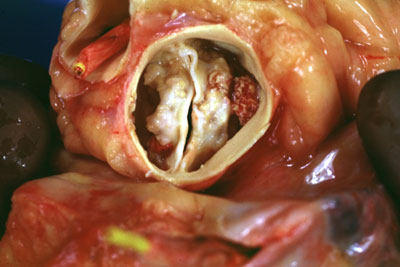
To help you visualize what this valvular disorder might look like, please review the picture below. As you can see, there are only two leaflets in this valve. (It should also be noted that this valve is severely calcified with calcium deposits shown acoss the surface of the leaflets.)
If you were recently diagnosed with a BAV, please know that you are not alone. This is one of the most common forms of heart valve disease. According to the Bluhm Cardiovascular Institute at Northwestern Medicine, this congenital heart defect impacts 1% to 2% of the general population. Like other congenital issues, BAVs are formed during pregnancy when two aortic leaflets fuse together.
Why Are Bicuspid Aortic Valves Problematic?
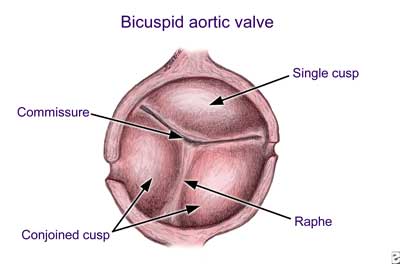
The diagram below is really helpful in understanding the potential issues of an aoric valve that is bicuspid. You can see that this heart valve has two conjoined leaflets, or cusps. As a result, you can also see that a BAV provides a smaller passage for blood to flow through the valve. This valve narrowing, medically known as aortic stenosis, can severely limit bloodflow through the heart to the rest of the body.
Ultimately, your heart is required to "work overtime" to push blood through the smaller, diseased bicuspid aortic valve. Initially, the cardiac muscle can adjust to the stress caused by this valve disorder. Over time, however, this ongoing strain can lead to permanent complications including:
- An enlarged heart
- Abnormal heart rhythms like atrial fibrillation
- Congestive heart failure
Needless to say, these are very serious issues. It is for this reason, that patients must actively monitor their health, get regular check-ups and be aware of potential bicuspid aortic valve symptoms.
What Are The Symptoms? Can Patients Be Asymptomatic?
I'm often asked, "Adam, what are the most common symptoms of a BAV?" During my research for this website and my book, I spent hours reviewing different educational resources from the Cleveland Clinic, the Mayo Clinic and the American Heart Association to determine a comprehensive list of symptoms. The most common symptoms are:
- Shortness of breath, during exercise or when you are lying in bed
- Constant tiredness or fatigue
- Coughing at night or when in bed
- Rapid or fluttering heart palpitations
- Swollen ankles
- Chest pain (tightness, angina)
- Feeling dizzy
It is also very critical to note that patients can be asymptomatic. This means that some patients will not experience any symptoms. Personally, I only experienced one symptom prior to my aortic valve replacement surgery. Luckily, at the time of my diagnosis, my left ventricle was just starting to enlarge. (Thankfully, my left ventricle returned to normal size after surgery.)
When Is Surgery Required For A Bicuspid Aortic Valve?
Aortic valves that only have two leaflets impact each patient differently.
At times, these valves may cause severe heart valve disease at birth. Alternatively, bicuspid aortic valve symptoms can appear during the first twenty years of life. Most patients (like me), however, start to experience problems during their 30s, 40s, and 50s. However, this is not always the case. Yesterday, for example, I spoke with a 71-year old patient who just had aortic valve replacement surgery due to this disorder.
It should also be noted that if you are diagnosed with a BAV, that does not guarantee you will need surgical treatment during your lifetime. Ultimately, your need for surgery will be determined by the severity of your disease -- either aortic stenosis or aortic regurgitation.
What Are The Surgical Options?
As diseased bicuspid valves are structurally problematic, medicine can not cure or treat this disorder. That said, the two types of surgical treatment for bicuspid valves are aortic valve repair and aortic valve replacement.
- During an aortic valve repair, the leaflets can be reshaped to open and close better. Aortic valve repair is typically performed for valves with aortic regurgitation through median sternotomy or minimally invasive techniques.
- During an aortic valve replacement, the diseased bicuspid valve is replaced with a mechanical or biological tissue valve through median sternotomy, thoracotomy or even percutaneous approaches.
To help you you learn more about bicuspid aortic valves and treatment options, here is an educational video I filmed with Dr. Patrick McCarthy, the Executive Director of the Bluhn Cardiovascular Institute at Northwestern Medicine.
So you know, many patients with a bicuspid aortic valve from our community, including Doug Sivyer, Dustin Lundelius and Greg Bailey have had excellent surgical results following treatment.
My Story With A Bicuspid Aortic Valve?
I was diagnosed with a severely diseased bicuspid aortic valve in 2005. Eight weeks later, two of my heart valves were replaced by Dr. Vaughn Starnes at USC Medical Center. It's been 13 years since my Ross Procedure and I'm doing fantastic!
After my recovery, I've gone on to get married, have a child and live a very active lifestyle. And, I just had my yearly echocardiogram. There are no signs of stenosis or regurgitation in my aortic valve.
You Might Also Like
To help you learn more about bicuspid aortic valves and its treatment, here are additional resources to educate and empower you:
- Free eBook: Advances in Bicuspid Aortic Valve Therapy
- Technology Update: How Did 4D-MRI Help John Time Bicuspid Aortic Valve Surgery?
- Surgeon Q&A: Can TAVR Be Used for Bicuspid Aortic Valves?
- Top 5 Facts About Your Aorta & Bicuspid Aortic Valves
- 38-time Marathoner, Mark Buciak, Gets Bicuspid Aortic Valve & Atrial Fibrillation Surgery
- Can Calcium Be Removed from Bicuspid Aortic Valves?
- Find Patient-Recommended Heart Surgeons Here
- Meet Bicuspid Aortic Valve Patients in Our Community
Page last updated: September 17, 2020
Written by Adam Pick
- Patient & Website Founder



 ..."
..."