Anatomy of the Heart and Heart Function
Your heart is a blood pumping machine. According to the Cleveland Clinic, your heart will beat approximately 2.5 billion times during your lifetime. That said, on any given day, your heart willl beat up to 100,000 times.
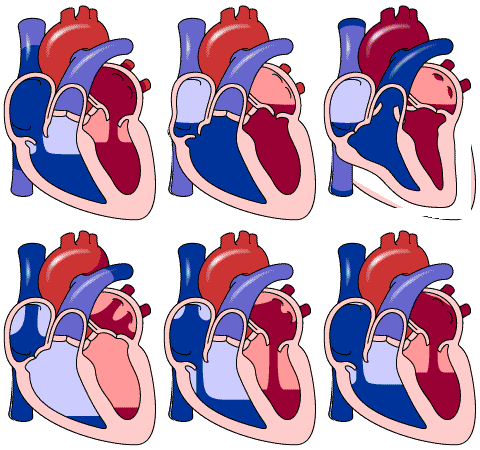
That corresponds into significant bloodflow throughout your body. The Texas Heart Institute suggests that most hearts can pump up to 2,000 gallons of blood during each twenty-four hour period.
However, while most people believe that human hearts are shaped like the image on a common Valentine's Day card, this is actually an incorrect interpretation of the cardiac muscle. According to the Heart Institute, "The heart is shaped like an upside-down pear."
As for its size... A normal, healthy heart is the size of an average clenched adult fist. Some diseases of the heart, however, can cause the heart to become larger (dilated). But, on average, clinical research suggests that hearts typically weigh between seven and fifteen ounces.
The heart is made of a special kind of muscle called myocardium, and is enclosed in a double-layered, membranous sac called a pericardium. A wall of muscle divides (septum) the heart into two cavities: the left cavity pumps blood throughout the body, while the right cavity pumps blood only through the lungs.
Anatomy of the Heart Cavities
There are four cavities in the heart. The two upper chambers of the heart are called atrium, the bottom chambers are called ventricles. The right side of the heart receives deoxygenated blood from all parts of the body except for the lungs. The left side of the heart receives oxygenated blood from the lungs and pumps it to the rest of the body.
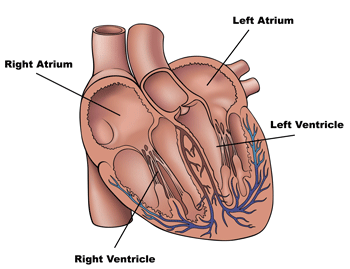
Four valves - the aortic valve, the pulmonary valve, the mitral valve and the tricuspid valve - sit within the heart and regulate the flow of blood throughout the heart.
You Might Also Like
To help educate and empower you about heart valve disease and treatment options, here are helpful resources you might like:
- Anatomy of Heart Valve Disease
- What is a Heart Murmur?
- What is an Enlarged Heart?
- How is Heart Valve Disease Diagnosed?
- What are the Different Types of Echocardiograms?
- Meet Heart Valve Patients in Our Community!
Page last updated: September 16, 2020
Written by Adam Pick
- Patient & Website Founder